
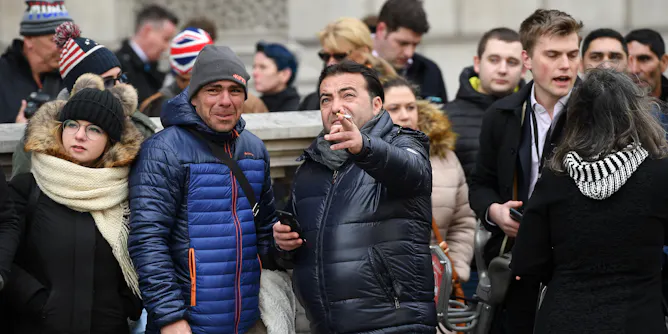
In the rush to compete, news organisations can still make basic errors. They need to remember the lessons of the past.
Articles on News
Displaying 161 - 180 of 205 articles
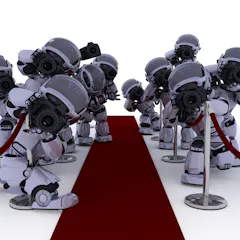
Robots writing stories? It’s happening at a newsroom near you – and many journalists aren’t thrilled.
How do we determine what is fact? An archaeologist explains how the answer has changed over time and why it matters so much now.
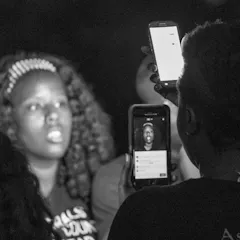
Facebook Live – and other live-video streaming services – change how we bear witness to events, and challenge how we think about visual information.
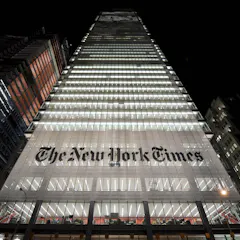
Although few pay for news in Australia, The New York Times’ is pushing into the country’s fracturing newspaper market.

Technology exacerbates the news echo chamber, but it can also be the solution to overcoming our deep-seated psychological biases.
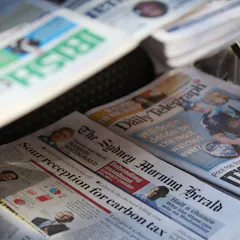
Was shadow minister for communications Michelle Rowland right when she said Australia’s level of media ownership concentration is one of the highest in the world?

Researcher who has studied online news for 20 years says people fall for fake news because they don’t value journalistic sources and consider themselves and their friends as credible news sources.

How can journalists resist a master media manipulator, reach local communities and sift through fake news and propaganda? Media experts explore the challenges of covering the next administration.
Even if fake articles could be curbed and filtered news modified, there’s something built into Facebook’s anatomy that foments partisan rage.
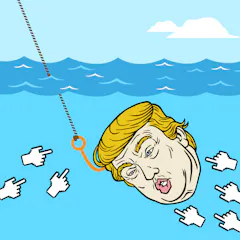
Lies, Twitter bots and sensation reign in the era of for-profit digital media.
A new database that shows the use of gendered words in major Australian newspapers tells us much about whose voices are being heard.
Changes in news media distribution and the impartiality of news sources provide good reason to be concerned. However, digital inequality is not the way to understand or measure it.

Making decisions about what people do and don’t read is the traditional role of an editor, no matter what Facebook claims.
Attempts to model your web experience led to fears of an echo chamber effect, but rather than reinforcing your sense of self, the process might be altering it.

There were high hopes that the SABC would become a true public broadcaster after the end of apartheid when it was used ruthlessly as a propaganda machine. But those hopes have since been dashed.
Social networking, smartphones, ad blockers, oh my. A global survey of 50,000 news consumers assessed the ways we get our news in 2016.
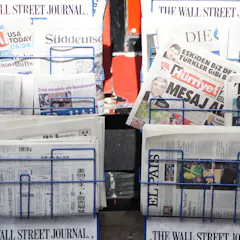
Researching how news has changed from the 17th century to the present makes two scholars sanguine about its future.
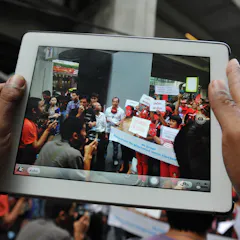
Journalists used to decide what was news. Things are very different now.
The rise of Facebook and Twitter is not necessarily a happy story for democracy.
Top contributors
-

Adjunct Associate Professor of Communication, University of Canberra
-
Director, News & Media Research Centre, University of Canberra
-
Director of Undergraduate Studies, School of Journalism, Media and Cultural Studies, Cardiff University
-
Professor, Digital Media Research Centre, Queensland University of Technology
-
Senior Lecturer in Journalism, Auckland University of Technology
-
Professor in Digital Media, Western Sydney University
-
Professor, Digital Media Research Centre, Queensland University of Technology
-
Postdoctoral Fellow, News & Media Research Centre, University of Canberra
-
Professeure/Professor, Directrice/Director, Centre d'études sur les médias, Université Laval
-
Associate Professor of Visual Communication & Digital Media, RMIT University
-
Associate Professor, Co-Director of the Research Centre for Journalism, Media and Democracy, Auckland University of Technology
-
Co-Director, Centre for Media Transition, University of Technology Sydney
-
Carolyn S. Chambers Professor in Journalism, University of Oregon
-
Senior Lecturer, Faculty of Law, Centre for Media Transition, University of Technology Sydney
-
Assistant Professor of Communication and Political Science, The Ohio State University