

Australian passenger cars on average use 20% more fuel than passenger in the US – which has had efficiency standards in place since 1975.
Articles on Net-zero
Displaying 21 - 40 of 47 articles

The Sunnylands Statement has set a powerful signal for COP28, however, it also highlights that more must be done in Dubai to define what it means to achieve ‘net zero.’
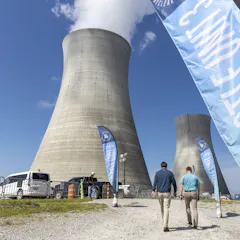
Small modular reactors may hold the key to Canada’s net-zero energy future.

In this podcast, former Labor climate change minister Greg Combet joins The Conversation to discuss net-zero, and Australia's future as a "renewable energy superpower".

E-fuels are materials that reliably and efficiently store energy until we need to use it and can readily be moved from place to place. They could be a major player in Canada’s green transition.
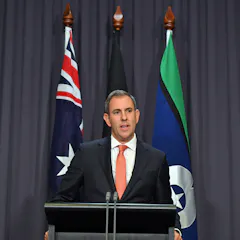
This is probably a good thing for the government, because the transition to renewables isn’t going as well as it needs to

An unprecedented win for climate justice in Montana has the potential to send reverberations around the world, including here in Canada.

The power of storytelling to help inform our decisions is underappreciated and of vital importance in envisioning a better future, and the steps to take to get us there.
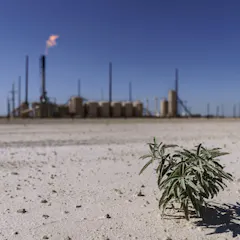
Regulating greenhouse gas emissions is an important part of Canada’s strategy to achieve net-zero emissions by 2050. However, a newly published study illustrates why enforcing regulation is key.
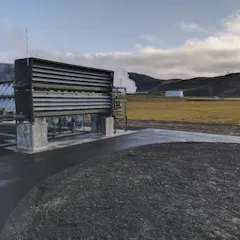
New research suggests it will be next to impossible to limit global warming to safe levels without relying on technologies to directly remove carbon from the air.

Millions of dollars have gone into California’s forest carbon offset program – with little new carbon storage to show for it, a new study suggests.

Grattan Institute projections suggest that by 2060 a mere 600 people will remain employed in major Australian coal mines, down from 40,000 today.
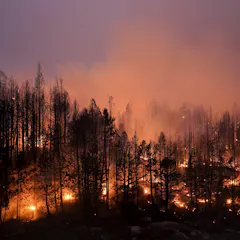
Planting trees and preventing deforestation can store carbon in nature, but the effect may only be temporary. If we also eliminate emissions from fossil fuels, even this temporary effect is important.
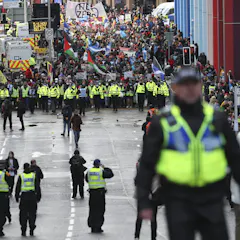
Instead of asking about optimism, it’s time to ask what we as citizens are going to do about climate change.
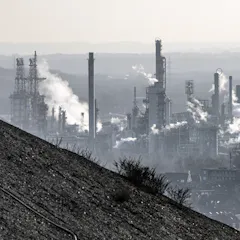
Regulators, banks and policy-makers use stress tests to uncover weak points in how financial institutions operate and identify changes that will help buffer them from harm.

As one of the few countries to have enshrined net-zero into law, Canada has earned praise for its climate leadership. Yet an independent report calls out its continued failures to reduce emissions.
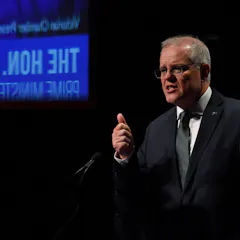
The prime minister road-tested an avalanche of slogans on Wednesday, some of them clearly false.

The clock tracks global emissions and temperature data, and uses the most recent five-year emissions trend to estimate how much time is left until global warming reaches the 1.5 C threshold.
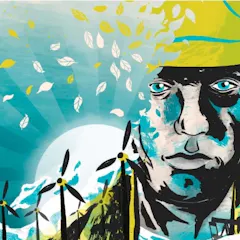
If Canada chooses to keep its oil in the ground, it doesn’t mean turning off the tap overnight. Skilled trades will be key to winding down the industry and building up new lines of work.
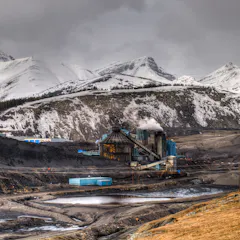
The goal of carbon neutrality changes everything. Canada can no longer limit itself to solutions that partially reduce emissions here and there. The chosen solution must be zero emissions.
Top contributors
-

Professorial Fellow, University of Canberra
-
Professor and Climate Scientist, Department of Geography, Planning and Environment, Concordia University
-
Senior Scientist and Data Analyst, St. Francis Xavier University
-
Professor of Political Science, University of British Columbia
-
climate campaigner
-
Simon Fraser University
-
Directeur de l’Institut de l’énergie Trottier, Polytechnique Montréal et Professeur de physique, Université de Montréal
-
Adjunct professor, Environment and Sustainability, University of Saskatchewan
-
Adjunct Professor of Energy, Murdoch University
-
Systems Lead - Sustainable Economies, Climateworks Centre
-
Professor of Physical Climate Change; Director of the Priestley Centre for Climate Futures, University of Leeds
-
Senior Researcher, Center for International Climate and Environment Research - Oslo
-
Professor, Département de droit, Université du Québec en Outaouais (UQO)
-
Program Director, Energy and Climate Change, Grattan Institute
-
Director of Research and Lecturer - Grantham Institute Climate Change & the Environment, Imperial College London