
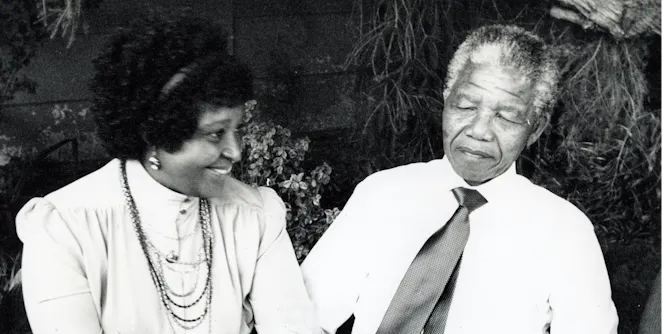
Jonny Steinberg talks about his intimate double biography of the famous South African leaders.
Articles on Nelson Mandela
Displaying 41 - 60 of 233 articles

Neil Agget’s passionate trade unionism proved fateful. It made him a target of a brutally repressive apartheid police state.

Gan Siyabonga is unique in Israel. It highlights a group that was both anti-apartheid and pro-Zionist.
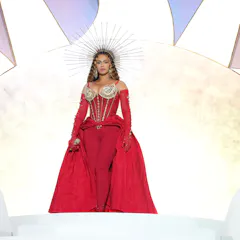
Africa is considered too high risk as a destination for big US pop tours - but Beyoncé could and should break the mould.
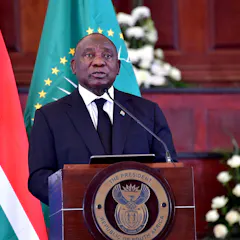
South Africa’s foreign policy under Ramaphosa emphasises economic diplomacy and ‘progressive internationalism’, which promotes global equity and ending the dominance of the global north.
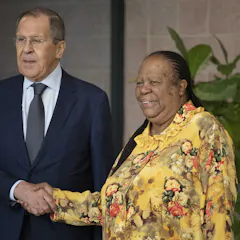
The relationship between Pretoria and Moscow was forged in the apartheid era with the then Soviet Union giving support to banned ANC fighters.

A powerful new book restores the writer and feminist politician to her rightful place in history.

A historian counters the popular view that the 1989 collapse of the Berlin Wall set in motion talks to end apartheid. The process was unstoppable by then.
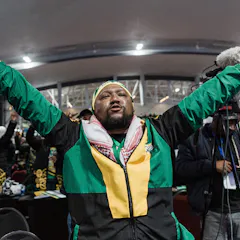
Despite its vagueness, the RET has become central to the contemporary ANC. It is destined to remain a powerful bloc within the party, and a constant constraint on Ramaphosa leadership.
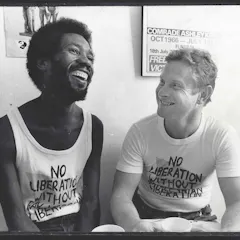
The activist is today the subject of songs, sculptures, an annual lecture and even a new musical.
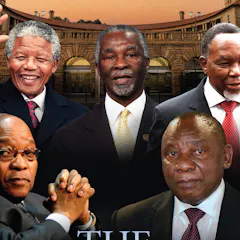
Mandela, the first president of a democratic South Africa, made big strategic choices – not necessarily the right ones, but certainly ones that were befitting of the times.

Struggle songs are relevant even in the post apartheid context because they continue to be an important way in which people deliberate on issues.

People are puzzled when they learn they share the same false memories with others. That’s partly because they assume that what they remember and forget ought to be based only on personal experience.
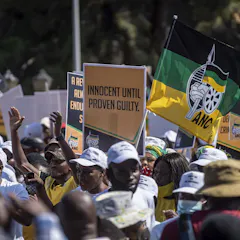
To his credit, former South African president Thabo Mbeki set up anti-corruption institutions that survived his own efforts to erode them.
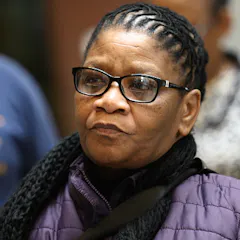
South Africa’s foreign policy is supposed to be guided by the principle of ubuntu (humanness), so a visit to an aggressor is hard to explain.

The pioneering role she played, and the sacrifices she made, extended well beyond the famous 1956 Women’s March.
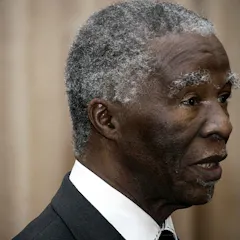
Every South African who cares about the future of the country will agree with former president Mbeki that, to avert disaster, something must be done urgently about its deep socio-economic problems.
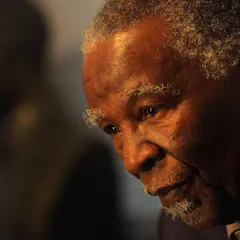
Mbeki has successfully transitioned from being an old horse of South Africa’s governing ANC to a highly venerated and in-demand African elder statesman.
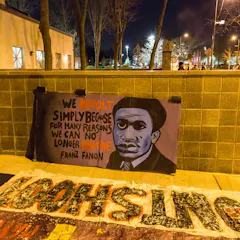
Fanon left a remarkable imprint, his views influencing many in the field of mental illness as well as pan-Africanist and anti-colonialism thinkers.
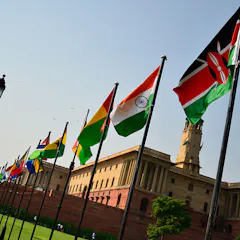
A new book places the responsibility of African growth on its leaders, people, and civil society, while also recognising the role partners like India can play in achieving its goals.
Top contributors
-

Professor of Sociology, University of the Witwatersrand
-
Political Scientist, University of the Western Cape
-
Professor of Public Affairs, Tshwane University of Technology
-
Extraordinary Professor, Department of Political Sciences, University of Pretoria
-
Lecturer, Culture and Media department, Birkbeck, University of London
-
Emeritus Associate Professor in Public Law, UCT. Visiting Adjunct Professor, WITS School of Governance; Director, Africa Programme, University of Cambridge Institute for Sustainability Leadership, University of Cambridge
-
Senior Lecturer in History, University of Dundee
-
Senior Research Fellow, Centre for the Advancement of Scholarship, University of Pretoria., University of Pretoria
-
Professor of Urban Governance, University of the Witwatersrand
-
Honorary Professor of International Relations, University of the Witwatersrand
-
Distinguished Reserach Professor, Southern Centre for Inequality Studies, University of the Witwatersrand
-
Professor of Public Theology in the Department of Beliefs and Practices, Faculty of Theology, at the Vrije Universiteit Amsterdam (Free University of Amsterdam), Vrije Universiteit Amsterdam
-
Research fellow, University of the Free State
-
Emeritus Professor, University of South Africa and Visiting professor and strategic advisor in Faculty of Humanities., University of Johannesburg
-
Senior Research Fellow New South Institute, Emeritus Professor at The Nelson Mandela School of Public Governance, University of Cape Town