

How can the concept of ‘evidence-based practice’ be applied to individualised disability support?
Articles on NDIA
Displaying 21 - 40 of 44 articles

In this podcast, former Paralympian Kurt Fearnley, chair of the National Disability Insurance Authority, which implements the scheme, discusses its issues and the road ahead
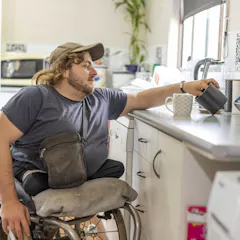
People with disability have a worrying sense of deja vu about the current NDIS cost concerns.
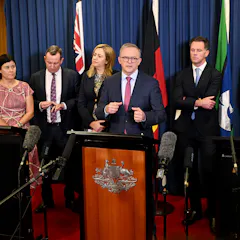
The May 9 budget will include a $2.2 billion suite of measures to seek to ease pressures in primary health care and hospitals, as well as containing initiatives directed towards the crisis in the rental…

Managing expectations before a budget is always tricky. Two committees are making this especially so for Treasurer Jim Chalmers ahead of his second budget.

If people with disability can’t access the NDIS, they’re often left without any services or supports. This needs to change.

Much has been said and written about the projected cost of the NDIS. We wanted to draw on the valuable knowledge of scheme participants and their families.

The budget forecast steep NDIS costs, but also allocated funds to review and support the scheme in sustainable ways that could contribute positively to the economy.

Behind the planning process sits an opaque system of automated decision-making. It rests on a generated plan, called a ‘typical support package’.
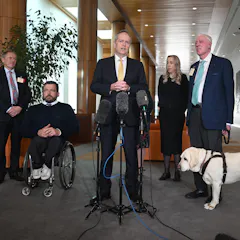
The original vision for the NDIS was that it would give people with disabilities a say in how services are delivered. The appointment of an NDIA chair who is disabled is a positive move.

NDIS participants want to call the shots when it comes to everyday support. And they want to be treated like people, not commodities.

Some NDIS participants worry if they don’t spend their annual funds, they won’t be offered the same supports in their next plan – and it’s harder for some to use what they’ve been allocated.

The NDIS offers support for activities of daily living, but doesn’t count parenting in this category.

Reports of large scale NDIS fraud show it’s time to work with participants and involve them in oversight.

A decade on from the establishment of the NDIS, we spoke to participants. Their feelings about it ranged from frustration to joyous gratitude.
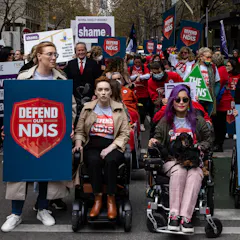
The short-term NDIS priorities for the new government are to rebuild trust and restore it to its original intention.

We interviewed people living with disability before and after they moved into purpose-built housing that fosters independence. The change for them was profound and cost-saving.

Reports of cuts to NDIS packages have been confirmed with an average drop of 4% across participants.

The proposed NDIS independent assessments have been controversial. And data from a pilot doesn’t really tell us whether they’d deliver positive outcomes for Australians with disability.

As a Koori bloke who lives with disability, I believe the proposed framework is disrespectful and discriminatory towards Aboriginal and Torres Strait Islander people.
Top contributors
-

Professor, Public Service Research, UNSW
-
Professor, University of Sydney; RMIT University
-
Adjunct Professor, Summer Disability Research Centre, La Trobe University
-
Senior Research Fellow, La Trobe University
-
Senior Lecturer in Accounting, University of Wollongong
-
Professor, Rehabilitation, Ageing and Independent Living Research Centre and Occupational Therapy Department, School of Primary and Allied Healthcare, Monash University
-
Professorial Fellow, University of Canberra
-
Professor of Acquired Brain Injury, La Trobe University
-
Senior Research Fellow, Crawford School of Public Policy, Australian National University
-
Professor of Health Economics, Centre for Health Economics, Monash University
-
Senior Lecturer in Public Policy and Politics, UNSW
-
Research Fellow, Centre for Health Economics, Monash University
-
Senior Lecturer, Crawford School of Public Policy, Australian National University
-
Disability Program Director, Grattan Institute
-
Professor and Director, Macquarie University Centre for the Health Economy, Macquarie University