
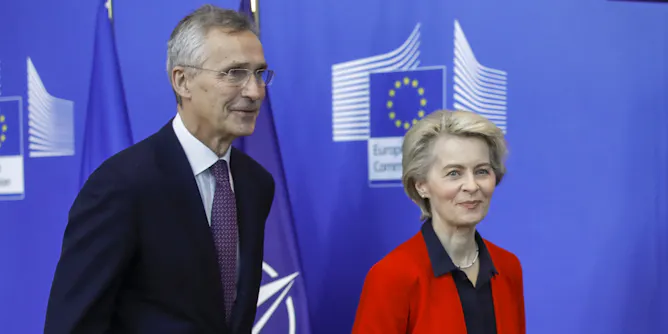
Where do Nato’s responsibilities end and the EU’s begin – especially when it comes to defence?
Articles on NATO
Displaying 281 - 300 of 562 articles
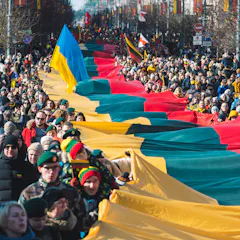
Since 2021, the tiny Baltic nation of Lithuania has come up against three authoritarian regimes: Belarus, China, and Russia. Its capital, Vilnius, is at the forefront of Western support for Kiev.
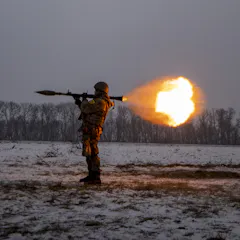
Considered to have one of the most powerful militaries in the world, Russian President Vladimir Putin has little to show for his invasion of Ukraine.
Vladimir Putin is playing a long game by not formally declaring war. It may be to avoid international escalation.

The technology exists to build autonomous weapons. How well they would work and whether they could be adequately controlled are unknown. The Ukraine war has only turned up the pressure.
A year into the war in Ukraine, a historian reflects on how it has affected the geopolitical environment.
A selection of our coverage of the conflict from the past week.
Because of the west’s fear that the war might escalate, it is effectively forcing Ukraine to fight with one hand tied behind its back.
If a new non-alignment is to be achieved in Africa, the foreign military bases of the US, France, and China - and the Russian military presence - must be dismantled.
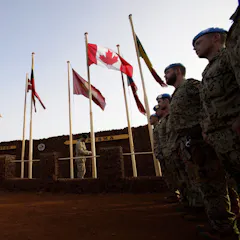
Far from Canada being back as a major player on the world stage, its presence has been diminished under Prime Minister Justin Trudeau.

Russia’s refusal to allow the US to inspect its nuclear arsenal could reignite pressure for the US to develop new nuclear weapons.
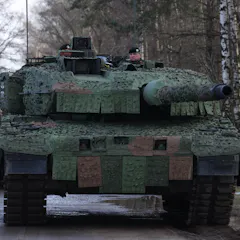
How should the war in Ukraine end? That’s the question dividing two schools of geopolitical thought, but one side seems to be winning the argument.

The US tanks could give Ukraine an advantage in pushing back Russia from its territory – but no amount of money alone is enough to win a war.
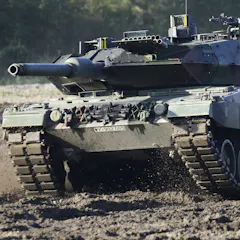
Germany’s dithering over whether to send tanks to Ukraine reflects deepening divisions in NATO over how involved it wants to get in the war. The West needs a clearer strategy.
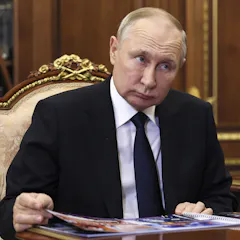
It’s not in Canada’s interest, nor even in Ukraine’s, to risk nuclear Armageddon by pushing for Russian regime change.
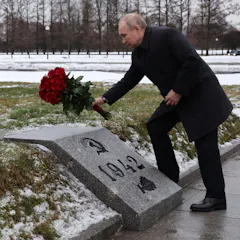
The Kremlin’s weapons of mass distraction are designed to keep Kyiv and allies guessing.
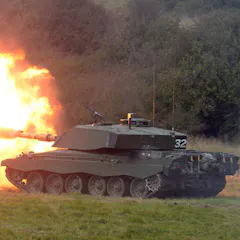
New supplies of advanced weaponry and training will further integrate Ukraine into Nato’s defensive system.
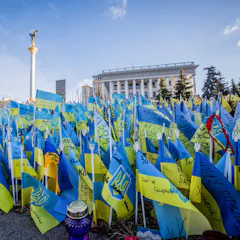
Moscow’s fears that Ukraine was turning towards the west prompted the invasion. This has backfired dramatically.
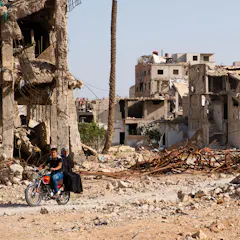
Renewed military activity in Syria is also stoking a round of alliance building for the Ukraine war.
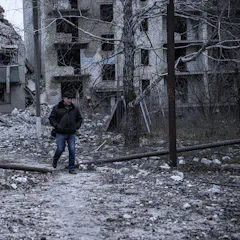
Given their numbers advantage, Russian troops were expected to quickly capture Ukraine. That didn’t happen, and with winter approaching, more Russian military defeats are expected.
Top contributors
-

Professor of International Security, University of Birmingham
-
Professor of International Politics, University of Birmingham
-
Associate Professor of Security and International Relations, Royal Danish Defence College
-
Professor of War and Technology, University of Bath
-
Professor of International Relations and Security, University of Bradford
-
Professor in the Department of Government, University of Essex
-
Associate Professor (Adj), Griffith Asia Institute; and Fellow, Strategic and Defence Studies Centre, Australian National University
-
Lecturer in Strategic Studies and International Relations, University of Reading
-
Professor of History and Political Science, University of Michigan
-
Professor of International Security, Jean Monnet Professor of European Security, National University Odesa Law Academy
-
Professor of International Politics in the Department of Political Science and International Studies, University of Birmingham
-
Senior Lecturer in Military Strategy and Law, University of Portsmouth
-
Professor of Law, University of Waikato
-
Professor of Political Science, Kansas State University
-
Professor of Political Science, Boise State University