

AI is helping communities own and build vital tools for their minority languages – all without external funding.
Articles on Minority languages
Displaying 1 - 20 of 24 articles
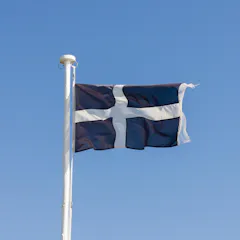
In terms of heritage, visibility and identity, this inclusive introduction to Cornish could be crucial.

Virtual reality technology is providing people with immersive and affecting experiences that could help avert the loss of heritage and languages under threat.

Media accounts on endangered languages abound, but they don’t always explore how to materially help native speakers. Peer-reviewed research shows that such efforts don’t always have positive effects.

Sociolinguists suggest that within the next century, 90% of the world’s languages will disappear, due largely to colonial languages dominating economies, education and governance.

Welsh language heist drama, Dal y Mellt, is being streamed on Netflix with the title, Rough Cut.
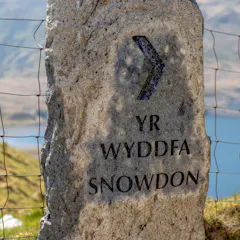
Welsh place names often reflect local legends, fauna and topography. The coining of English names to replace them has sparked an ongoing campaign to protect them.

There are many benefits to being bilingual.
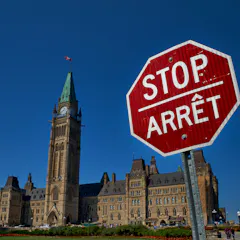
Canada’s population is more diverse than ever, with many different languages represented. Government policy must reflect that diversity and offer meaningful support to minority languages.

The almost complete absence of French at the Public Order Emergency Commission does not come from a subservient reflex on the part of French speakers so much as their fear of being scorned.
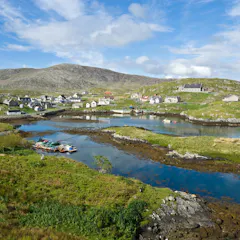
Scottish Gaelic psalm singing is an important part of the language and culture, but this centuries-old tradition is now becoming endangered.
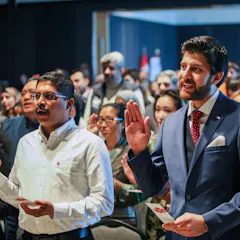
Following the Sept. 20 federal election, an important question must be asked: How is the Canadian electoral process accommodating the country’s increasing linguistic diversity?

Gaelic speakers need opportunities to use their language in a wide variety of social and everyday settings to avoid its presence being eroded.
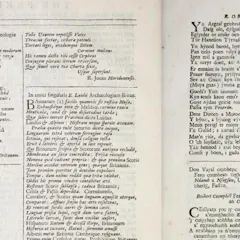
Welshman Edward Lhwyd helped bring togethr Gaelic, Welsh, Cornish and Breton to show how language could connect people on a deeper level.

Canada’s Charter of Rights and Freedoms doesn’t mean much if it can’t be enforced. That’s why the Court Challenges Program is so important — no matter what the Québec premier says.

The platform has provided a forum for the written Scots language to evolve that wasn’t possible before the advent of social media.

Usually, a minor language will adopt words from a dominant language, but NZ English bucks this trend. It has been borrowing a growing number of Māori words, not always to add meaning but to mark identity.
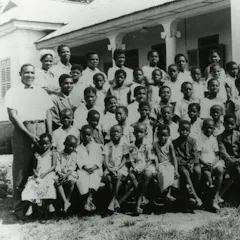
Ghana urgently needs an official Ghanaian Sign Language (GSL) policy. Such a move has the potential to humanize education for people who are Deaf and alleviate the linguistic discrimination they face.

There’s no reason why AI systems can’t speak any language – but is there a reason why it should?

While the Kremlin rages at supposed crackdowns on Russian speakers abroad, it’s rolling out a programme of linguistic homogenisation at home.
Top contributors
-

Associate professor, Faculty of Law, L’Université d’Ottawa/University of Ottawa
-
PhD Candidate, Faculty of Law, L’Université d’Ottawa/University of Ottawa
-
Senior Lecturer in French Linguistics, Queen's University Belfast
-
Postdoc Researcher, Department of Nordic Studies and Linguistics, University of Copenhagen
-
Lecturer Criminology, Sociology and Social Policy, Swansea University
-
Professor of Computing, Singapore Institute of Technology
-
Professor of Human Geography, Aberystwyth University
-
Associate Professor of Law and former Director of the Human Rights Research and Education Centre (2014-2025), L’Université d’Ottawa/University of Ottawa
-
Reader in Multilingualism and Language Contact, University of Westminster
-
Lecturer in Psychology, University of South Wales
-
Senior Lecturer in Economics, University of Sussex Business School, University of Sussex
-
Senior Lecturer in Sociolinguistics, University of Jyväskylä
-
Lecturer, English Language and Linguistics, University of Glasgow
-
Lecturer in Film Studies, Aberystwyth University
-
PhD Student, University of Toronto