

AI systems will accelerate the pace of war.
Articles on Military technology
Displaying 21 - 40 of 54 articles
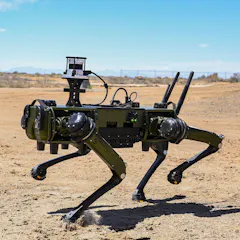
The US military has been experimenting with AI-powered robots that are also equipped with weapons.
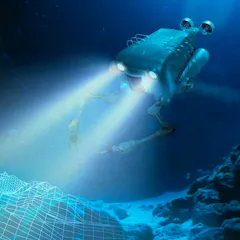
Aerial drones are already transforming warfare. Underwater drones are next.

54 people have died in crashes of the controversial ‘tiltrotor’ V-22 Osprey aircraft – but the military advantage it offers is too great to be discounted.
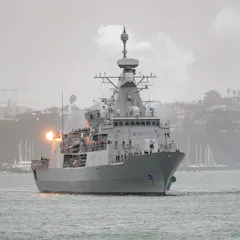
New Zealanders will need to get used to bigger defence budgets – and change their attitudes to the military – if the new national security strategy is to be properly implemented.
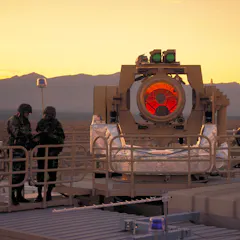
Militaries around the world are scrambling to realise the ‘God mode’ of invulnerability and infinite ammunition promised by laser weapons.
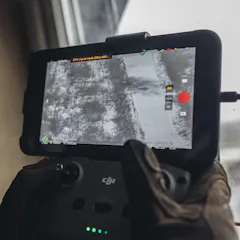
The war in Ukraine has dramatically increased the use of drones in warfare, from repurposed consumer quadcopters to flying bombs to remotely piloted warplanes.
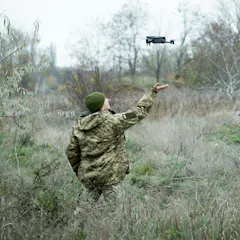
A year ago, the Ukrainian military was largely equipped with Soviet-era weapons. It has since seen an influx of high-tech weapons. But it’s less what than how that’s made a difference.
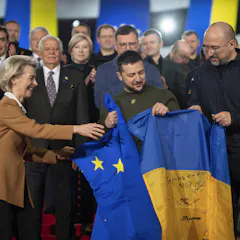
A selection of our coverage of the conflict from the past week.
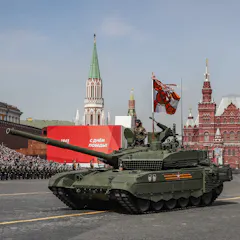
Intelligence reports say Russia’s latest weaponry is not as devastating as it might look.
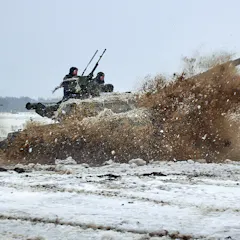
Ukraine can call on a highly motivated citizenry to fight a prolonged insurgency against occupying forces.

Did ancient technological advancements drive social innovation, or vice versa? Studying cause and effect in the ancient world may seem like a fool’s errand, but researchers built a database to do just that.
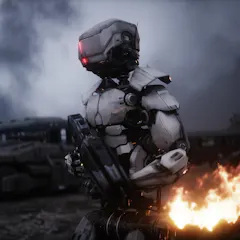
Science fiction doesn’t just introduce us to speculative technologies – the genre explores how they might affect society too.
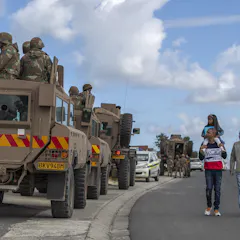
Besides the misalignment of its resources, design, equipment and its additional roles, the military has also been hobbled by misappropriation of funds.
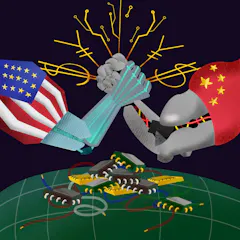
The US defense community is coming to understand that AI will significantly transform, if not completely reinvent, the world’s military power balance.

‘Dual use’ technology – technology used for both peaceful and military purposes – is allowed in Antarctica, according to the treaty.

Science fiction has made us vigilant of ‘killer robots’ in our midst, but they’re far closer than many of us realise.
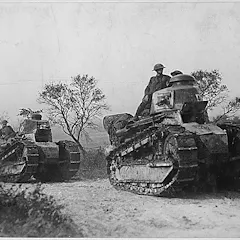
America’s longstanding tradition of isolationism meant that in 1917 U.S. forces needed a lot of support from overseas allies to fight effectively.
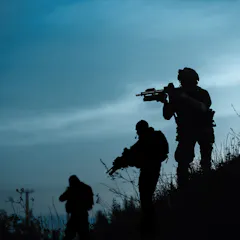
Armed forces around the world are exploring technological and biological enhancements to their soldiers. But this raises a number of serious ethical concerns, before, during and after conflict.

Maybe you think neuroscience has a peaceable history of benign efforts to improve lives and enhance human capacities. But its origins and development tell a different story – with ethical implications.
Top contributors
-

Lecturer, Public Safety, University of Tasmania
-
Teaching Fellow in Strategic and Air Power Studies, University of Portsmouth
-
Professor
-
Lecturer, International Relations, Deakin University
-
PhD in machine ethics, University of Canterbury
-
Senior Lecturer in Military Strategy and Law, University of Portsmouth
-
Visiting Fellow, Strategic Studies, Griffith University
-
Professor of AI, Research Group Leader, UNSW
-
Professor of Applied Ethics and Director, Security and Risk Research, University of Portsmouth
-
Senior Lecturer in Air Power Studies, University of Portsmouth
-
Senior Lecturer in Law, Cybercrime & AI Ethics, University of East London
-
Professor of International Security, University of Birmingham
-
Associate Professor of History, Oregon State University
-
Associate Professor, Deputy Head of School (Research), School of Engineering and Information Technology, UNSW Canberra, UNSW
-
Lecturer in History, Penn State