
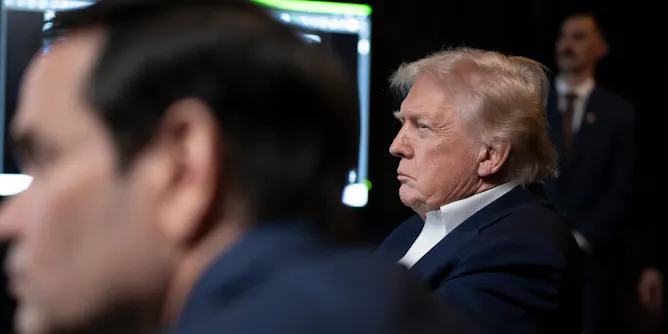
The Trump administration has used US domestic laws to justify capturing Venezuelan President Nicolás Maduro. It’s a clear case of US exceptionalism.
Articles on Military intervention
Displaying 1 - 20 of 32 articles
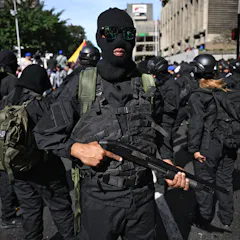
President Donald Trump has said the US will ‘run’ Venezuela until a ‘safe, proper and judicious transition’ can take place. But that still leaves many options.
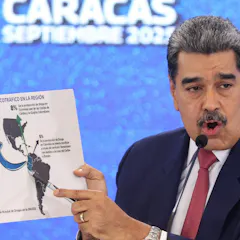
A US military buildup in the Caribbean after weeks of naval strikes is both the latest case of intervention in Latin America and uniquely aggressive in key ways.

There is a long, and often ugly, history of foreign intervention in Haiti.

The SADC mission shows how difficult it is to run a large-scale military intervention, especially if the host government is not taking full ownership and supporting the operation.
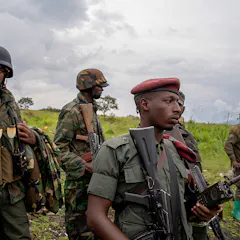
The new intervention force must be sizeable, and have proper air cover as well as transport and air elements. None are guaranteed.
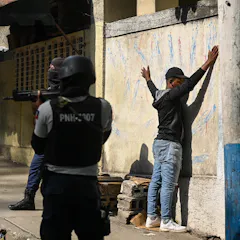
The recent kidnapping of a US nurse has put a focus on the plight of Haitians living with organized crime every day. But few governments are willing to intervene.
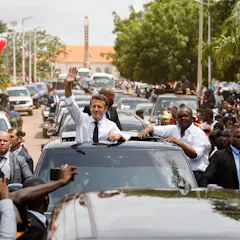
Macron’s recent visits to Africa tell a story in which France is doing penance for its colonial crimes while trying to maintain influence gained through colonialism.
Analysis of US survey data finds that white people who hold racist views are more likely than others to favor military action over diplomacy in China and Iran, and to endorse the global war on terror.
Data show that the US intervenes more in other countries’ affairs than it did in the past. It also currently hires fewer career professionals for ambassadorial or foreign affairs positions.
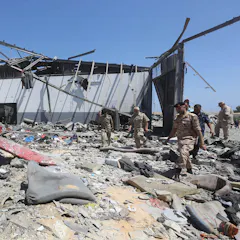
The NATO-led military intervention in Libya has just fuelled more violence.
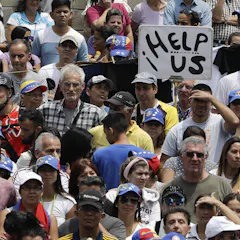
As rival factions vie for control over Venezuela, many of the country’s 31 million people are suffering prolonged power outages, food and water shortages, and limited access to medicine.
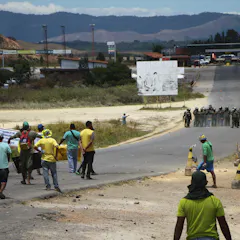
Brazil’s president has threatened military intervention in neighboring Venezuela, called its leader a ‘dictator’ and sent troops to the border. But Brazil’s military is quietly working to avoid war.
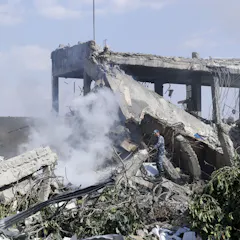
While the Syria strikes were clearly violating international law, using force to uphold the ban on chemical weapons is becoming acceptable in the international community.
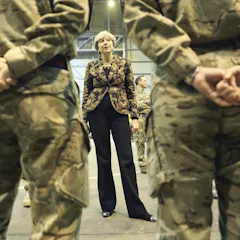
The government is planning to take part in military action in Syria. But does it need MPs to consent beforehand?
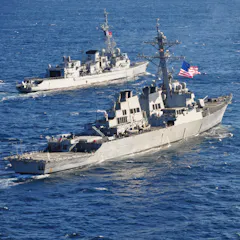
The legal standards for military intervention are complicated and highly specific. It’s not clear an attack on Syria would meet them.
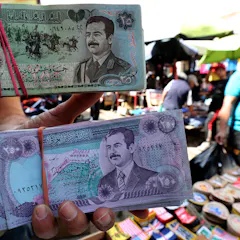
After the US invasion brought their dictator down, Iraqis’ everyday lives were marked by chaos and violence.
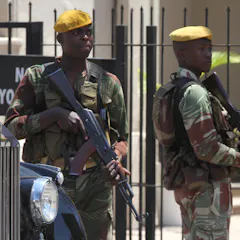
By intervening in Zimbabwe’s politics the military could plunge the country into a prolonged period of uncertainty. Could President Emmerson Mnangagwa be its saviour?
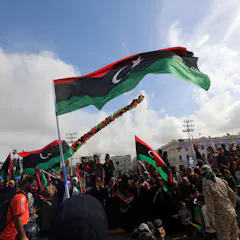
As far as Moscow’s concerned, the stakes in Libya are low and the potential returns very high.
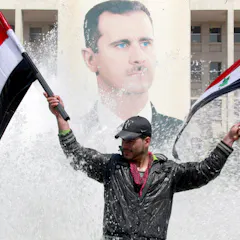
The West’s chosen solution to the Syrian conflict demands action that it’s unwilling to take.
Top contributors
-

Reader in International Relations, University of Westminster
-
Richard von Weizsäcker Fellow na Bosch Academy e Co-fundador, Instituto Igarapé; Princeton University
-
Associate Professor, Security Institute for Governance and Leadership In Africa (SIGLA), Stellenbosch University
-
Associate Professor of International Security, University of Leeds
-
Lecturer in Politics and International Relations, Aston University
-
Professor of International Politics, Lancaster University
-
Professor of War Studies, University of Nottingham
-
Associate Professor, School of Geography, University of Nottingham
-
Lecturer in Strategy and Defence, University of Exeter
-
Professor in Global Security and Mass Atrocity Prevention, University of Leeds, University of Leeds
-
PhD Candidate in Politics and International Studies, Adelaide University
-
Professor of International Relations, University of Leeds
-
Governance specialist in the School of Governance, University of South Africa
-
Senior Professor, People, Organizations and Society, GEM
-
Professor of Applied Ethics and Director, Security and Risk Research, University of Portsmouth