

In his short play from 1830, ‘Mozart and Salieri,’
Russian poet Alexander Pushkin proposed that genius and evil are incompatible. Here’s why this argument is worth revisiting in light of #MeToo.
Articles on #MeToo
Displaying 221 - 240 of 299 articles
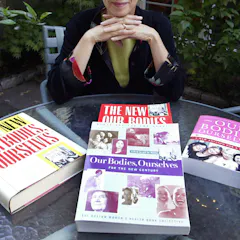
Like their predecessors, today’s feminists can get mired in disagreements over strategies and goals. The celebrated feminist text suggests a more constructive approach.

A revolt by women at the world’s largest sport brand revealed what companies and many others still don’t understand about the nature of workplace harassment.
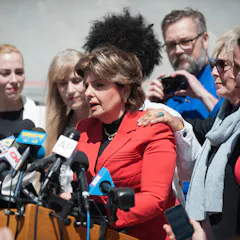
The women who overcame heavy opposition to fight for justice in the Cosby rape case.
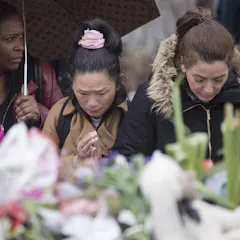
The word “terrorism” has not been used officially to describe the Toronto van attack. But if it’s shown the accused was inspired by misogyny, Canadian law allows for terror to be added to murder charges. Should it?

The geosciences are the least diverse of all STEM fields. Inhospitable climates at academic science conferences may be one of the reasons.
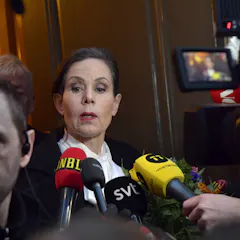
Allegations of sexual harassment have shaken the organisation that awards the Nobel Prize in Literature.

In the much awaited second season of the TV series, Offred is more openly defiant than she was in Margaret Atwood’s novel. Still, the first two episodes remain true to the themes of Atwood’s book.
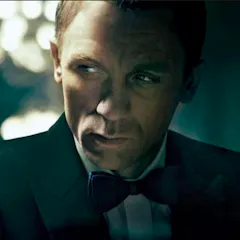
If we’re keeping him, it’s time to reinvent James Bond for the digital post-Weinstein age.
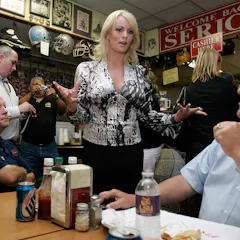
Stephanie Clifford may be a ‘porn star,’ but her success is hardly typical of the vast majority of performers affected by the seismic changes in the industry.

It may seem incredible that some 2,500 years since the Homeric epics, women are still silenced in public. But the myths of Archaic Greece resonate today in disturbing ways.
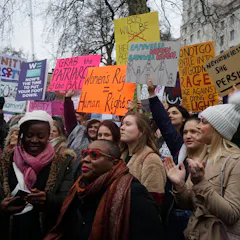
Not all women have the capacity, or freedom, to speak out about their experiences of sexual violence – be it in the workplace or at home.
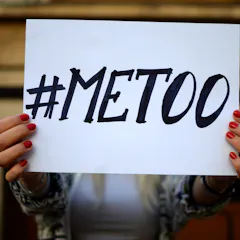
It’s important to differentiate between various forms of sexual violence to punish perpetrators appropriately, and to help those affected to label and describe their experiences.

Another case of alleged sexual harassment in academia highlights the slow progress being made to protect people from abuse.
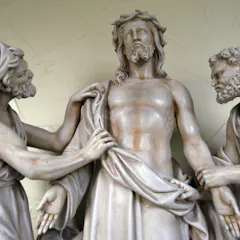
Crucifixion was more than just physical punishment, it was also a devastating emotional and psychological act of violence.

Workplace reactions to #MeToo risk exacerbating the problem. What’s needed are more face-to-face conversations, no matter how awkward they may be.

Today’s workplaces extend beyond physical spaces, so movements like #metoo must trigger change in how we behave online.

Survival sex – the exchange of sexual favours for aid packets – happens in refugee camps everywhere. Victims are not protected by international human rights law.

The #MeToo movement has sparked discussions about appropriate sexual behaviour that teachers can build on in sexual education.
Critics say that #MeToo has turned the legal principle of innocent until proven guilty on its head, but such comments privilege the rights of perpetrators over justice for victims.
Top contributors
-

Professor of Law, University of Oregon
-
Associate Professor, School of Humanities and Languages, UNSW
-
Professorial Fellow, University of Canberra
-
Lecturer in Journalism, City St George's, University of London
-
Assistant Professor, Department of Political Science, Brock University
-
Commissioning Editor, Health + Medicine and Host of Strange Health podcast, The Conversation
-
Senior Lecturer in Criminology, University of Wollongong
-
Associate Teaching Professor, School of Interdisciplinary Arts and Sciences, University of Washington, Bothell
-
Professor of Political Science and Chair of the South African Research Initiative in Gender Politics, Stellenbosch University
-
Professor of Family and Sexual Violence, RMIT University
-
Senior Lecturer, School of Humanities and Social Science, University of Newcastle
-
Associate Professor of Sociology, Clemson University
-
SSHRC Postdoctoral Fellow in English and Cultural Studies, McMaster University
-
Professor of Law, Cardozo Law School, Yeshiva University
-
Professor of English Private Law; Pro-Vice-Chancellor for Education, University of Cambridge