

A national dental care program is welcome news, but raises several ‘billion-dollar’ questions about how the program will work and what will be covered. Here are seven principles to guide decisions.
Articles on Medicare
Displaying 121 - 140 of 303 articles
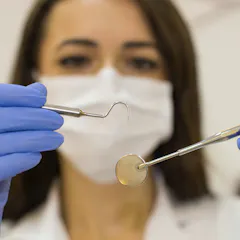
Canada’s health system does not include dental coverage, leaving a large gap in care that’s existed since its beginning. It’s time to ensure access to oral care.

Although Medicare has agreed to pay for Aduhelm, its coverage comes with restrictions.

Such an expansive scheme is very expensive. It has been costed at A$77.6 billion over the next decade, funded with new taxes on big corporations and billionaires.

Changes in the latest federal budget will mostly affect people who need multiple medicines throughout the year, perhaps for chronic disease. But there are other ways to reduce drug costs.

People who need the most health care – the poor and the chronically ill – miss out on care the most. But there are ways to reduce this inequity.

Most states have taken advantage of the opportunity to expand access to Medicaid since 2014 through the Affordable Care Act. That’s helping reduce the number of uninsured people.

Canada’s lack of pharmacare harms health in our communities, strains our health-care system and encumbers our economy. Parliament is out of excuses for not implementing a national drug plan.

Congress is inching closer to passing as much as $4.5 trillion in new infrastructure and social spending, which would be an attractive target for fraudsters.

New payment models may mean more of the people who need these treatments can get them.

The AMA has shaped some important decisions in the pandemic, but it’s not always clear how its power is used.
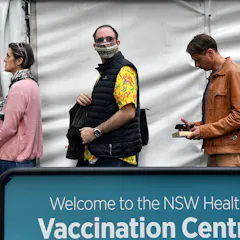
Australians will be able to show specific online proof if they have had two doses of a COVID jab.

With more than 850 changes to Medicare on the cards, the system needs time to adjust. Hasty implementation may mean patients face higher gap fees.

Nursing homes have struggled through COVID-19 deaths and lockdowns. Giving nurses more quality time with patients can help them win back trust.

People who stayed active or became more active in adulthood spent between 10% and 22% less on healthcare.

The president is calling for sweeping changes in health care policy. Tens of millions of Americans could be affected.

Wound care might be costly, but it’s cost-effective, saving health dollars in the long run. The issue is, who pays?

Rural health care will have to transform to survive.

Widely adopted in the US when pandemic precautions kept people home, telehealth faces a challenge as insurance coverage changes, right when its popularity had surged.

It can be hard to work out what calculations to make when deciding on private health. So we asked a health economist to break it down.
Top contributors
-

Honorary Enterprise Professor, School of Population and Global Health, and Department of General Practice and Primary Care, The University of Melbourne
-
Professorial Fellow, University of Canberra
-
Jim Gillespie is a Friend of The Conversation.
Associate Professor in Health Policy, Leeder Centre for Health Policy, Economics and Data & Sydney School of Public Health, University of Sydney
-
Program Director, Health and Aged Care, Grattan Institute
-
Adjunct Associate Professor, Menzies Centre for Health Policy and Economics, University of Sydney
-
Associate Professor of Public Health, The Ohio State University
-
Professor of Health Economics, The University of Melbourne
-
Health economist, University of Sydney
-
Professor of Health Economics and Director, Centre for Health Economics Research and Evaluation, University of Technology Sydney
-
Professor of Gerontology, UMass Boston
-
Reader in Health Economics, Centre for Health Economics, University of York
-
Professor of Health Economics and Director, Centre for Health Economics, Monash Business School, Monash University
-
Professor, Public Service Research, UNSW
-
Senior Research Fellow and Lecturer of Gerontology, UMass Boston
-
Associate Professor in Health Economics, Curtin University