

The explosive viral spread of the grainy but dramatic footage shows the limits of mainstream media ethics.
Articles on Media regulation
Displaying 1 - 20 of 45 articles

In such a highly concentrated media market as Australia, the partisanship of big news brands has become the norm.
Using state resources to sue media for spreading fake news is not the answer, and sets a bad precedent.
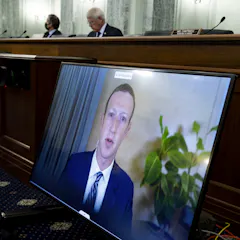
A terse piece of legislation from 1996 has been credited with creating the internet as we know it – and blamed for the flood of misinformation and other ills that have come with it.
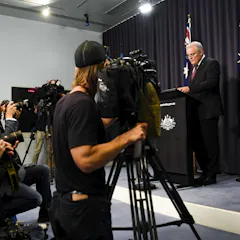
Media regulation in Australia has always been weak, fragmented and lacking in public visibility. It has also never had a government bold enough to do anything about it.

Deplatformed groups can all too easily flock to alternative platforms to coordinate.

There were some ominous sounds coming out of the election campaign about what the Conservatives might have planned for the UK’s public broadcaster.
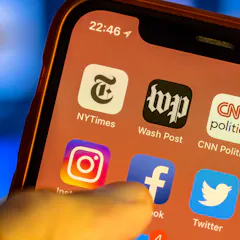
Media companies are mad as hell at tech giants and don’t want to take it anymore. But what choice do they have?
The Conversation64.5 MB (download)
No wonder that, according to a new international survey, media companies are increasingly unhappy with their lot. In this episode we hear from the survey's author, Robert Whitehead.

‘Phatic sharing’ reclaims Twitter as a truly social network, rather than simply as a source of breaking news or a place for public debate between politicians, journalists, and activists.

While they may talk about ‘free speech,’ businesses make decisions about their content based on a very different set of principles.
The problem is not the journalism itself, but the editorial processes that increasingly rely on non-journalistic procedures and practices.
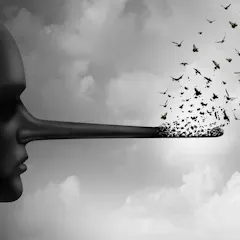
Emmanuel Macron is the latest to talk about reining in fake news. It can’t be done.
Squabbling and poor regulation achieve nothing.
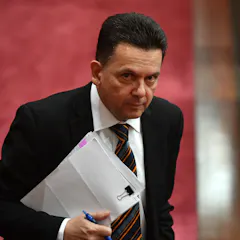
Politics podcast: Nick Xenophon on media reform
Nick Xenophon's position on contentious legislation – currently media reform – is crucial for the government.
The most pertinent issue is how much power the federal government is prepared to allow any single media proprietor to have.
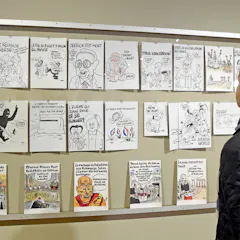
A more nuanced approach is needed to what upsets or disturbs people.
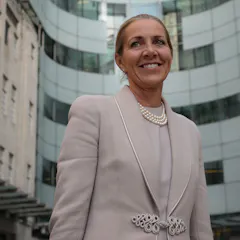
The ousting of BBC chair, Rona Fairhead, is a worrying sign of a government power grab over the public broadcaster.

The Turnbull government is engaged in a media reform process that is all about the sideshow – not forward-thinking policy with the public interest in mind.
A new affiliation between Network Ten and WIN may have been forced, but it opens the way for possible future mergers.

The rise on live streaming of television programs is breaking down the protected geographical barriers on what you can watch, and the regional broadcasters are not happy.
Top contributors
-

Professor of Communication, Charles Sturt University, and Honorary Associate, Discipline of Media and Communications, University of Sydney, University of Sydney
-
Associate Professor in Convergent and Online Media, University of Sydney
-
Professor of Journalism, Media and Communication, Queensland University of Technology
-
Senior Research Fellow, Centre for Advancing Journalism, The University of Melbourne
-
Associate Professor of Screen Media, Victoria University
-
Researcher at Microsoft Research, Cambridge UK. Previously, The University of Queensland
-
Professor of Journalism and Social Media, Griffith Centre for Social and Cultural Research, Griffith University, Griffith University
-
Associate Professor Journalism & Media, Deakin University
-
Lecturer in Law, Edinburgh Napier University
-
Associate Professor, School of Law, University of Canberra
-
Programme Leader for MA International Journalism, University of Salford
-
Senior Lecturer in Media and Communications, University of Surrey
-
Professor of Journalism, University of Sussex
-
Vice Chancellor's Fellow at Victoria University and Adjunct Professor of Economics, Victoria University
-
Professor of Media Studies, Queensland University of Technology