
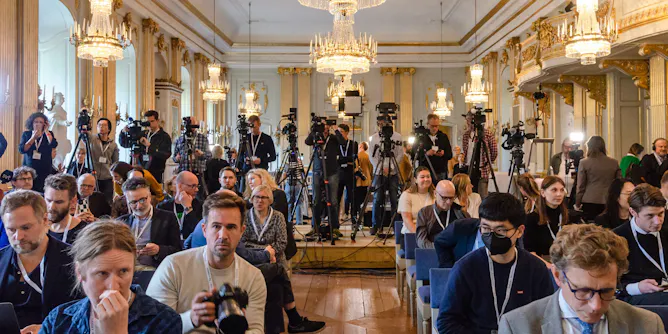
As readers turn their eyes to nominees for both Canada’s Giller Prize and the Nobel Prize in literature, how does Canadian literary recognition translate into international standing?
Articles on Margaret Atwood
Displaying 1 - 20 of 30 articles
The Testaments has to resolve the plot dilemmas established in The Handmaid’s Tale.
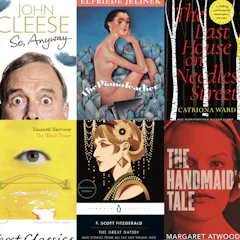
Literature is full of dysfunctional families. We asked critics to nominate their least favourite mothers.
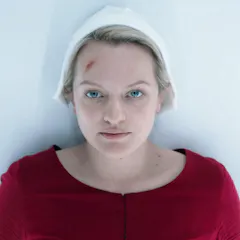
Hulu’s adaptation misrepresents the themes of Atwood’s biting feminist dystopia.
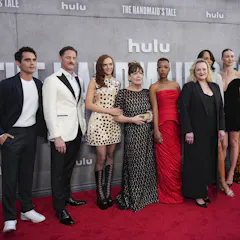
‘The Handmaid’s Tale’ book and TV series reflect currents of political turmoil, particularly rising authoritarianism in the United States and the erosion of women’s rights.
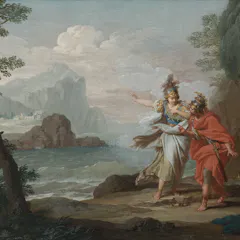
These books and poems give the women of the Odyssey a say and other new perspectives on the classic tale.
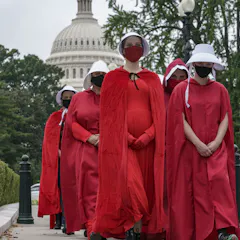
Before and after abortion was decriminalized in Canada in 1969, fiction has explored how abortion intersects with cultural imaginings about women’s bodies and humanity’s future.
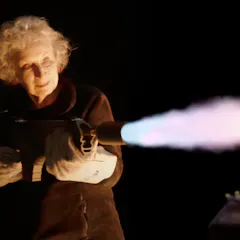
Margaret Atwood’s new fireproof copy of The Handmaid’s Tale protests book banning – and burning. The Venn diagram of those who burn books and those who read them is typically two separate circles.
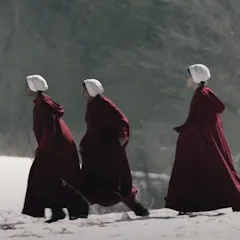
Myths of Canada’s moral superiority in contrast to the United States can be a barrier to acknowledging and addressing racism in Canada.
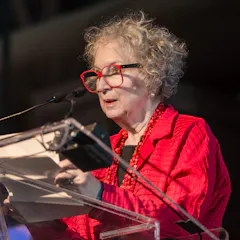
Canada has produced Nobel Prize winners in the arts and sciences. With several recent awards, Canadian talent still has the potential for future achievements.

In Oscar Wilde’s novel, ‘The Picture of Dorian Gray,’ a painted portrait of the protagonist becomes ugly and twisted with age, much like Trump is represented as reflecting all of America’s evils.
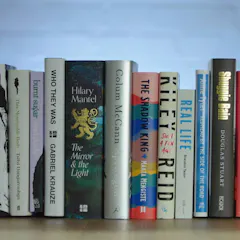
The Booker Prize has always struggled with inclusivity.

‘Dystopia’ is a term that’s gained popularity during the coronavirus pandemic. But it’s not a synonym for ‘a bad time,’ and a government’s poor handling of a crisis does not constitute dystopia.
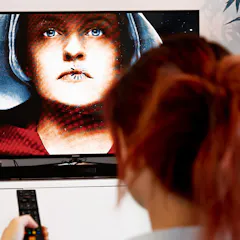
In the television show ‘The Handmaid’s Tale,’ Charles Darwin’s ‘Descent of Man’ makes a cameo — and its appearance makes a comment on how Gilead functions.
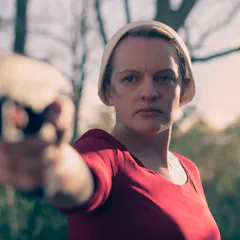
We all like to think of ourselves as heroes. But according to science, the vast majority of us wouldn’t be prepared to rebel against totalitarian rulers.
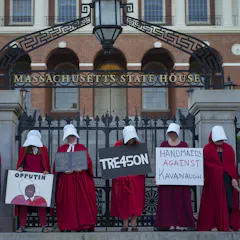
The sequel to Margaret Atwood’s dystopian classic provides an apt moment to consider attacks on women’s rights across the world.

The author has returned to Gilead, 35 years after the original novel was published.
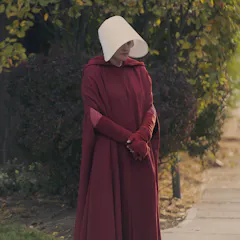
Margaret Atwood’s handmaid has become a symbol of the subjugation of women. Anchorites were the medieval equivalent: women who were literally bricked up to keep them chaste.

Can new language change the way the public and politicians perceive the hazards of the Earth’s changing climate?
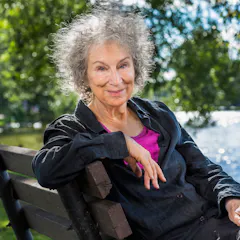
Margaret Atwood’s classic novel imagined a society where women had almost no power. Hundreds of people gathered in Sydney yesterday to hear Atwood speak about dystopias – fictional and otherwise.
Top contributors
-

PhD, Department of English Language and Literatures, University of British Columbia
-
Senior Lecturer in Literature and Cultural Studies, University of East London
-
Senior Lecturer, Literature and Screen Studies, Federation University Australia
-
Reader in English, De Montfort University
-
Associate Professor, Gender, Sexuality, and Women’s Studies and English and Writing Studies, Western University
-
Lecturer in Human Geography, University of Exeter
-
Lecturer in American Studies, University of Hull
-
Associate Professor; Rosemary Woolf Fellow, Tutor in Old and Middle English, Somerville College, University of Oxford
-
Lecturer in Comparative Literature, Queen Mary University of London
-
Associate Professor of Political Science & International Relations, Valparaiso University
-
Senior Lecturer, University of Newcastle
-
Professor in the School of Cultural Studies and Humanities and Director of the Centre for Culture and the Arts., Leeds Beckett University
-
Professor & Director, Global Ecological Change & Sustainability Laboratory, University of Guelph
-
Associate Professor of History, The University of Queensland
-
Professor of English Literature, University of Dundee