

Can the government mandate vaccines? Canadians have rights to make decisions about vaccination, but these rights are not absolute, and do not mean those decisions will have no consequences.
Articles on Mandatory vaccination
Displaying 1 - 20 of 21 articles

Controversial Liberal senator says he will withhold vote over COVID issues

With the government decision on alert levels due today, it’s clear a more radical approach to vaccination is needed — including restrictions for eligible but unvaccinated people.
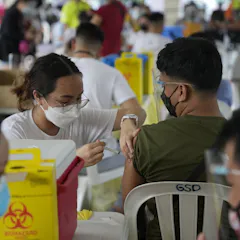
There are other pathways to increasing vaccination rates, while also fostering trust in the health-care system. These have proved difficult in the US, but are available in Australia.

If a vaccination certificate becomes mandatory for work and other activities, does that mean vaccination is effectively mandatory too?

The case for campus vaccine mandates is compelling, and this conclusion is bolstered by recommendations from medical doctors.

Many universities overseas have already made vaccination a condition of being allowed on campus. There are precedents for this policy, which is based on strong public health and economic grounds.

Ethically, vaccine mandates are justifiable on multiple levels, based on the common good and a public health ethics framework.

The UK government is set to make it compulsory for all staff working in care homes in England to get the COVID vaccine. Two ethicists discuss the pros and cons.

Full population-level protection against COVID-19 will require most adolescents and children to be vaccinated. There are ethical arguments for encouraging vaccination uptake through vaccine mandates.

A 1904 revolt against mandatory smallpox inoculation taught Brazilian health officials a deadly lesson on how to vaccinate a skeptical public. Today President Bolsonaro seems to ignore that history.

There are arguments both for and against making vaccination compulsory.

Governments can’t force people to be vaccinated, but they can penalise those who don’t.

As measles cases surge, people blame parents who refuse to vaccinate their children. A sociologist who has studied public health says anti-vaxxers may not be so different from the rest of us.

Because of the potential drawbacks of forcing people to vaccinate their children, we should take other measures to increase vaccination rates.

President Trump wants to slash global health funding at a time when more investment is needed, not less. This spending can protect Americans – as well as foreigners – from deadly diseases.

When a high proportion of a community is immune it becomes hard for diseases to spread from person to person – a phenomenon known as herd immunity.
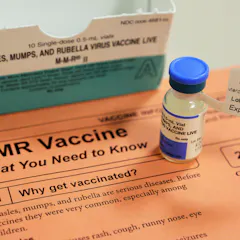
The anti-vaccination movement is not the cause of falling vaccination rates. It is a symptom of the public’s growing distrust in the government and the medical profession.

The plan to withhold payments of child-care and family tax benefits for unvaccinated children could cost non-compliant parents up to A$15,000 a year. But is it ethical to punish parents?

Immunisation in Australia isn’t compulsory – and doesn’t need to be controversial. Most Australians recognise the incredible benefits that vaccination provides to prevent serious disease.
Top contributors
-

Professor, Medical Ethics, Bond University
-
Head of School of Population Health and Professor, Infectious Diseases Dynamics and Interventions, UNSW
-
Director, Scowcroft Institute of International Affairs and Executive Professor, Texas A&M University
-
Adjunct Professor, Macquarie University
-
Professor and Director of Doherty Epidemiology, The University of Melbourne
-
Associate Dean For Global One Health, College of Veterinary Medicine & Biomedical Sciences; and Director, Pandemic and Biosecurity Policy Program, Scowcroft Institute for International Affairs, Bush School of Government and Public Service, Texas A&M University
-
Assistant Professor, Texas A&M University
-
Professor, Discipline of Paediatrics and Child Health, University of Sydney
-
Assistant Professor of Sociology, Psychology, and Public Health, University of Nottingham
-
Senior Lecturer in Philosophy, University of Waikato
-
NIHR Academic Clinical Fellow in Public Health Medicine, UCL
-
Professorial Fellow, University of Canberra
-
Distinguished Professor in the Department of Medicine and Director, The Centre for Medical Ethics & Law, Stellenbosch University
-
Research Assistant, Faculty of Law, Western University
-
Associate Professor, Computing & Information Systems; Director, Melbourne Data Analytics Platform, The University of Melbourne