
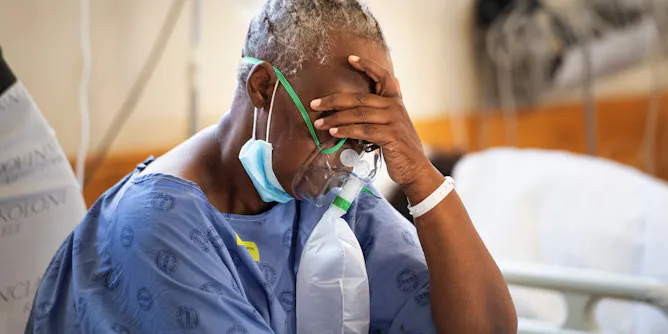
Long COVID isn’t purely a biological problem; it’s a human one, shaped by both physiology and lived experience.
Articles on Long COVID research
Displaying all articles
A new study finds the risks of developing long COVID declined over the first two years of the pandemic. But unvaccinated adults were more than twice as likely to get long COVID compared with those who were vaccinated.

But there was little effect on fatigue.

While there are still far more questions than answers about long COVID-19, researchers are beginning to get a clearer picture of the health and economic consequences of the condition.
We know very little about how long COVID affects the body, and why some people develop ongoing symptoms and others don’t. But emerging evidence offers clues.

A new study finds that misdirected immune responses can persist for months in those who are suffering from long COVID-19.
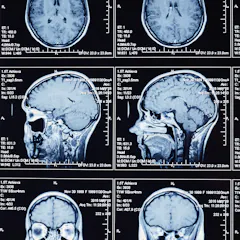
Brain changes including shrinkage, weakened connections and poorer performance on thinking and memory tests could explain ‘brain fog’ after COVID – even after ‘mild’ cases.
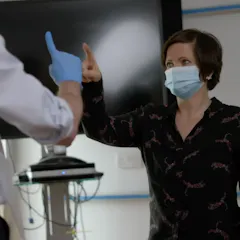
While the Scottish government is funding long COVID research projects, specific funding has yet to be provided to develop assessment and rehabilitation services for the condition.
Top contributors
-

Senior Research Fellow, The Perron Institute for Neurological and Translational Science, and Faculty of Health Sciences, Curtin University
-
Clinical Epidemiologist, Washington University in St. Louis
-
Professor of Dietetics, University of Plymouth
-
Clinical Professor Allied Health Professions, Robert Gordon University
-
Lead Research Scientist of Global Health Metrics, University of Washington
-
Honorary Associate Professor, Nursing, Midwifery and Allied Health Professionals Research Unit, University of Stirling
-
Instructor of Human Immunology, Emory University
-
Professor of Health Metric Sciences, University of Washington
-
Professor of Applied Health Research, University of Stirling
-
Associate Professor, Unit Head and also serves as Head of the Division of Allergology and Clinical Immunology at Groote Schuur Hospital, University of Cape Town