

New research looks at how people perceived the most prominent restrictions and how these perceptions impacted their health.
Articles on Lockdown rules
Displaying 1 - 20 of 23 articles
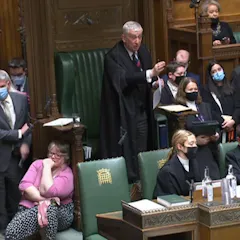
Why will calling someone a liar get you thrown out of the UK parliamentary debates, but using defamatory language might not?
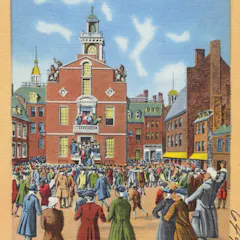
In the summer of 1776, Boston offered smallpox inoculation to everyone and required those who declined to leave town or stay in their homes.

For one year, 600 people tracked 20 types of coronavirus restriction in 186 countries – here’s what they found out.

In Nigeria, the unmarried, the unemployed, the less educated and those from the northern parts of the country were most susceptible to psychological challenges associated with COVID-19 lockdown.

English and Welsh governments are consulting the public about whether they should revoke temporary abortion rules.

Law enforcement is a blunt tool to achieve social conformity with COVID-safe rule. It’s time to start thinking about other strategies to promote new norms.

Research suggests the coronavirus pandemic’s greatest impact is due to people changing their behaviour voluntarily. So we may be overestimating the costs of government restrictions.

As Melburnians are encouraged to wear masks in public, shops and cafes around Australia can already make mask-wearing a condition of entry.

The best option is for infected people to be admitted to hospitals or other suitable health facilities. This will help prevent transmission within families.

The Victorian spike serves as a reminder that we are still very much in a pandemic. We need to come to terms with the fact we will need follow the basics of infection control for some time.

A survey conducted in April revealed more than half the participants flouted social distancing rules to go shopping for non-essential items, and visit friends or family.

Official government guidelines say businesses should not collect customer details in a book or notepad where other customers can see them. But many establishments haven’t heeded the advice.

Two new cases of COVID-19 have been announced in New Zealand, after 23 consecutive days with no new cases. But that doesn’t mean that the country’s elimination efforts have failed.

Antisocial behaviour has skyrocketed but that could be due to people breaching lockdown rules.

Dreams that are more vivid, more frequent and more striking… Lockdown seems to trouble our nights as well as our days, and there’s reason to believe that’s not just a figment of our imagination.

By tracing the location of millions of devices, Google has mapped the pandemic response at a scale never seen before.

Do people at the top think there is one rule for them and one rule for others? Bluntly, yes, they do.
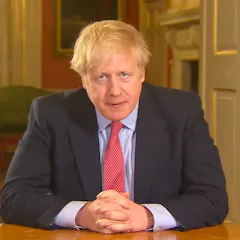
For the government a Sunday announcement has several advantages, many of them to do with the news agenda.

It’s possible to evaluate countries’ readiness to lift their lockdowns, based on how well they managed the first wave of the pandemic, and how ready they are for a digital economy.
Top contributors
-

Dean Academic and Professor, Griffith University
-
Associate Professor, Epidemiology and Environmental Health, University of Canterbury
-
Emeritus Professor in Law and Criminal Justice, Adelaide University
-
Associate professor, University of Canterbury
-
Professor of Social Work, Dean (Sustainable Development Goals Performance), Griffith University
-
Adjunct professor, Te Herenga Waka — Victoria University of Wellington
-
Professor of Public Health, University of Otago
-
Dean of Global Business, The Fletcher School, Tufts University
-
Associate Professor in Criminal Law and Criminal Justice, Durham University
-
Professor of Politics, Te Kunenga ki Pūrehuroa – Massey University
-
Senior Lecturer in Law, Adelaide University
-
Professor, Co-Lead of the Disrupting Violence Beacon and Chief Investigator ARC Centre of Excellence for the Elimination of Violence Against Women, Griffith University
-
Associate Tutor in Politics, Edge Hill University
-
Lecturer in Information and Communication Technologies, CQUniversity Australia
-
Professor in Applied Mathematics, University of Canterbury