

Unemployment and corruption drive anger and despair, yet the flame of hope flickers alive.
Articles on Living standards
Displaying 1 - 20 of 27 articles

Some estimates say up to one in seven people are living in poverty, but Australia doesn’t properly measure it. Here’s how we could.
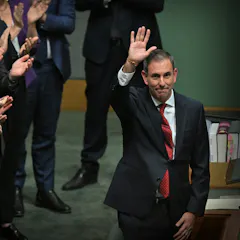
Living standards have fallen for the fifth successive quarter, the longest decline in 40 years.

Canada’s ongoing economic malaise and decline in living standards are rooted in a constellation of domestic and global challenges.

Unemployment and related payments for working-age people were given a welcome boost in last year’s budget. But they remain well below pensions, and far from adequate.

In psychology it’s known as the gender-equality paradox.

Tackling the cost of living crisis and raising UK living standards requires a joined-up response, but the autumn statement didn’t give much indication of that.
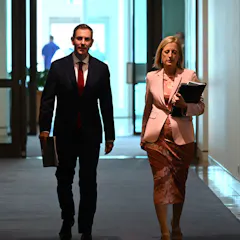
Life hasn’t been this unaffordable in Australia in 40 years. There’s still time to redesign tax cuts starting next July – which would give $9,000 to high earners but just $1,000 to ordinary earners.
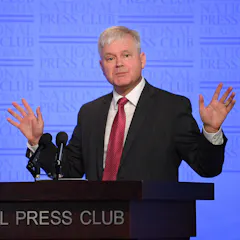
In this podcast, independent economist Chris Richardson joins The Conversation to discuss a rate rise, "sticky" inflation, the fall in the standard of living, and a bleak prospect as we go into 2024.

Energy inequality will have to reduce substantially by 2050 to maintain a safe climate and decent living standards for all.

Central banks are raising interest rates to tame inflation, but 2023 will increasingly turn a technical decision into a political challenge.

Lower real living standards now represent the price of being in paid work.
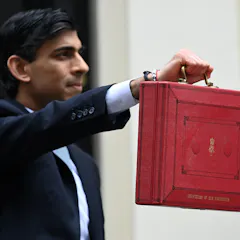
There’s a long list of pre-announcements, but it remains to be seen how much turns out to be smoke and mirrors.

Australia’s living standards have remained remarkably stable compared to those of other countries. Losing access to China wouldn’t change that much.

A new Grattan Institute study finds that for the first time in a long time, young Australians are no better off than those who came before, and are likely to do worse.

Populism is on the rise in countries where inequality has been fairly stable over time, as well as countries where inequality has grown.

The Conversation’s distinguished panel predicts unusually weak growth, dismal spending, no improvement in either unemployment or wage growth, and an increased chance of recession.

But the ALP has not put a figure on the amount it believes would be appropriate.

The Conversation has assembled a forecasting team of 19 academic economists from 12 universities across six states. Together, they assign a 25% probability to a recession within two years.

The standards we use today were designed to help avoid the overcrowded housing that blighted cities in the past. But severe overcrowding is again on the rise, so what needs to be done?
Top contributors
-

Visiting Fellow, Crawford School of Public Policy, Australian National University
-
Professorial Fellow, University of Canberra
-
Honorary Research Fellow, City Political Economy Research Centre, City St George's, University of London
-
Professor, Crawford School of Public Policy, Australian National University
-
Emeritus Professor of Economics, and Emeritus Fellow of Merton College, University of Oxford
-
Senior Lecturer, School of Built Environment, University of Technology Sydney
-
Professor of Social Policy, Loughborough University
-
Professor of Social Epidemiology and Director of the Centre of Research Excellence in Healthy Housing at the Melbourne School of Population and Global Health, The University of Melbourne
-
Professor Emeritus of Economics, SOAS, University of London
-
Emeritus Professor of Economics (Griffith University) and Teaching Associate (University of Queensland), Griffith University
-
Professor of Psychosocial Studies, UCL
-
Senior lecturer, Canberra School of Government, University of Canberra
-
Professor, School of Economics, The University of Queensland
-
Director of the Conrad School of Entrepreneurship and Business, University of Waterloo
-
Deputy Director of Public Policy, UCL