
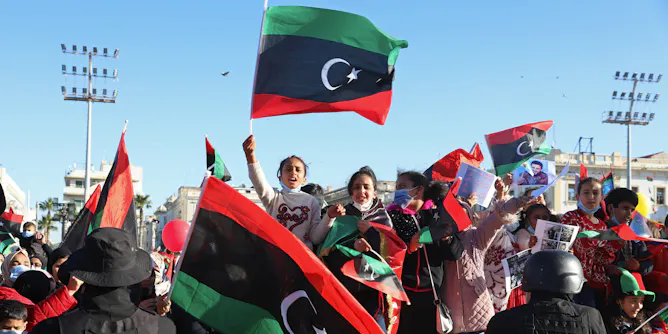
Ten years after the Arab Spring, hope has given way to turmoil as Libyans have watched duelling governments and armed groups fight over the country’s oil riches. Is a new chance for peace afoot?
Articles on Libya
Displaying 61 - 80 of 206 articles
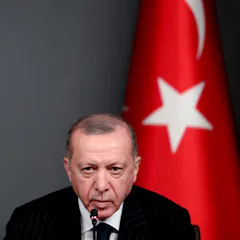
Erdoğan’s aggressive foreign policy is one of the reasons Turkey’s economy is suffering a downturn.
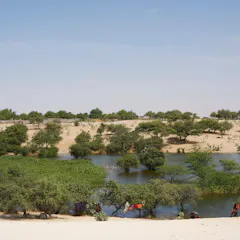
The shrinking of Lake Chad contributes to instability in the countries which sit around its expanse.
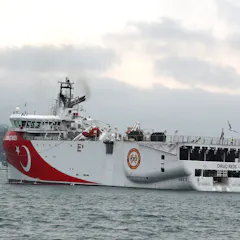
With France on manoeuvres and Germany struggling to play peacemaker, Turkish-Greek relations are close to 1974 lows.
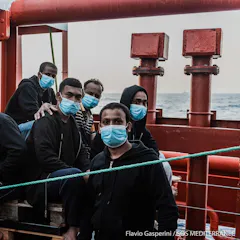
Official statistics record 377 deaths in the Mediterranean in 2020, but the true figure is likely to be much higher.
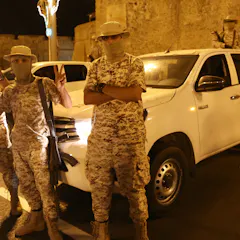
The peace process has unfolded in fits and starts, and thus far there doesn’t seem to be a light at the end of the tunnel.
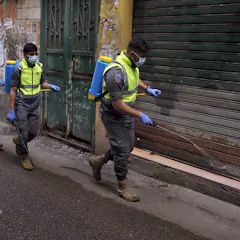
Criminal gangs, insurgents and terrorist groups seek to protect the people in the areas they govern, when a central government’s power is weak or nonexistent.

The Chinese model of peace differs fundamentally from that pursued by western nations.
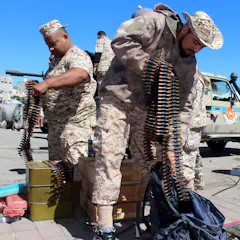
With dozens of international players meddling in Libya, nobody wants to see their side weakened.
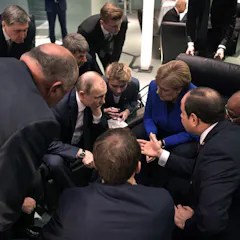
Can the key external enablers of Libya’s conflict also be peacemakers?
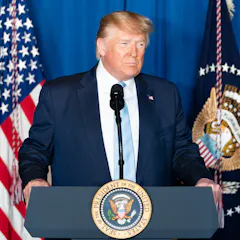
Both President Trump and President Obama used military force without informing Congress, or getting its approval. But the differences reveal more than the similarities.
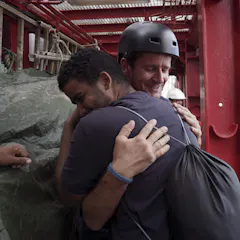
In Libya, a lack of authority has allowed the ongoing kidnapping and extortion of migrants. What can European countries do to prevent the murder and torture of migrants?
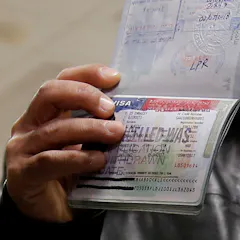
Was the ban a Muslim ban – or was that just an anti-Trump narrative? A political scientist combs through the data for answers.
A critic of Obama’s two terms explains how the 44th president’s personality and his politics of ‘least resistance’ prevented him from rising to the moment.
Crony capitalism became firmly embedded under Ben Ali, benefiting his family and close friends.
Given that some states are being asked to increase their presence in border and remote areas, free trade and free movement of goods and people could become a real cause for concern.
The NATO-led military intervention in Libya has just fuelled more violence.
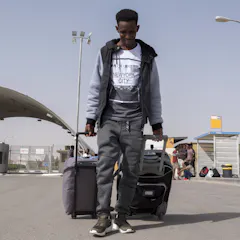
The flow of unaccompanied minors from Eritrea has become the subject of international concern.
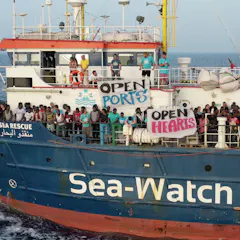
Carola Rackete, captain of an NGO search and rescue ship, was arrested by Italian authorities when landing in Italy. She isn’t the first to be criminalised for trying to save people at sea.
Maps that divide the world into ‘no-go’ and ‘safe’ zones has created a new politics of danger.
Top contributors
-

Lecturer in Middle East Studies, Deakin University
-
Professor of Peace Studies, University of Bradford
-
Professor in the Department of Government, University of Essex
-
Associate Professor, Colgate University
-
Chargée de recherche CNRS, Géographe et politiste spécialiste des frontières et migrations, Centre national de la recherche scientifique (CNRS)
-
Research Fellow, Coventry University
-
Lecturer and Senior Research Fellow at the South African Research Chair in International Law (SARCIL), University of Johannesburg
-
Lecturer in Politics and International Relations, University of Aberdeen
-
Professor of International Migration and Forced Displacement and Director of the Institute for Research into International Migration and Superdiversity, University of Birmingham
-
Leader of Research Group “The Production of Knowledge on Migration” at the Institute for Migration Research and Intercultural Studies, Osnabrück University, Osnabrück University
-
Director of the Centre for Global Development and Professor in the School of Education, University of Aberdeen
-
Senior Research Fellow, Horn of Africa and Southern Africa, Institute of Commonwealth Studies, School of Advanced Study, University of London
-
Professor of International Politics, Clinton Institute, University College Dublin
-
Professor of Politics, University of Birmingham
-
Professor of British Politics, University of Leeds