
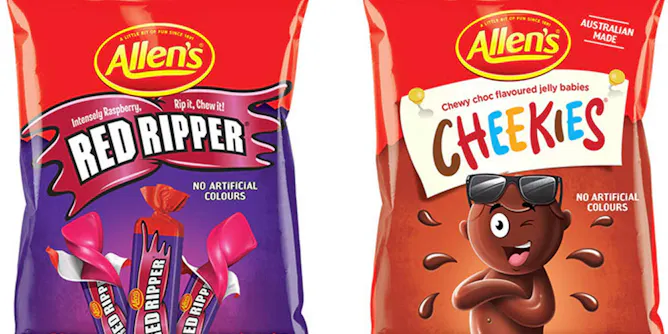
From next year, lolly shelves will stock Red Rippers and Cheekies. It’s not a flawless renaming — but it is important.
Articles on Language
Displaying 341 - 360 of 853 articles

Remember the ‘peanut gallery’ from the ‘Howdy Doody’ show? That term, like many others we commonly use, has surprisingly controversial origins.

Populists leaders are supposed to use simpler language than their opponents. A comprehensive study shows this is not always the case.

Using machine learning to study over 85 million YouTube comments, a research team has, for the first time, identified linguistic differences among cable news viewers.

Differentiating between bad jargon and good jargon.

Some have equated the German word with small-minded cruelty. But the word’s meaning is more nuanced.

Why the benefits of bilingualism aren’t consistent.

Updates to the Oxford English Dictionary provide a fascinating glimpse into how language changes in the face of rapid and unprecedented social and economic disruption.

A quantitative analysis of potential nominees to the Supreme Court reveals that conservatives could get a real lock on the nation’s highest court.

Elon Musk’s OpenAI has developed software that can produce human-like writing. Don’t mistake that for true intelligence.

Ko tā te kāwanatanga Kōrea whakahou i te ahurea o te marea, kei te whakaatu kāore te reo e aukati ana i tō angitu i te pae matawhānui o te ao.

Teaching deaf babies sign language improves the success of cochlear implants – and also safeguards their long-term physical and mental health.

Research on how children learn show we develop language skills by recycling other parts of our minds.
Grammar is a set of tools to make meaning rather than a set of rules to follow. The difference is in how we teach it.

With 52% of 15-year-olds now saying they read only if they have to, experts say a new way of teaching literacy is overdue.

Interpreters are a critical part of health care for people with limited English. The shift to remote interpreting during COVID-19 could ensure more Australians who need these services can access them.

From 16th-century playwrights to ‘The Good Place,’ wordplay has found clever ways to get around uttering profane and blasphemous language.
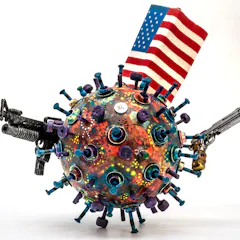
The use of military metaphors in some contexts can be helpful. In medicine? Not so much.

New research shows how a lack of basic information caused by the language barrier can lead to the spread of fake news in refugee communites.

We want to be whitelisted and not blacklisted for jobs. White lies make stretching the truth okay, but you don’t want to receive a black mark on your record.
Top contributors
-

Senior Lecturer in Linguistics, Monash University
-
Professor of Linguistics, Monash University
-
Roger J. Kreuz is a Friend of The Conversation.
Associate Dean and Feinstone Interdisciplinary Research Professor, University of Memphis
-
Honorary Associate Professor in Writing, The University of Queensland
-
Professor of Linguistics, University of York
-
Professor of English Language and Literature, University of Oxford
-
Associate Professor in Linguistics, Macquarie University
-
Professor of African Language Studies, University of the Western Cape
-
Senior Research Fellow of Linguistics, University of Colorado Boulder; Griffith University; University of New England
-
Associate Professor of Linguistics and Director of Language Lab, The University of Western Australia
-
Associate professor, Universidad Nebrija; UCL
-
Associate Professor in Language, Literacy and TESL, University of Canberra
-
Postdoctoral research fellow (Forensic Linguistics/ Language and Law), University of the Western Cape
-
Professor of Linguistics and English, Florida International University
-
Director, Office of Scholarly Communication and Publishing, University of Pittsburgh