
The pandemic has changed economic thinking on how low the unemployment rate can go. We now need a new full employment target.
Articles on labour force survey
Displaying all articles

Australia has its lowest unemployment rates in almost 50 years – helped along by high numbers of employees off work sick.

The drop in Australia’s unemployment rate in August is not a sign of improving labour market conditions. Instead it shows many gave up on looking for a job.
The last time Australia’s unemployment rate was below 5% was June 2011.
Joblessness has become a fixture of the South African economy. Understanding the patterns of who is out of work and for how long is key to designing policies to address the problem.

The best case scenario sees a short-term recovery to the depths of the 1980s and 1990s recessions.
Women have suffered much more than men. Many who were employed in March have withdrawn from the labour force and so aren’t counted as unemployed.
The ABS is providing near real-time data like never before. It’s labour force survey remains the most authorative way of tracking the labour market.

More of us are in work than ever before, but we are more cautious than before, less likely to ask for more pay or change jobs.
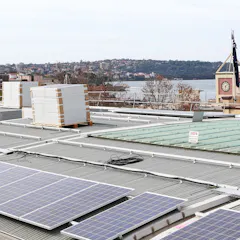
Estimates released by the Australian Bureau of Statistics suggest that the number of direct full-time equivalent jobs in renewable energy activities has continued to fall from its 2011-12 peak.
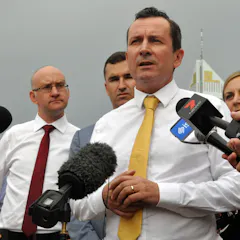
In the lead up to the state election, Western Australian Labor leader Mark McGowan said WA has the highest unemployment rate in Australia. Is that correct?

The ABS’ labour force survey is more than 50 years old. We need a new way of measuring employment for a new modes of work.
Top contributors
-

Professor of Economics, The University of Melbourne
-
Associate professor, The University of Melbourne
-
Associate Professor, Bankwest Curtin Economics Centre, Curtin University
-
Professor, Crawford School of Public Policy, Australian National University
-
Professor, Economics, University of the Western Cape
-
Visiting Fellow, College of Business & Economics, Australian National University
-
Professor of Economics, University of Canberra
-
Professor, Department of Economics, The University of Melbourne
-
Professorial Fellow and Co-Director, HILDA Survey, Melbourne Institute of Applied Economic and Social Research, The University of Melbourne
-
Senior lecturer, University of the Western Cape
-
Scientia Professor of Economics, UNSW
-
Professor of Economics, Australian National University
-
Adjunct professor, Flinders University