
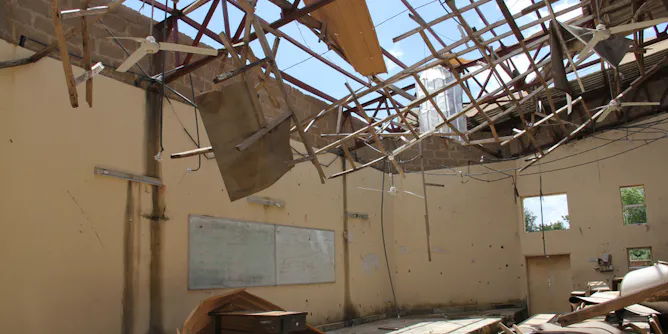
International scholarships make up most of the foreign aid to higher education in conflict-affected countries.
Articles on knowledge production
Displaying all articles

The cycle of opportunity and prestige for historically advantaged institutions leaves historically Black institutions on the back foot.
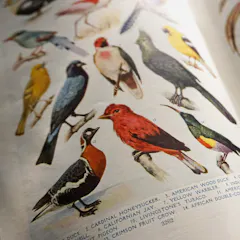
Mid-century encyclopaedias claimed the power to decide what counted as knowledge and what didn’t – much as online publishing platforms and social media companies do today.

ChatGPT is a sophisticated AI program that generates text from vast databases. But it doesn’t understand the information it produces, which also can’t be verified through scientific means.

Ecology is dominated by colonial notions and knowledge that doesn’t consider local knowledge. This needs to change.
Pandemic restrictions have shuttered research projects - some, for good. The consequences for science, not to mention policy and decision making, must be addressed

Africa’s urban challenges are increasingly well known and documented. But the amount of data produced on urban Africa still pales in comparison to other parts of the world.
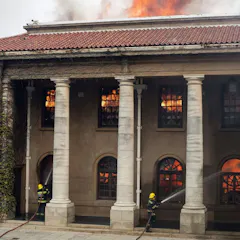
Losing archives has significant implications in a country like South Africa with a fraught and contested history because voices from the past, which may carry alternative histories, are lost.
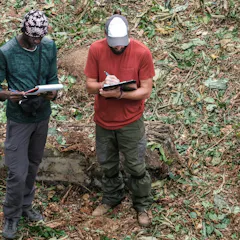
Research assistants and associates from the global South are sometimes kept invisible, despite their crucial role in the research cycle.

His life’s work was asserting the humanity and history of the Bantu people, while proposing that the soul was able to bring knowledge of the past and of the future into the present.
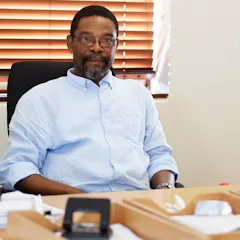
With humility that belied his global stature, his laugh came easily, and his generous storytelling taught lessons that his students grew into for many years after he shared them.

Decolonising mathematical sciences is possible. The answer lies in rediscovering existing African examples of teaching maths and including them in the Western body of knowledge.

Open access publishing still profits publishers, with little added value for researchers.
Top contributors
-

Associate professor, Université catholique de Louvain (UCLouvain)
-
Postdoctoral fellow, Université de Montréal
-
Associate Professor, Graduate School of Business, University of Cape Town
-
Doctoral Fellow, University of the Witwatersrand
-
Lecturer in Marketing, Lancaster University
-
Associate Professor, University of Cape Town
-
Professor in Development Studies, Université catholique de Louvain (UCLouvain)
-
University of the Witwatersrand
-
Senior Lecturer in Political and Development Geography, University of Sheffield
-
Senior Research Fellow, University of Johannesburg
-
Senior Research Fellow in Climate Change Risks, University of Cape Town
-
PhD candidate, University of Cape Town
-
Associate Professor, North Carolina State University
-
Assistant professor, Université de Mons
-
Senior Manager, Bertha Centre for Social Innovation and Entrepreneurship, University of Cape Town