
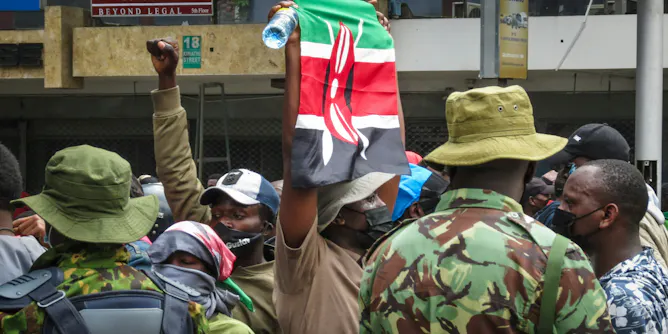
State spending has remained high despite public demands for greater fiscal discipline.
Articles on Kenya protests
Displaying all articles

Would lowering the voting age to 16 enhance young people’s participation in the political processes that affect their lives?

Kenyan regimes have long adopted brutal policing approaches to sustain themselves in power.
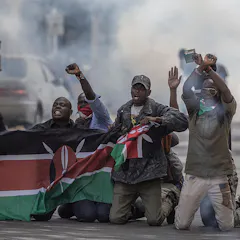
Police brutality thrives in environments where wrongdoing goes unpunished.

Youth unemployment and corruption have helped drive youth dissatisfaction on the continent, with major implications for governments and democratic strength.
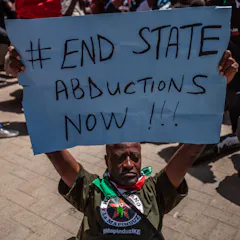
Citizens considered a threat to the government’s survival have become targets for enforced disappearances.

In the Absence is a meditative exhibition of large-scale installations created by the Wajukuu Art Project.
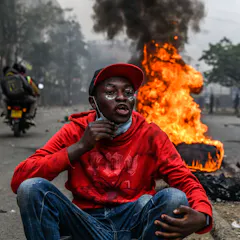
A 2010 constitution offered Kenyans economic and social rights that have faded in the face of mounting national debt.

Popular discontent with the government’s performance doesn’t provide sufficient legal grounds to remove a Kenyan president.
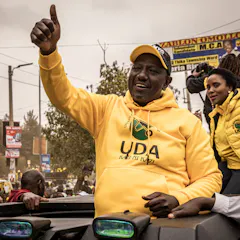
The state’s efforts to quell public protests show some worrying similarities to the past.
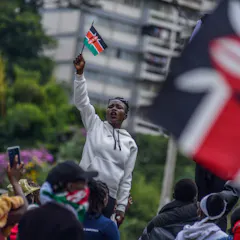
Significant transitions in Kenya have occurred through the voices of the masses rather than formal political structures.

Kenya is not an isolated case. Twenty-one countries are receiving IMF support.
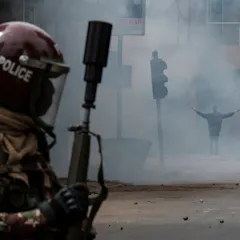
Reforms have failed to transform an authoritarian police force into a democratic one.
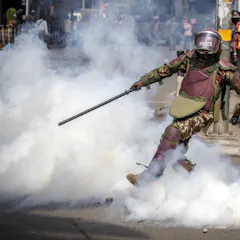
Kenya’s political regimes have used the police to repress opposition and sustain themselves in power.
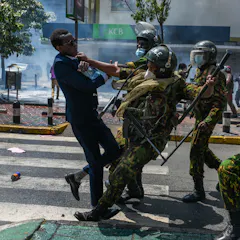
Kenya’s police have a long history of using excessive force.
Top contributors
-

Lecturer in criminology, Edinburgh Napier University
-
Professor, Weber State University
-
Principal Policy Analyst, Governance Department, The Kenya Institute for Public Policy Research and Analysis (KIPPRA)
-
Associate Professor, Utrecht University
-
Professor of Peace and Conflict Research, Uppsala University
-
Professor in Inclusive Education, Hague University of Applied Sciences
-
Professor/Senior Research Fellow, Centre for Advancement of Scholarship, University of Pretoria
-
Professor of Comparative Politics, University of Warwick
-
Assistant Professor of Anthropology, American University
-
Professor, School of International Service, American University
-
Lecturer, Kenyatta University
-
Professor of Political Science, Coastal Carolina University
-
Lecturer in Security, Development and Leadership in Africa, King's College London
-
Doctoral Researcher, University of Helsinki
-
Lecturer, Distance Learning Institute, University of Lagos