
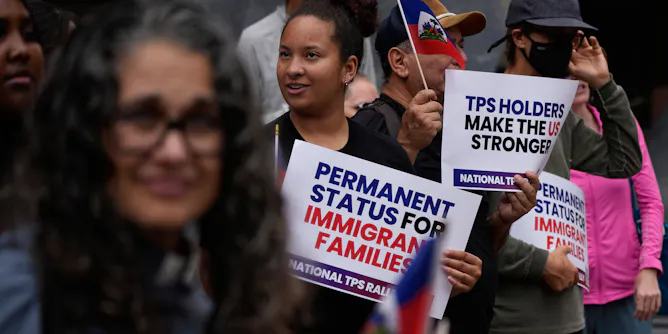
Congress never built a path from temporary status to permanent residence, leaving many people facing deportation with little recourse.
Articles on Justice Elena Kagan
Displaying all articles
The high court’s ruling effectively endorses the unitary executive theory, greatly expanding the power of the president.

The conservative majority at the US Supreme Court has issued a ruling in a gerrymandering case that one liberal justice called the ‘now-completed demolition of the Voting Rights Act.’
Recent rulings indicate that the high court is leaning toward expanding the type of presidential power that is more emblematic of dictatorship than democracy.
The Supreme Court’s decision has major implications for the criminal prosecution of Trump and for the country and how it is governed.

Justices are weighing the arguments in two cases that have the potential of changing the way social media platforms operate.
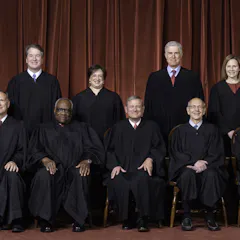
In a 6-3 conservative majority, the more important divisions may be among the six Republican-appointed justices.

Alabama will be allowed to keep a congressional map that critics say disadvantages Black voters. That does not bode well for 2022 midterms, argues a law scholar.
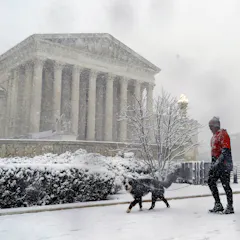
The court appears split over the future of vaccination mandates, with conservative justices skeptical of the Biden administration’s authority to enforce requirements.
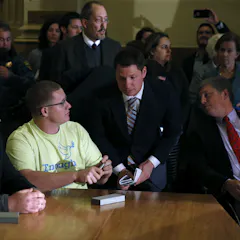
Electors may not vote their consciences, which means the Electoral College will continue to operate how most Americans think it does.
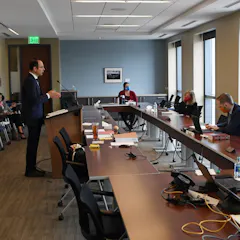
The Supreme Court’s pandemic-related move to oral argument over the telephone has improved those arguments and allowed the public to engage with these discussions of the meaning of our Constitution.
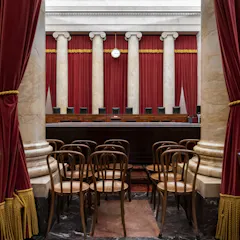
The Supreme Court has issued what’s likely to be its final word on partisan gerrymandering, saying it’s a political issue, not a legal one. That means reform lies in the hands of voters.
Top contributors
-

Professor of Political Science, Concordia University
-
Professor of American Civics, University of Tennessee
-
Associate Professor of Political Science, College of Charleston
-
Professor of Law, University of Richmond
-
Professor of Law, Arizona State University
-
John Rennie Short is a Friend of The Conversation.
Professor Emeritus of Public Policy, University of Maryland, Baltimore County
-
Assistant professor of politics and policy, Simmons University
-
Professor of Political Science, USC Dornsife College of Letters, Arts and Sciences
-
Clinical Associate Professor of Law, Co-Director, USC Immigration Clinic, University of Southern California
-
Professor of Law, American University