
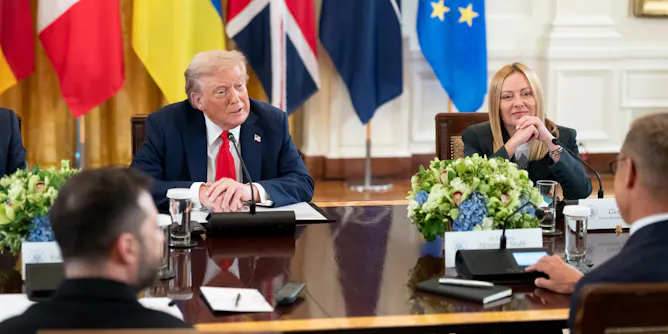
Italy’s stance on the Middle East conflict reveals a tendency to tread cautiously to protect both its own and shared European interests while distancing itself from the United States.
Articles on Judicial reform
Displaying all articles
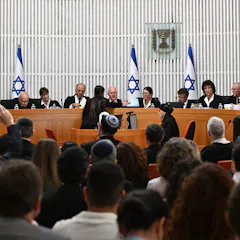
Israel’s highest court has struck down the government’s law limiting its power. Three scholars look at why the law was proposed, what it aimed to do and who supported – and opposed – it.

What will happen in Israel after more than half a year of pro-democracy demonstrations against the conservative government’s judicial overhaul?
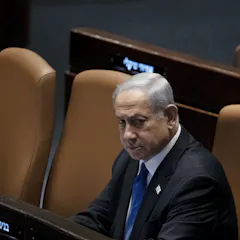
Benjamin Netanyahu has helped reshape Israel and the broader world in profound ways. And there’s a dark side to those changes.

Recent in-depth interviews with Palestinians living in East Jerusalem show that while they are following the Israeli protests, they feel an overall sense of resignation about their futures.
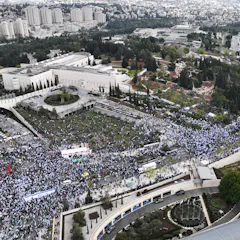
Three scholars examine the implications of the crisis roiling Israel as hundreds of thousands of people protest across country.
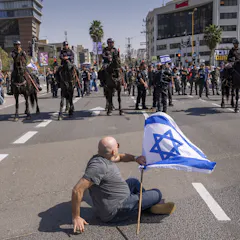
Netanyahu’s new government is exacerbating deep divisions in Israeli society and threatening the very essence of Israel as a liberal democracy.

Unlike in most countries, US Supreme Court justices enjoy life tenure. Some legal scholars believe that centuries-old custom, meant to protect judicial independence, no longer serves the public.

Many states have found ways to remove partisan politics from their court systems.

The appointment of judges has hitherto been an obscure and oftentimes clandestine affair. This has produced incompetent judges and led to claims that the judiciary is beholden to the executive.

The US Supreme Court is often less insulated from partisan politics than many Americans assume.

While our judges may prefer their anonymity, the process for choosing who sits on the highest court must be more transparent. Our system is beginning to look outdated.
Top contributors
-

Rosalinde and Arthur Gilbert Foundation Professor of Israel Studies, University of California, Los Angeles
-
Associate Professor of International Relations, American University School of International Service
-
Professor of Middle Eastern Studies and Public Policy and Director of the Interdisciplinary Studies Institute, UMass Amherst
-
Professor of Legal Studies and Political Science, UMass Amherst
-
Head of Department, Public and Environmental Law Department, University of Limpopo
-
Associate Professor of Law, Adelaide University
-
Associate Professor of Political Science, Westminster College
-
Visiting Teaching Assistant Professor of Political Science, University of Denver
-
Professor of Political Science, Northern Illinois University
-
PhD Student/Researcher, University of Michigan
-
Full professor at the University of Côte d’Azur, director of the master’s program in “France-Italy Relations”. Associate fellow at the Foundation for Strategic Research (FRS, Paris) and adjunct professor at LUISS University (Rome), Université Côte d’Azur
-
Scholar-in-residence at the Center for Israeli Studies, American University
-
Affiliate Researcher, The Australian Centre for Jewish Civilisation, Monash University