
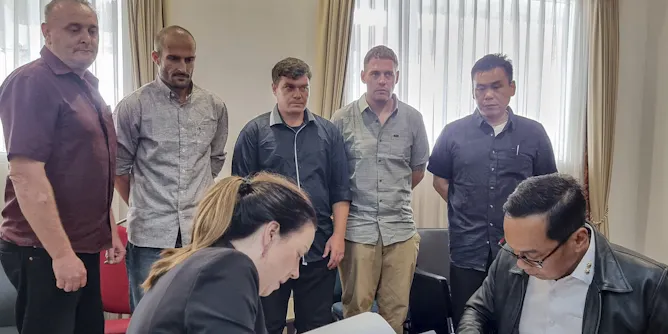
Unlike former President Joko Widodo, who launched a war on drugs, Prabowo Subianto wants to be seen as an outward-looking leader eager to improve Indonesia’s international standing.
Articles on Jokowi
Displaying 1 - 20 of 69 articles
Prabowo’s party wants to revert to Indonesia’s original authoritarian Constitution. Are there enough guardrails in place to protect the country’s fledgling democracy?
For Jokowi, maintaining popular support and satisfying public demands was the essence of democracy. He was not interested in institutions that place limits on governmental power.
A confrontation between Indonesia’s top court and lawmakers over the outgoing president’s efforts to promote his son and ally in elections has triggered a ‘democratic emergency’.
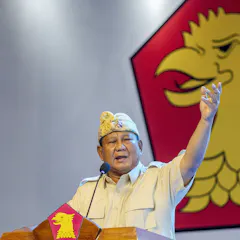
The general has repeatedly said Indonesia’s democratic system is not working and the country should return to its original 1945 constitution, which could unravel many democratic reforms.
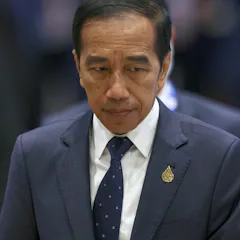
Joko Widodo is prevented from running again for president. But a court ruling has thrown next year’s elections in doubt and rumours abound of efforts to keep him in power longer.
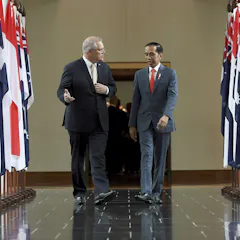
A truly mature relationship requires high levels of public participation and awareness, and this is what needs work with our northern neighbour.
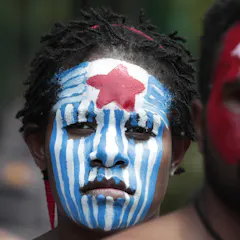
Tensions have been building over the last month following the killing of an Indonesian intelligence chief. The government has vowed to ‘chase and arrest’ all armed militants in the region.

Tourism development should support local communities to increase their skills and knowledge to better equip them to be resilient to crises and economic shocks.
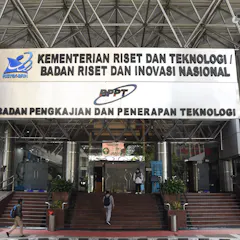
The institutional design of BRIN allows for political intervention, showing how the Indonesian government is unwilling to prioritise research and technology.
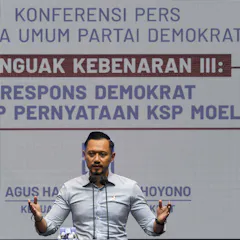
Presidentialism in Indonesia creates very specific political dynamics.
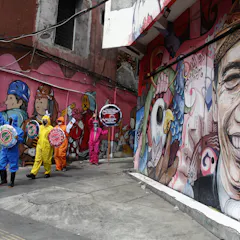
Reversing the year-long trend all comes down to good policymaking, driven by data and research.
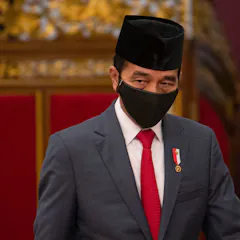
Jokowi’s administration has been unable to deal with the pandemic effectively because it lacks political will and fears it could wreck the economy and, with it, his legacy.

Indonesia is paying the price for failing to control the spread of the coronavirus. The country needs to change course and give priority to public health as the first step in repairing the economy.
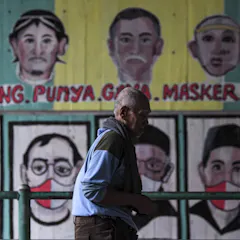
There are three key factors behind the government’s poor COVID-19 responses in the past nine months, and Indonesians can take steps to fix this.
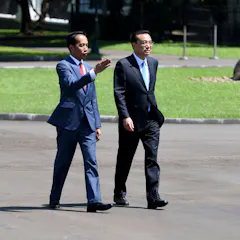
The increasing dependence of Indonesia on China has negative economic and political repercussions.
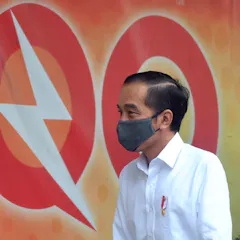
There are three main reasons for the the public disappointment in Jokowi.
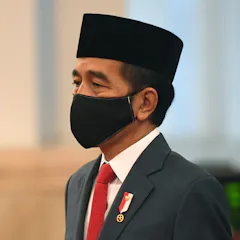
The government’s decision not to delay the elections is driven mostly by economic reasons, though political factors also come into play.
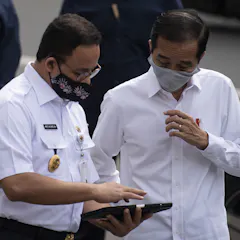
A pandemic can amplify friction and tension between jurisdictions – especially when there are political differences and existing conflict.
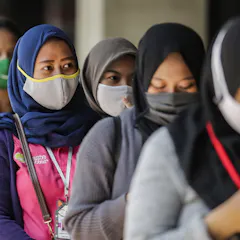
With low testing levels, it’s unclear just how bad the pandemic is in Indonesia. But President Joko Widodo is keen to get the economy restarted quickly, in part, to avoid widespread social unrest.
Top contributors
-

Malcolm Smith Professor of Asian Law and Director of the Centre for Indonesian Law, Islam and Society, The University of Melbourne
-
Associate Lecturer, School of Government, Universitas Jendral Achmad Yani
-
Director of China-Indonesia Desk, Center of Economic and Law Studies (CELIOS)
-
Adjunct Professor, Griffith Asia Institute, Griffith University
-
Director for Presidential Studies at Department at Digital Media and Communication Research Center, Faculty of Social and Political Sciences, Universitas Gadjah Mada
-
Senior Scientist in Disaster and Climate Risk at Earth Sciences NZ & Senior Research Fellow (adjunct), Humanitarian Emergency and Disaster Management, Charles Darwin University
-
Research fellow, Indonesia Judicial Research Society
-
Professor of Indonesian Law, University of Sydney
-
Professor of Public Administration, Universitas Gadjah Mada
-
Researcher, Centre for Strategic and International Studies, Indonesia
-
Research Analyst, Nanyang Technological University
-
Associate Director, Centre for Indonesian Law, Islam and Society, The University of Melbourne
-
Adjunct Assistant Professor, Universitas Bakrie
-
Associate Professor, Public Health, Monash University
-
Deputy Director - Undergraduate Business Programs; Senior Lecturer in Economics and Statistics, Griffith Business School, Griffith University