
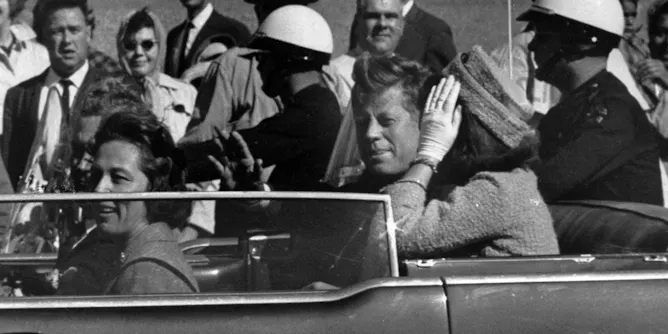
The JFK assassination was a landmark event in TV news history.
Articles on JFK
Displaying 21 - 40 of 48 articles

Gothic storytelling, with its sinister atmosphere of conspiracy and other hallmarks, offers a way to reframe the Kennedy family lore.
In 1967 a Mexican reporter told the CIA he had met Lee Harvey Oswald in Mexico City just before the JFK assassination. New research and recently declassified intelligence pokes a hole in his story.
Rewatching the 1991 film classic JFK shows the intricate choreography of montage — and the line between fact and truth still being navigated today.

The technology isn’t the problem – conspiracy theories were around long before the internet.
The agency’s earliest ad campaigns emphasized youthful idealism, patriotism and travel opportunities. That was an easier sell than urging Americans to enlist in an anti-communist operation.
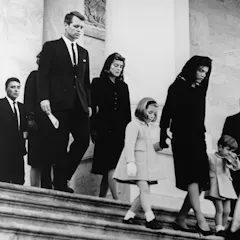
The process of coming to terms with a loss is central to these films, which are aching and inventive renderings of complex feelings and moments.
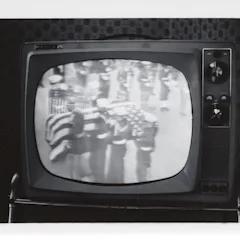
During our current bout of collective trauma, many of our coping strategies have mimicked the ways Americans responded to the Kennedy assassination.
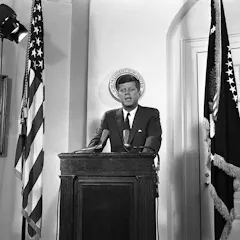
JFK pushed consumer rights to the top of the national agenda in 1962, leading to a raft of new laws offering new protections. But without enforcement, such rights are meaningless.
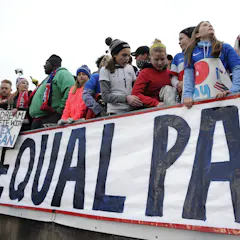
A decade ago, President Obama signed the Lilly Ledbetter Fair Pay Act, the latest legislative effort to close the persistent gap between how much women and men earn. Here’s why it hasn’t made much of a difference.

In the abstract, this near-mythic figure represents bravery, hard work and manliness.
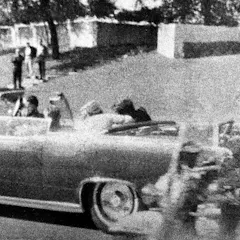
Applying actual science to forensic investigations can yield substantially different results from the findings of standard methods in the field.
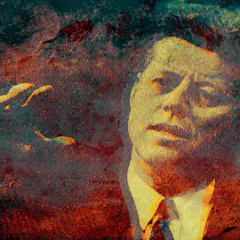
In the minds of many, the assassination remains a tragedy cloaked in mystery. How does this lack of closure – and the general distrust it fomented – resonate in American culture and politics today?
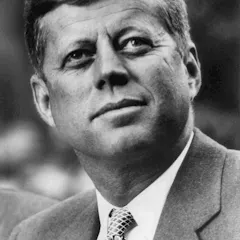
It’s been a good year for conspiracy theorists, so they say.
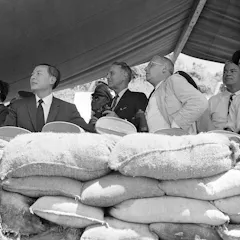
Walt Rostow argued communism was incompatible with economic development and was influential in persuading Presidents Kennedy and Johnson to get more involved in Vietnam.
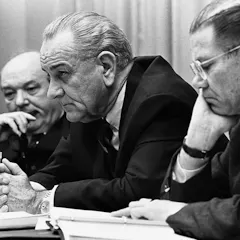
Was Vietnam ‘a quagmire’ or a ‘stalemate machine’? Understanding this 50-year-old debate can shed light on why the US is currently locked into a ‘forever war.’
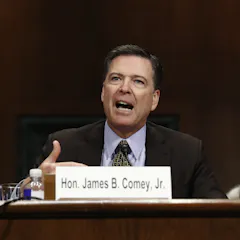
Hoover abused his power as FBI director to serve presidents’ interests. The reforms that followed were set up to prevent it from happening again.
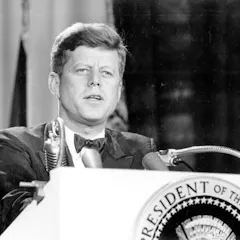
A century after his birth, John F Kennedy’s celebrity shines as brightly as ever.
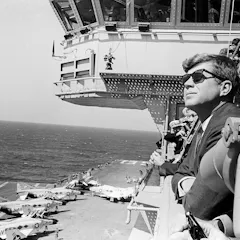
Reagan, Clinton, Obama and Trump would all pull from the Kennedy playbook, from mastering the media to exuding masculine vitality.

John Fitzgerald Kennedy consistently ranks as one of America’s most popular leaders. A presidential historian argues that didn’t just happen – it was the result of an effort to create an image.
Top contributors
-

Associate Professor of Political Science, Erie Campus, Penn State
-
Associate Professor of Instruction, The University of Texas at Austin
-
Professor of Communication and Journalism, University of Maine
-
Professor of International Relations, Australian National University
-
Adjunct Professor of Criminal Justice, St. Edward's University
-
Associate Professor of Social Sciences, Boston University
-
Distinguished Professor of Statistics, Texas A&M University
-
Senior Lecturer in English Literature, Charles Sturt University
-
Professor of History, University of Illinois at Springfield
-
Professor of History, University of Missouri-Columbia
-
Teaching Associate in Media and Cultural Studies, University of Nottingham
-
Professor in U.S. Politics and U.S. Foreign Relations, United States Studies Centre,, University of Sydney
-
Senior Lecturer and Researcher in Cognitive and Parapsychology, Manchester Metropolitan University
-
Lecturer in Politics and International Relations, Nottingham Trent University
-
Professor of Political Science, Drake University