
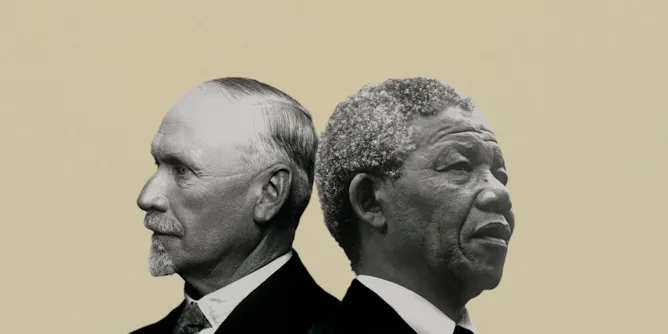
Whereas Jan Smuts was to be largely forgotten after his defeat in South Africa’s 1948 election, Nelson Mandela became an international icon.
Articles on Jan Smuts
Displaying all articles
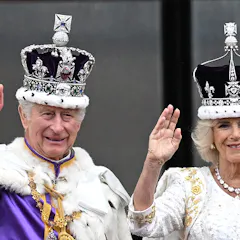
Activists view their moral case for the return of the diamonds as unanswerable, but it runs up against many complications.
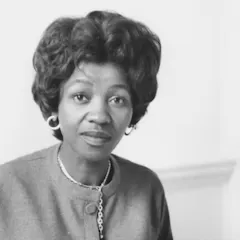
These columns demonstrate that Noni Jabavu’s concerns from 1970s are still relevant today.
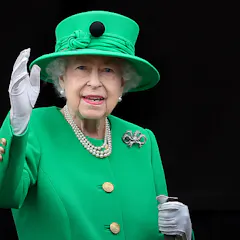
The decolonisation process was to take place rapidly during the reign of Elizabeth II.
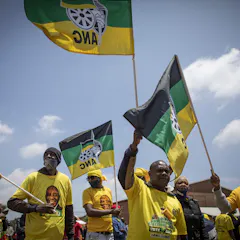
Any ruling party in South Africa has found it hard to maintain internal coherence and unity over an extended time span amid wide national diversity.

This history covers twelve decades, from the surrender of Boer guerrillas in the Second Anglo-Boer War in 1902 to the July 2021 looting spree and violence.

A secret plan to destabilise the new democratic government reveals the failed ambitions of the apartheid state security apparatus and confirms what is known about the brutality of the period.

There are two histories of dagga in South Africa - the one of criminalising it and the other of the state trying to make money off it.

Opium played a fascinating role in southern African colonial politics, conflict and social change - from the poppy fields of Mozambique to the early days of Johannesburg city.
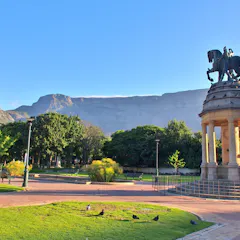
For black South Africans, the hard lesson was the same as it had been during the Boer war: support for Britain would bring few rewards.
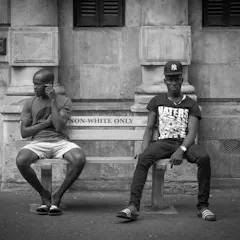
Apartheid has been removed from the statute books for almost three decades. But a de facto apartheid endures both economically and socially.

Humans have an innate interest and ability in naming biologically meaningful entities, or species. Taxonomy, then, vies for the title of world’s “oldest profession”.
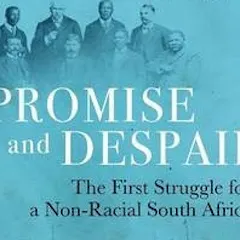
Britain’s acquiescence in the face of Afrikaner intransigence set the precedent for the progressive disenfranchisement of nonwhite South Africans and laid down the foundation for apartheid.
Top contributors
-

Professor of Sociology, University of the Witwatersrand
-
Political Scientist, University of the Western Cape
-
Visiting Professor, University of Kent
-
Senior Lecturer in Biological Systematics, University of Limpopo
-
Senior Research Fellow, Horn of Africa and Southern Africa, Institute of Commonwealth Studies, School of Advanced Study, University of London
-
Lecturer in Politics and International Relations, University of Leicester
-
Lecturer, University of Cape Town
-
Assistant Professor, University of California, Santa Barbara
-
Professor of History, University of Johannesburg
-
Associate Professor and Head of Department, Biological Sciences, University of Cape Town
-
Emeritus Professor, University of Cape Town