
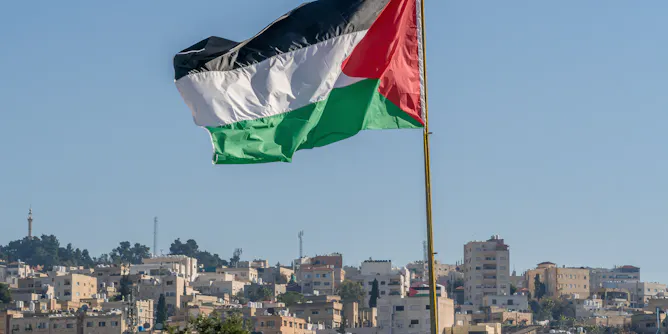
Recognition of Palestinian statehood was previously held out as an incentive to completing peace negotiations. But that’s changed now, and New Zealand should consider changing its position too.
Articles on Israel-Palestine
Displaying 41 - 60 of 286 articles

How university campuses respond to concerns about student safety can set the stage for learning or encourage its opposite: divisiveness and censorship.
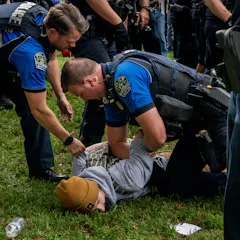
Throughout the 1960s and 1970s, conservative activists led a counterattack against campus antiwar and civil rights demonstrators by demanding action from college presidents, the courts and the police.
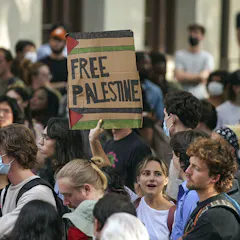
Ontario’s Strengthening Accountability and Student Supports Act threatens to undermine university autonomy, and could serve to censor critical thinking and dissent on campuses.

The government’s rhetoric in response to the death of the Australian aid worker is stronger than we’d previously seen, but in a conflict with no clear solutions, little will change.
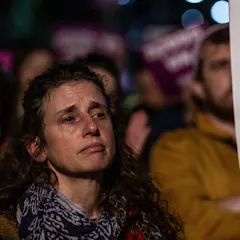
Secular Jewish groups have historically made up the majority of solidarity and peace groups. But Palestinian citizens and observant Jews are also key.
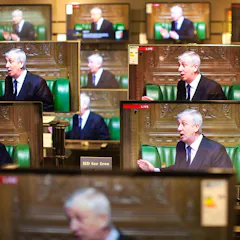
Instead of voting on a ceasefire, the House of Commons descended into furious arguments between MPs and the speaker.
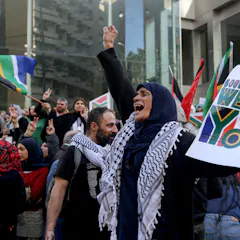
A changing world order and global battles for power will derail the quest for peace in Gaza and the Middle East.
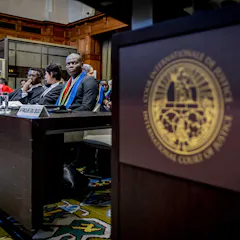
The International Court of Justice has heard arguments from each side of an extraordinary genocide case. What was said, and what happens now?
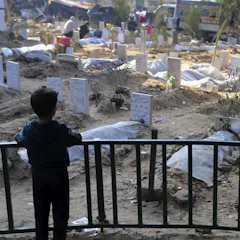
Today, hearings will begin in the International Court of Justice, where South Africa is accusing Israel of genocide in Palestine. How will the proceedings work, and what does it mean for the war?
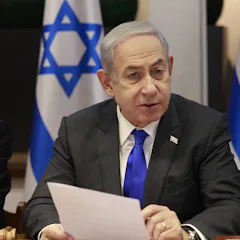
The mistaken killing of three Israeli hostages by the Israeli Defense Forces at the weekend has substantially increased pressure on Prime Minister Benjamin Netanyahu to accept a ceasefire.
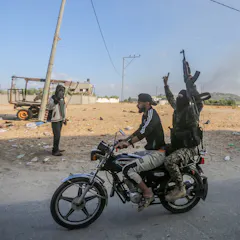
A scholar of the Islamic State group says Hamas has undergone a radical ISIS-inspired transformation that has not yet gotten widespread public attention.
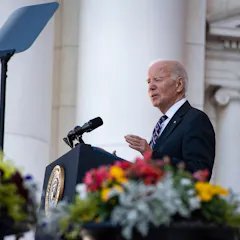
Around 50% of those under 30 supported Biden’s policy on Israel, a higher number than other age groups.
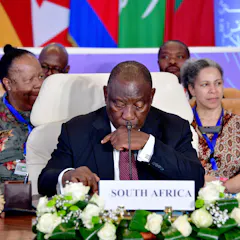
President Cyril Ramaphosa’s messages, and tone of delivery, suggest an assertive leader representing the interests of the global south.
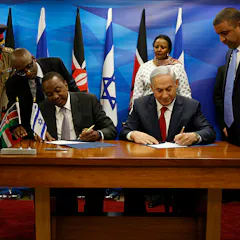
East Africa’s reaction to the war in Gaza appears shaped by history, affinity to the policies of the west and the threat of terrorism.

The European bourgeoisie could not forgive Hitler because he applied in Europe colonialist procedures previously reserved for the supposedly inferior Arabs, Indians, and Africans.
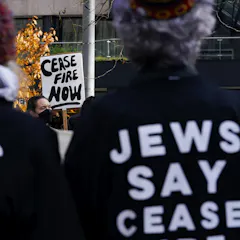
Calls for a cease-fire in Gaza are driven by humanitarian compassion and principles. But cease-fires are also technically complicated military and political ventures.
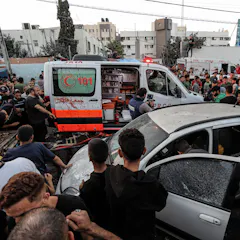
At present the Israeli prime minister, Benjamin Netanyahu, has ruled out a ceasefire but may allow ‘little pauses’.
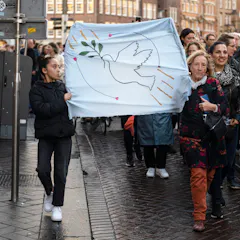
Blaming an entire nation for the actions of some of its people is unfair, unproductive and will perpetuate the hatred and suffering.
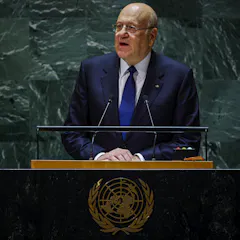
Lebanon has problems enough of its own without a major conflict on its border.
Top contributors
-

Reader in International Journalism, City St George's, University of London
-
Lecturer, Royal Holloway, University of London
-
Professorial Fellow, University of Canberra
-
Lecturer in Peace and Reconciliation, University of Aberdeen
-
Professor of International Security, University of Birmingham
-
Professor of International Relations, City St George's, University of London
-
Tony Walker AM is a Friend of The Conversation.
Director, La Trobe University
-
Rosalinde and Arthur Gilbert Foundation Professor of Israel Studies, University of California, Los Angeles
-
Professor of Peace Studies, University of Bradford
-
Professor of International Relations, Lancaster University
-
Lecturer in Interdisciplinary Race, Gender and Postcolonial Studies, UCL
-
Lecturer in Post-war Recovery Studies, University of York
-
Professor in Human Rights and International Law, University of Newcastle
-
Associate Professor in the School of Middle Eastern and North African Studies, University of Arizona
-
Professor of Middle East Policy Studies and Director of the Olive Tree Scholarship Programme, City St George's, University of London