
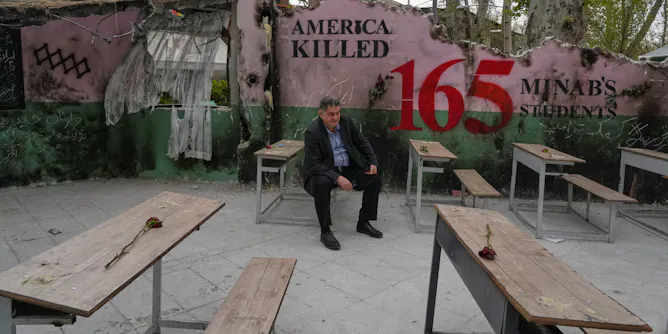
For a country that built the post-1945 rules-based order, the United States now needs to be rescued from its own war by the very nations it once lectured on governance and peace.
Articles on Israel-Iran tensions
Displaying all articles
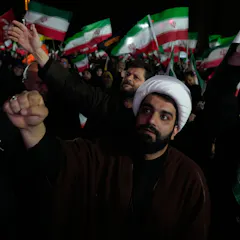
Wars that define eras are remembered not just for how they are fought, but for what follows. For Canada, the end of the Iran war will be a chance to lead with clarity, consistency and purpose.
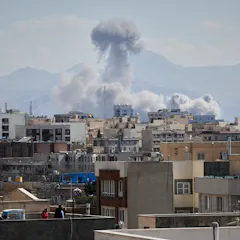
Even if the U.S. and Israel succeed in bringing about regime change in Iran, they may create an even worse geopolitical situation.

The voices of the Hibakusha offer not only memory, but also moral clarity in an age of growing peril.

Interviews with 30 Iranian Canadians help to untangle the roots of political tensions and evolving solidarities in the Iranian diaspora in Canada.

Fears about supply, demand, profits and supply chains all combine into a volatile mix that delivers prices that are often higher in a crisis, but also change more rapidly and by larger amounts.

While Israel and Iran have agreed to a ceasefire after 12 days of airstrikes, it isn’t clear what specific measures, if any, the countries might agree to in order to keep the peace.
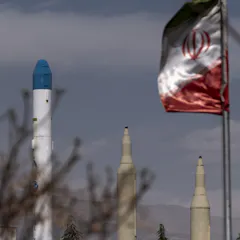
Tehran can utilize an army of proxy groups, intelligence operatives and cyberhackers as part of any retaliation for Israeli or US attacks.

Strikes on nuclear facilities in Iran may increase Tehran’s belief that attaining nuclear weapons is key to establishing a deterrence to regime change.
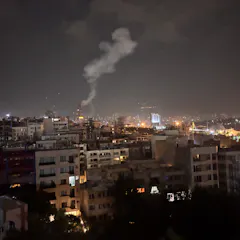
Multiple nuclear and military facilities were targeted in an Israeli strike, which took place days before US and Iran were due to conduct a sixth round of nuclear talks.
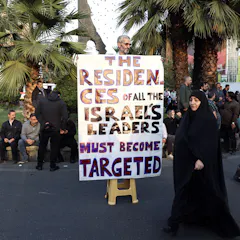
Though both sides seem to want to avoid a wider war, the latest Israeli strike is a reminder that the longer conflicts go on, the less likely they are to remain contained.
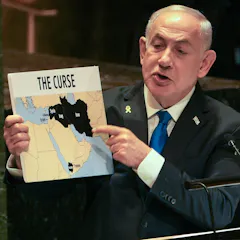
The US is ruling out a strike on Iran’s nuclear facilities, but Israel has other options for retaliation. One thing is clear: a regional war is no longer imminent, it is here.
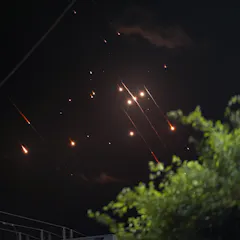
Iran could no longer be seen as sitting on the fence, allowing its proxy allies, Hezbollah and Hamas, to engage with Israel on their own.

Escalating conflict between Israel and Iran is partly the result of an unsuccessful, decade-long plan to ‘contain and deter’ the Iranian regime.
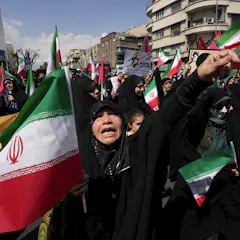
Israel’s latest missile strike on Iran may be more a face-saving exercise aimed at satisfying members of its coalition government than a true escalation of hostilities.
Top contributors
-

Associate Professor and Edward and Emily McWhinney Professor in International Relations, Simon Fraser University
-
Adjunct Professor, Natural Resource Institute (NRI), University of Manitoba
-
Affiliate Researcher, The Australian Centre for Jewish Civilisation, Monash University
-
Lecturer in Middle East Studies, Deakin University
-
Associate Professor of International Relations and National Security Studies and Graduate Program Director for National Security Studies, Park University
-
Associate Professor of Practice of Public Policy, University of Michigan
-
Director of Security Studies and Professor of Criminology and Justice Studies, UMass Lowell
-
Adjunct Lecturer, Pennsylvania State University, Penn State
-
Executive Director of the Edward R. Murrow Center and Senior Fellow of Diplomatic Practice, The Fletcher School, Tufts University
-
Nonresident Fellow in Energy and Global Oil, Baker Institute for Public Policy, Rice University
-
PhD candidate in Sociology, University of Calgary
-
Professor of Sociology and University of Calgary Research Excellence Chair, University of Calgary
-
Senior Education Project Manager and Research Associate, Nonproliferation Education Program, Middlebury College
-
Senior Lecturer in International Relations, University of Pennsylvania
-
Director, Middle East Studies Forum (MESF), Deakin University