
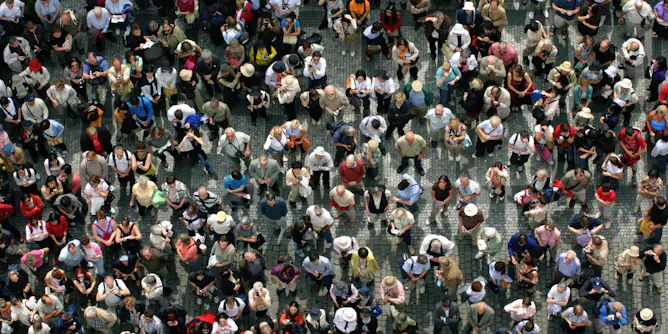
Reasoned debates on sustainable migration intake levels are important. But transport and health infrastructure shortfalls in Western Sydney won’t be solved by reactive anti-immigration attitudes.
Articles on Is Australia Full?
Displaying all articles
Australia feeds tens of millions, at home and abroad. But if our population doubles by 2061, as some projections suggest, we’ll need some smart strategies to keep those people fed.

Australia’s GPI, a broad measure of national wellbeing, has stalled since 1974. So what has been the point of huge population and GDP growth since then if we and our environment are no better off?
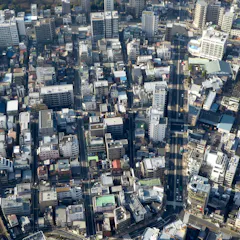
Tokyo has experienced extraordinary population growth but is among the world’s most liveable cities. Just how has it managed the pressures of growth?
Regional settlement of migrants benefits both new arrivals and local communities.
Selecting immigrants on points is likely to result in them being healthy, or at least healthy enough for them not to put much strain on our exhausted health systems.

Local neighbourhoods where Asians and Muslims form a majority are almost entirely concentrated in Australia’s two major cities – Sydney and Melbourne.
Financial benefits are behind the development industry’s push for a continuous rapid population growth. But our poorly planned cities are ill-prepared and already struggling.

The latest statistics show Australia’s population growth in the last decade has been significantly higher than in other developed countries.

Considering all the aspects of life in Australia that are affected by population, it’s remarkable that the nation doesn’t have a national policy on it.
Top contributors
-

Associate Professor in Environmental Engineering, Adelaide University
-
Principal Research Fellow, Charles Darwin University
-
Honorary Associate Professor in Planning, University of Queensland, University of Sydney
-
PhD Candidate (Sociology), Australian National University
-
Professor and Director Food Systems Program, Global Change Institute, The University of Queensland
-
Senior Lecturer, University of Technology Sydney
-
Associate Professor of Geography and Planning, Macquarie University
-
Adjunct professor, School of Media and Communications, RMIT University
-
Associate Professor, Institute for Culture and Society & School of Humanities and Communication Arts, Western Sydney University
-
Associate Professor and Principal Research Fellow, Centre for Social Impact Swinburne, Swinburne University of Technology
-
Demographer, POLIS Centre for Social Policy Research, Australian National University
-
Research student, School of Natural & Built Environments, Adelaide University
-
Professor, Department of Geography and the Environment, University of Denver
-
Professor of International Planning, Centre for Urban Research, RMIT University