
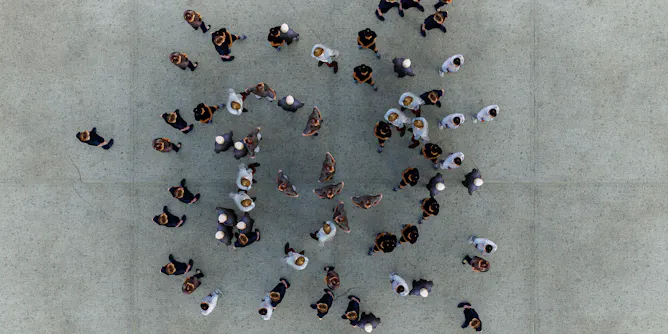
A psychologist explains how group identity, polarizing issues and social media are driving people apart – and suggests some remedies.
Articles on Intolerance
Displaying 1 - 20 of 25 articles

Diversity training programs work best, our research shows, when they form part of a broader, ongoing company effort against intolerance.

The almost complete absence of French at the Public Order Emergency Commission does not come from a subservient reflex on the part of French speakers so much as their fear of being scorned.
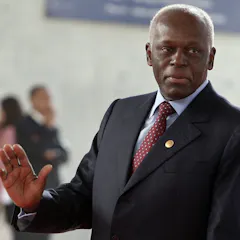
Dos Santos was a withdrawn president. His silence produced an aura of power and the cult of personality that surrounded him.
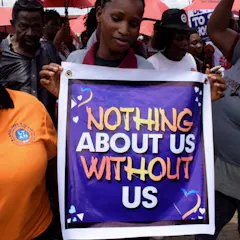
The study reveals a consistently biased and negative depiction of sex workers by news media in Nigeria.
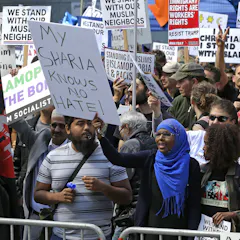
Day 6 of our Understanding Islam series. Sharia constitutes a broad set of rules that guide Muslims on how to lead an ethical life. The way Sharia is interpreted depends on who is using it and why.
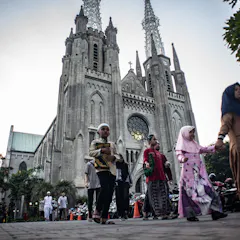
To put an end to discriminatory laws and practices, more fundamental reforms are needed.
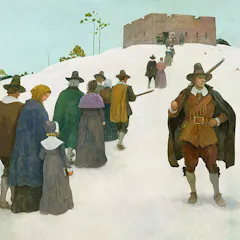
It was less about their asceticism and more about rejecting the world they had fled.
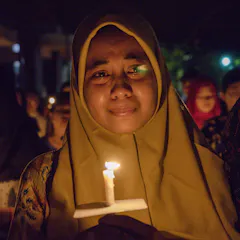
It is important to understand the issues of intolerance through statistics. But it is crucial to dig deeper to understand why a person becomes intolerant.

Some Islamic nations, including Brunei, have harsh punishments under Sharia. In pre-modern times, Sharia was rarely used as criminal law, and standard of proof for any prosecution was very high.
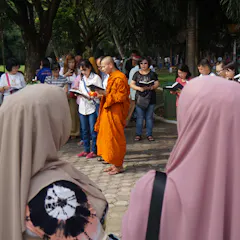
Let’s rethink the way we understand democracy and tolerance.

Michael Haneke’s allegorical 2009 film showed how a peaceful society can be shattered within a single generation. It’s a lesson for us now in a world drifting toward populism and violence.

International students are a huge asset, but universities must guard against prejudice and ensure they they are properly integrated and supported.
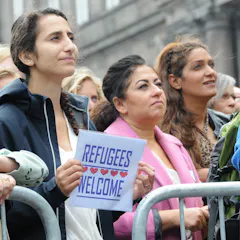
How can a hashtag supportive of refugees be hijacked by those opposing them? An empirical study explores the process.
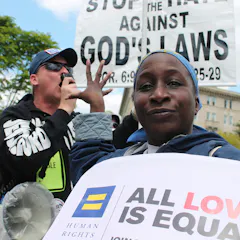
Educators must work to ensure inclusion with diverse student bodies, yet it seems inevitable that in today’s world, talking about identity issues can be risky and emotional. So how to move forward?
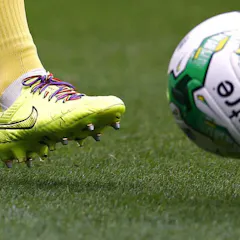
Football presents itself as a neutral, universal and, in a way, desexualised sport. Yet despite widespread campaigns against homophobia, deeply negative attitudes about gay players persist.
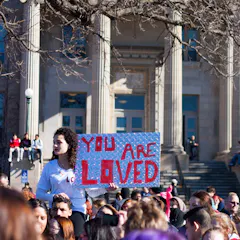
Diversity is an enormously appealing and powerful concept, yet it can also distract us from the focus we need to face today’s pressing social issues. So what’s the way forward?

Current trends suggest that evangelicalism is out of step with younger Americans. But, a scholar says, evangelicalism has been here before.

Many are calling for government to step in to stop bots and the spread of fake news on sites like Facebook and Twitter. A media expert explains why this is a slippery slope.
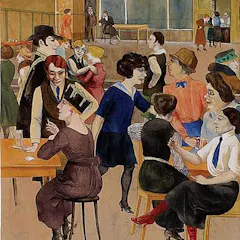
The 1920s and early ‘30’s looked like the beginning of the end for centuries of gay intolerance. Then came fascism and the Nazis.
Top contributors
-

Professor in department Law, Managment, and Social Sciences, EM Lyon Business School
-
PhD candidate in Law, Humboldt University of Berlin
-
Professor of Communication and Media Studies, Fordham University
-
Associate Professor of History, Case Western Reserve University
-
Professor in Sociology, Queen's University Belfast
-
Assistant Professor, EM Lyon Business School
-
Professor of Religion, Amherst College
-
PhD Candidate in Geography, University of Cambridge
-
Affiliate Professor, GEM
-
Maître de conférences (HDR), sociologie, Université de Montpellier
-
Professor of International Affairs and Comparative Literature, Penn State
-
Senior Research Fellow, Institute for Social and Economic Research, University of Essex
-
Postdoctoral Research Associate, University of Essex
-
Professor, University of Essex
-
PhD candidate in Geography, University of Cambridge