

A new study has calculated the tremendous cost of ash dieback to the UK economy.
Articles on International trade
Displaying 61 - 80 of 124 articles
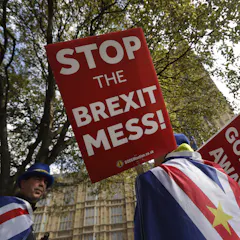
American companies still face enormous uncertainty about how they’ll be doing business in the UK and EU in the coming years, particularly as the April 12 Brexit deadline draws closer.
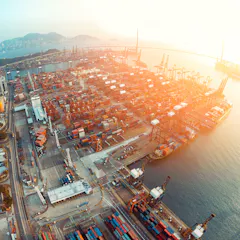
Despite the growing role of data and technology in the world economy, there are very few rules to govern digital trade.

America’s objectives for a trade agreement with Britain spell out a stark Brexit future.
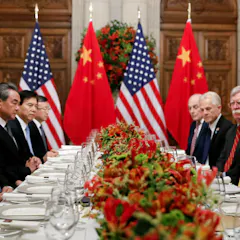
China has reneged on past promises it has made to the US. With the deadline for a deal fast approaching, the solution may lie in learning from a global organization the president hates: the WTO.
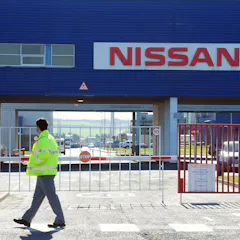
What Brexit means for future UK-Japan business.

Britain has long dreamed of breaking away from the European continent but global trade has never replaced links with its close neighbours.
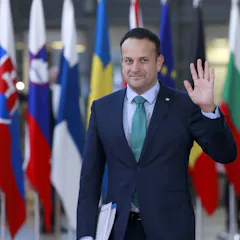
After the UK leaves, Ireland could be the gateway to Europe for the US.

The EU and Japan’s economies together account for about a third of global GDP.

The clock is ticking before the US ramps up tariffs on Chinese imports.
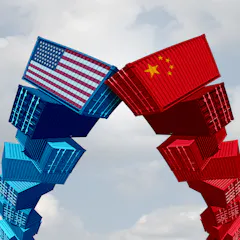
We may be on the cusp of a full-blow trade war that could reconfigure globalisation.

Boasting the world’s biggest and strongest economy, the U.S. has enormous leverage when it sits down with a partner to negotiate a trade deal. Threats and tariffs are not really helping.
Americans seem to believe trade deficits are a bad thing, partly because of arguments suggesting they mean the US is ‘losing.’ An economist explains why that’s rubbish.
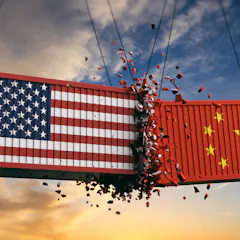
There can be no middle road in the trade war between China and the United States. Soon we will have to pick sides.
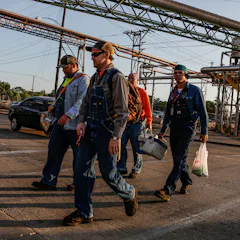
The president says he’s fighting his trade war because a generation of free trade has failed working-class Americans. An economist explains why tariffs will only make things worse.

American policymakers and lawmakers are floating unilateral sanctions against Russia, Iran and even Turkey in an effort to change behavior. But research shows sanctions only work in narrow circumstances.
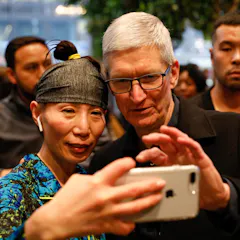
The president launched a trade war largely on the premise of a massive trade deficit with China. A closer look at the iPhone shows why he’s wrong.

US tariffs could potentially benefit some EU firms that rely on steel and aluminium.
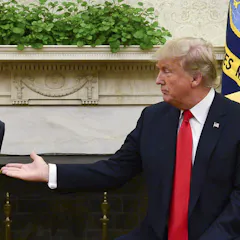
The underlying problem with Donald Trump’s tariffs on steel and aluminum isn’t Trump. It’s the increasing willingness by the U.S. to impose its will on its neighbours amid rising economic nationalism.
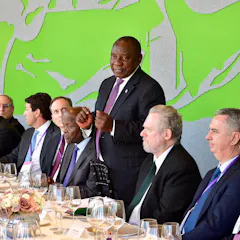
South Africa’s relations with the US could sour under President Trump.
Top contributors
-

Lecturer of international trade law, Monash Business School, Monash University
-
Professor, and Executive Director: Institute for International Trade, and Director of the Jean Monnet Centre of Trade and Environment, Adelaide University
-
Associate Professor of Agri-Food Trade and Policy, University of Guelph
-
Senior Lecturer in Economics, Aston University
-
Professor of Global Business Strategy, Simon Fraser University
-
Associate Professor, Global Management Studies, Toronto Metropolitan University
-
Director of the Wine & Spirits Academy, Kedge Business School
-
Professor Emeritus of Economics, SOAS, University of London
-
Senior lecturer in Economics, Aston University
-
Associate Professor of Political Science, Brock University
-
Lecturer in International Business, University College Cork
-
Senior Research Fellow, Institute for International Trade, Adelaide University
-
Distinguished Professor, Arthur J. Gosnell Professor of Economics, & Head, Department of Sustainability, Rochester Institute of Technology
-
Lecturer in Political Theory, Department of Government, University of Essex
-
Professor of Practice, NYU Shanghai and Fundação Dom Cabral, NYU Shanghai