

News that a doctor in New York City tested positive for Ebola sparked mandatory quarantine orders for heath workers returning from West Africa in New York and New Jersey last week. The outbreak has killed…
Articles on Influenza
Displaying 301 - 320 of 361 articles

At the sharp end of the fight against Ebola and other infectious diseases are courageous people who work tirelessly in difficult conditions. Equations are not included as standard in medical kits. But…
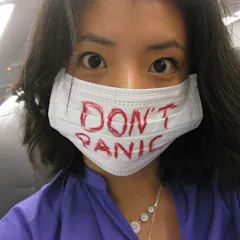
Today’s reports suggesting a particularly severe flu season could easily be overstating the case. The figures, released by Influenza Specialist Group say there have been more than 20,000 cases of flu nationally…

The current West African ebolavirus outbreak, which has now reached more than 1,000 cases and resulted in more than 800 deaths, is a reminder of the often unpredictable nature of viruses and the difficulties…
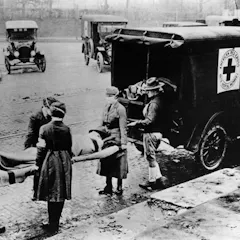
The great influenza pandemic of 1918-19, often called the Spanish flu, caused about 50 million deaths worldwide; far more than the deaths from combat casualties in the World War One (1914-18). In fact…

The danger of reporting findings before peer review is that scientists often can’t talk about the details of their research, which can lead to hype or fear in the media. A recent example of this is a controversial…

We live in an ageing society, with the global median age rising steadily. Australia’s economic viability will increasingly rely on retaining older people in the workforce for longer. This, of course, relies…

Influenza viruses that exist in nature and affect wild birds shuffle their genes about all the time, creating new viruses with different genetic combinations. In this way a virus was created that in 1918…

Ginseng, the root of the plant Panax ginseng, is one of the most commonly used herbal medicines and is often sold as an over-the-counter remedy for fatigue. Although it has been used by humans for thousands…

Most people who think they have the flu, don’t. And some people who think they have a cold, really have the flu. So what is the difference between a cold and the flu? And does it matter? A cold is a mild…

Antiviral drugs are largely ineffective for reducing hospital admissions and complications from influenza, and come with serious side-effects, according to a research review published by the Cochrane Collaboration…

Influenza infection is very common – about one in five of us are infected each year. But, surprisingly, the majority of infections don’t cause any illness. In a study published in The Lancet Respiratory…

Influenza affects up to 15% of adults and 30% of children each flu season and early indications suggest we could be facing a severe season. The 2014 seasonal influenza vaccination is available from today…

Influenza viruses rapidly evolve in shape, making it hard to develop protective vaccines against them. Despite a great deal of study, scientists have been at a loss to forecast their evolution in any detail…

Australia’s federal Department of Health has advised general practitioners to be on the lookout for potential cases of the H7N9 strain of influenza A, or bird flu, following a spate of deaths in China…

Lack of exposure to a particular influenza strain means you won’t have had a chance to build up complete immunity. And if the strain spreads easily between people and there is little immunity in communities…
Some Indigenous groups have been found to be particularly vulnerable to new strain of influenza (H7N9) currently found in…
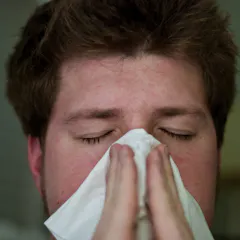
Twitter has become the latest online tool to be used to monitor the spread of disease. Researchers are looking at whether health providers can identify the locale of a disease outbreak by monitoring the…

When new health threats emerge, the media is often accused of hyping up the risk to the public. But we tend to believe that health experts provide rational, independent viewpoints on the real risks posed…

When people talk about ‘big data’, there is an oft-quoted example: a proposed public health tool called Google Flu Trends. It has become something of a pin-up for the big data movement, but it might not…
Top contributors
-

Professor of Infectious Diseases, Monash University
-
Professor of Global Biosecurity, NHMRC L3 Research Fellow, Head, Biosecurity Program, Kirby Institute, UNSW
-
Paediatrician, Infectious Diseases Physician and Clinical Microbiologist, The Kids Research Institute Australia, The University of Western Australia
-
Deputy Director, WHO Collaborating Centre for Reference and Research on Influenza
-
Hon Prof, Dept of Child & Adolescent Health, University of Sydney
-
Professor of Nursing, Purdue University
-
Lecturer, Biomedical and Life Sciences, Lancaster University
-
Medical Epidemiologist at the National Institute of Communicable Diseases and Lecturer at the School of Public Health, University of the Witwatersrand
-
Professor (Adjunct) in Infectious Diseases Epidemiology, Australian National University
-
Professor Emerita of Biology, Indiana University
-
Professor of Public Health, Bond University
-
Assistant Professor, Texas A&M University
-
Catedrático de Microbiología. Miembro de la Sociedad Española de Microbiología (SEM), Universidad de Navarra
-
Virologist, The University of Queensland
-
Professor in Mathematical Biology, The University of Melbourne