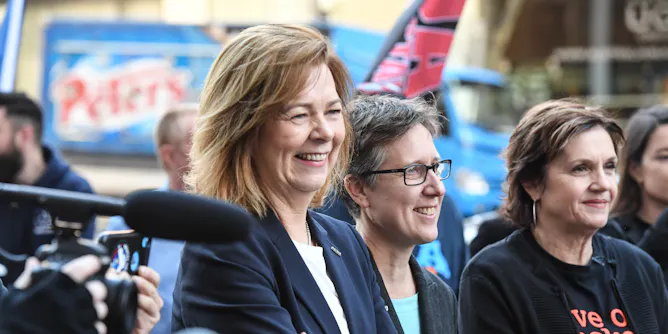
ACTU president Michele O'Neil on John Setka and the government’s anti-union legislation
CC BY33.4 MB(download)
ACTU President Michele O'Neil says that the decision over Setka's leadership lies with the union membership, and denounces the government's plans to bring back anti-union legislation.
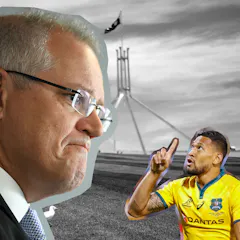
Scott Morrison faces the risks of the Folau saga becoming a divisive intrusion into what he wants to be a steady-as-she-goes style of government.
AAP/The Conversation
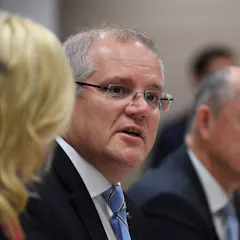
Scott Morrison won his ‘miracle’ election but what he does from now on will determine whether the Coalition can secure a fourth term.
Prime Minister Scott Morrison will lay out economic policies “to get Australians off the economic sidelines and on the field again” on Monday.
Dean Lewins/AAP
In his first major domestic speech since the election, Prime Minister Scott Morrison will lay out economic policies “to get Australians off the economic sidelines and on the field again”.
Unions could have been more upfront about what they wanted the rules changed to.
GLENN HUNT/AAP
Dealing with the Coalition will more difficult than arguing than the rules are wrong.
The German model of balancing shareholder interests on company boards with worker representatives is again attracting interest in the US, Britain and Australia.
Shutterstock.com
The global evidence from more than 300 studies on the economic impact of unionisation shows unions do not, overall, reduce productivity.
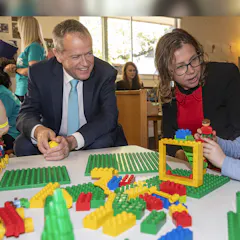
Labor leader Bill Shorten and early childhood education spokeswoman Amanda Rishworth at the Deakin & Community Childcare Co-operative in Burwood, Melbourne.
DANIEL POCKETT/AAP
Unions and Labor have a long history of working together, but if the ALP wins office, unions will have to compete with many other groups to get what they want.
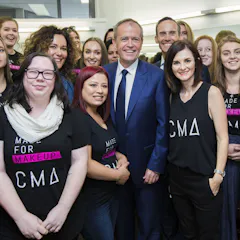
Bill Shorten with students at the CMA Training Group in Canberra. If he restores Sunday penalty rates, his success will come at a cost.
Sean Davey/AAP
At this election there is a stark choice between the two major parties on industrial relations: the “small target” approach of the Coalition and the ALP’s more ambitious and detailed plan.
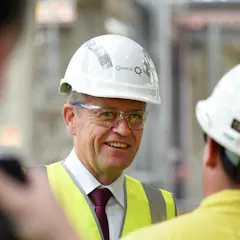
Opposition leader Bill Shorten at a manufacturing facility in Sydney. He’ll instruct the Fair Work Commission to replace the minimum wage with a higher “living wage”.
Mick Tsikas/AAP
Laurie Carmichael Distinguished Research Fellow at the Centre for Future Work, Melbourne; and Professor Emeritus, Griffith Business School, Griffith University
Professor of Economics, Department of Economics, Deakin Business School and Alfred Deakin Institute for Citizenship and Globalisation, Deakin University