

There’s a lot of information on social media that would support legal proceedings, but courts have yet to harness this.
Articles on KenyaVotes2022
Displaying 1 - 20 of 30 articles
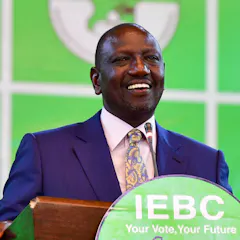
The division within the Independent Electoral and Boundaries Commission, the fact that the race was very close, and turnout was relatively low may increase incentives to challenge the results.
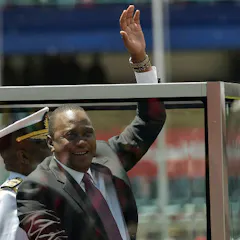
The most prominent economic legacy of Kenyatta’s government is runaway public debt.

Kenya is not unlike any other country where democratic deepening requires a ‘two-steps forward, one-step back’ outlook.

The increase in terror attacks has complicated the Kenyan government’s relationship with the country’s Muslim community.
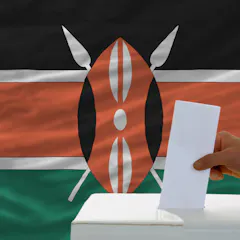
That there is no clear favourite to win shows the campaigning has been relatively free and competitive.
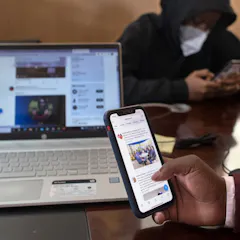
Platforms like Facebook, Twitter and WhatsApp are reframing democracy and the way citizens engage and organise in the digital space.
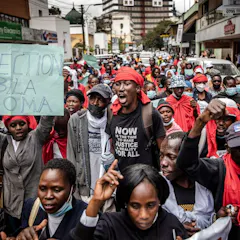
Patronage politics, a history of violent conflict and high-stakes elections increase the risks of poll violence in Kenya.
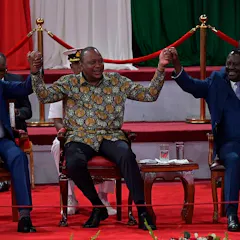
Kenya’s ethnic-based politics often leads to electoral violence that hurts regional trade.
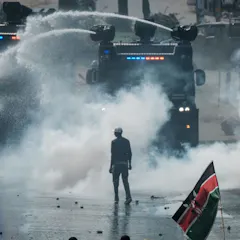
Our research found that Kenyan students dislike ethnic-based politics in principle, but feel the pressures of tribalism.
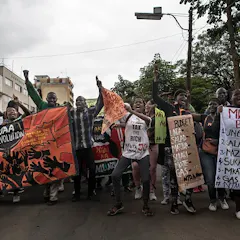
A confluence of many factors – from Russia’s war to drought to local corruption and lack of productivity – has inflated prices.
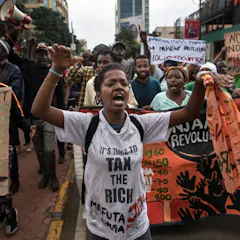
The economy has taken centre stage in Kenya’s 2022 elections, but political promises have fallen short of offering realistic solutions.

The presence of fringe presidential contenders is a marker of maturing democracies.

The level of education of the political class is not the key to progress.
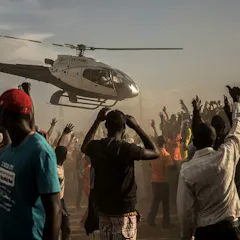
The transactional nature of politics reduces opportunities for debate and dialogue between elected officials and their constituents.

In principle, political debates should showcase an aspiring leader’s vision. It’s a lofty goal given their current format in Kenya.

The country’s courts have already exhibited a significant level of maturity in rulings touching on the executive.

To predict - and prevent - election-related violence, it’s important to first understand the key drivers of conflict.

Every five years, underlying ethnic rivalries are rekindled through songs, words, euphemisms, epithets and slurs.

Odinga is considered a master strategist, sometimes populist and excellent mobiliser.
Top contributors
-

International Relations Scholar, University of the Witwatersrand
-
Researcher, African and African Diaspora Studies, National School of Anthropology and History
-
Professor, Faculty of Business and Management Sciences, University of Nairobi
-
Professor of History, Durham University
-
Associate professor, Uppsala University
-
Professor of Political Science, College of Behavioral Sciences, California State University, Northridge
-
Associate Professor of Political Science, University of California, Riverside
-
Associate Professor, Université Saint-Paul / Saint Paul University
-
Professor of Comparative Politics, University of Warwick
-
Associate Professor, Political Science, College of the Holy Cross
-
Senior Lecturer, HOD-Mass Communication, Kabarak University
-
Senior Lecturer in Media Studies, Daystar University
-
Professor, Weber State University
-
Professor of Media Industries, University of Nottingham
-
Associate Professor of International Studies, University of Nottingham