
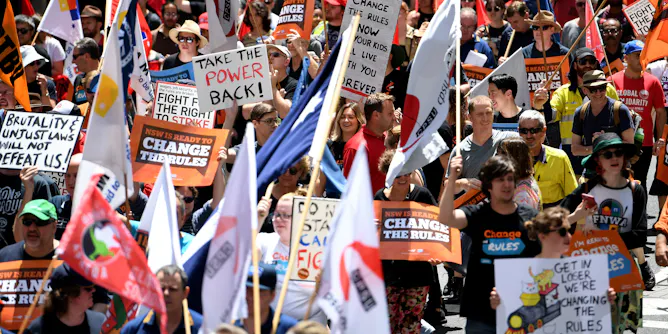
While government payments and programs go some way to reducing inequality, the transformation of the labour market and its institutions has cut workers’ share of the pie to historic lows.
Articles on Income inequality
Displaying 81 - 100 of 200 articles
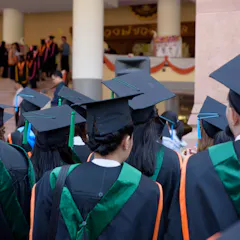
First-generation college students earn substantially less than their peers whose parents went to college, new research shows.
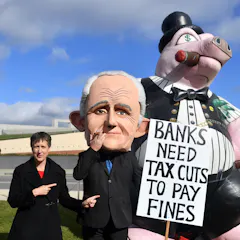
This is the first article in a series, Reclaiming the Fair Go, to mark the awarding of the 2018 Sydney Peace Prize to Nobel laureate and economist Joseph Stiglitz.
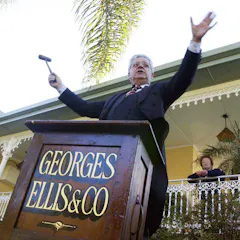
The Productivity Commission neglected the impact of housing costs. After allowing for these costs, the top 10% of households’ average disposable income grew at 2.7 times the rate of the bottom 10%.
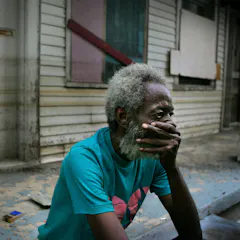
A new study shows that natural disasters enrich white victims while hurting people of color, worsening wealth inequality. And government aid contributes to the problem.

Governments can’t undo the technological changes behind frozen wages and rising inequality. The best policy is to invest in education and training to give workers skills of value in the new economy.

Lots of things have happened in a century, but poverty has proven persistently hard to treat.

Inequality is being driven by a focus on maximising shareholder value to the exclusion of other stakeholders.
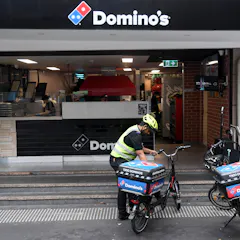
The evidence suggests the impact of CEOs on company performance isn’t enough to justify their sky-high pay, which is really based more on a culture of power and privilege.

Most European nations have seen suicide rates fall by 20 percent or more. Research is limited, but some studies blame US inequality.

The Australian Bureau of Statistics’ latest analysis of the impact of government benefits and taxes on household income shows this reduces income inequality by more than 40% in Australia.

The largest cities in Australia and the US are both the richest and the most likely to push out low-income earners. Having cities of all sizes will increase people’s choices of where to live and work.

The income tax cuts in the 2018 federal budget are likely to be modestly regressive, giving high earners a lower share of the overall tax burden. But by 2028 income tax will be higher across the board.

A range of pressures are forcing companies to consider being more open about pay structures, levels and gaps. What are the risks and potential benefits of being more transparent?
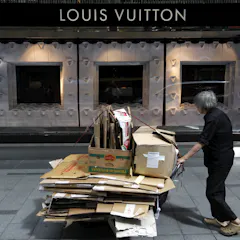
Inequality is decried at campaign rallies and in the global commentariat. But little is being done at any policy level.

Refugee policy may well be a humanitarian issue. But it is also a development issue.

The rich have to be taxed more and the poor need to be paid more, according to Oxfam International head of inequality policy Max Lawson.

Schools across Canada should ‘grow down’ and offer two years of full-day preschool, according to a new report. This would allow mothers to work, improve child outcomes and reduce income inequality.
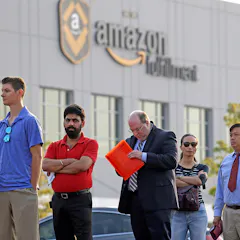
Amazon, like the entire tech sector, has suffered from a lack of diversity in its workforce. This trend is likely to continue when it opens a second headquarters in one of 20 cities.

Income inequality, the most common way to measure the gap between the rich and the poor, only tells part of the story. Wealth inequality tells the rest.
Top contributors
-

Part-Time Professor of Economics, The New School
-
Professor, Crawford School of Public Policy, Australian National University
-
Professorial Fellow and Co-Director, HILDA Survey, Melbourne Institute of Applied Economic and Social Research, The University of Melbourne
-
Nicolas Herault is a Friend of The Conversation.
Professor, Bordeaux Schoool of Economics, Université de Bordeaux
-
Associate Research Professor of Information Systems, Arizona State University; Institute for Humane Studies
-
Professor, ESCP Business School
-
Emeritus Professor, Department of Political Economy, University of Sydney
-
Professorial Fellow, Jumbunna IHL, University of Technology Sydney
-
Emeritus Professor of Economics (Griffith University) and Teaching Associate (University of Queensland), Griffith University
-
PhD candidate at the LSE and Research Fellow at the Superpower Institute, The University of Melbourne
-
Adjunct associate, Swinburne University of Technology
-
Associate professor, University of Sydney
-
Professor of Business and Society, University of Technology Sydney
-
Professor of Housing & Social Policy, HHAUS Housing, Homelessness & Urban Studies, Swinburne University of Technology
-
Research Professor in Social Policy, UNSW