

The idea of passive income is often glamorized, but the reality is that many of these ventures require significant effort.
Articles on Income
Displaying 21 - 40 of 97 articles
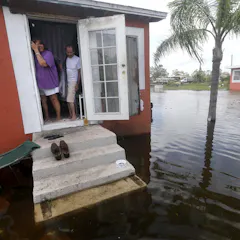
Researchers tracked power outages after 8 major storms to see how wealth corresponded to recovery time.

Why do gay men generally earn less than heterosexual men, and lesbian women more than heterosexual women? New research aims to find out why, and how LGBTQ+ inclusivity can be improved.

You may feel little sympathy for people in the top bracket of earnings, but don’t let that stop you reading. Like it or not, their views and actions matter to everyone

Australia could benefit from revisiting a plan to match maternity leave pay rates with prior earnings as occurs in Switzerland.

The federal government wanted to give taxpayers a couple months to prepare the year’s taxes. But as filing became more complex, the date was pushed back.

The co-hosts of the ‘Taxes for the Masses’ podcast explain the upside and downside of all those credits and deductions.

The Alberta government’s report on the supposed ills of the minimum wage should be viewed within the vast, diverse spectrum of economic literature, not just standard economics.
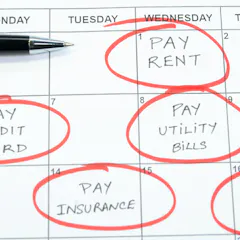
Budgets are imperative for people to manage their resources and attain financial goals.

Earnings of laid-off workers in southern Europe are 30% lower five years later, while in northern countries the decline is less than 10%. The differences are largely due to the likelihood of finding a new job.

Canada’s current income assistance programs are not doing enough to support Canadians. If the goal of temporary assistance is to help those in need, these programs must have better, broader coverage.

The tax on electronic transactions has not generated as much revenue as the government of Ghana expected.
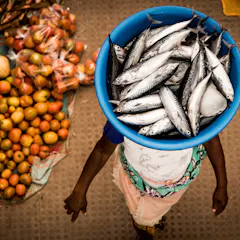
The ability of West Africa’s fisher women to cope or adapt in times of adversity should not let policymakers off the hook.

Instead of a guaranteed fixed income, a universal job guarantee policy provides jobs — and wages — to people who aren’t able to find work on their own.

In families that are facing economic insecurity, fathers are more likely to experience depressive symptoms that can lead to conflict.

The future of tipping should be defined by Canadians, not businesses seeking to shift responsibility for worker compensation onto consumers.

Adults in the US reported the same levels of depression a year into the pandemic as they did at the outset.

Many Americans regularly report that they don’t make enough to support their families. Status plays a role — while money can’t buy happiness, it can bring status, which can lead to happiness.

A levy on electronic transactions in Ghana makes sense if the government gets the architecture for it right

Compared to people who aren’t as good at math, people who are better at math are more happy when they have high incomes and less happy when they have lower incomes.
Top contributors
-

Pro Vice-Chancellor, Climate, Sustainability and Inequality and Director, Southern Centre for Inequality Studies, University of the Witwatersrand
-
Professorial Fellow and Co-Director, HILDA Survey, Melbourne Institute of Applied Economic and Social Research, The University of Melbourne
-
Professor in sociology, Sciences Po
-
Chief executive officer, Grattan Institute
-
Associate Professor, Rhodes University
-
Senior Researcher, Southern Centre for Inequality Studies, University of the Witwatersrand
-
Professor, Department of Gerontology, McCormack Graduate School Director, Center for Social and Demographic Research on Aging, Gerontology Institute, UMass Boston
-
Professiorial Fellow, The University of Melbourne
-
Profesora Ordinaria de Direccion Estrategica y Dirección de Personas, IESE Business School (Universidad de Navarra)
-
Professor, Crawford School of Public Policy, Australian National University
-
Halford Mackinder Professor of Geography, University of Oxford
-
Visiting Professor of Tax Law, New York University, and Professor of Law, The University of Melbourne
-
Professor of Anthropology and Marine Affairs, University of Rhode Island
-
Adjunct Professor, Curtin Law School and Curtin Business School, Curtin University
-
Professor of Economics and Director of the Development Policy Research Unit, University of Cape Town