
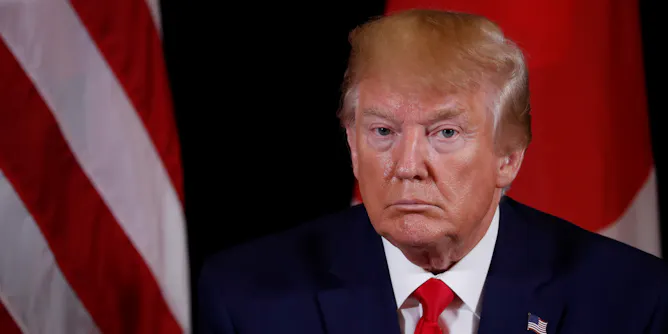
The conflict between Congress and President Trump over his dealings with Ukraine’s president is just the latest version of a long-running struggle for power between the two branches of government.
Articles on Impeachment
Displaying 101 - 120 of 167 articles
While some have seen Mueller’s testimony as a disappointment, Democrats may still initiate impeachment proceedings against Donald Trump in the House of Representatives.
To one scholar of the post-truth era, tuning in to Robert Mueller’s testimony Wednesday was to hear a duel over the facts. Not what the facts imply – but what the facts are.
Those who want President Trump out of office should forget about the 25th Amendment; it won’t work as they hope or believe. The amendment is a complex law that – by design – is very hard to use.
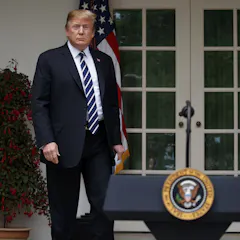
Politics have pervaded the debate about whether Congress should impeach President Trump. One legal scholar says that whether to impeach – or not – should not be viewed as a political question.
Many were confident the US Constitution was robust enough to check Donald Trump’s worst excesses, but the real push back has come from elsewhere.
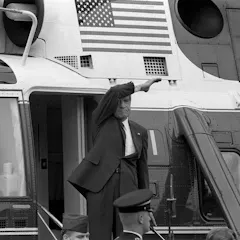
President Trump has invoked executive privilege to stymie congressional investigators. Another president, Richard Nixon, did the same thing. It helped Nixon hold onto power – but only for a while.
How can a community decide the direction it should go, if its members cannot even agree on where they are? Two political scientists say the growing phenomenon of dueling facts threatens democracy.
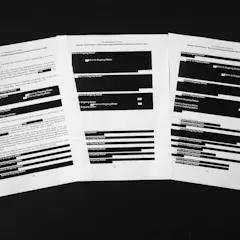
Mueller’s report describes more than a dozen times Trump may have broken the law. Here’s how Congress will decide whether the president obstructed justice during federal probes into his presidency.
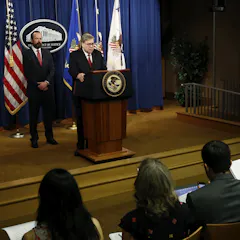
The full report on the special counsel’s Trump investigation has now been made public. As people, Congress and prosecutors nationwide dig into Mueller’s findings, here are three key issues to watch.
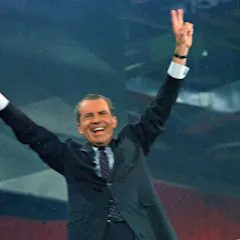
Some cite mental illness, or at least instability, as a basis to remove Pres. Trump from office. A doctor and a lawyer use a 1965 novel, ‘Night of Camp David,’ to explain why that’s unlikely.
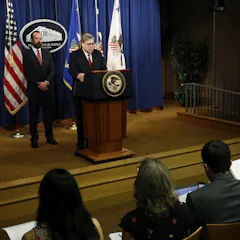
As the special counsel’s investigation of Trump turns into a partisan battle in Congress, here are four key issues to follow.
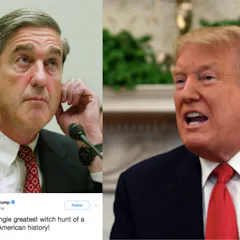
Legally, a person can obstruct justice even if he committed no other crime – though it is harder to prove. It all depends on the intent behind pressuring investigators, say, or firing an FBI director.
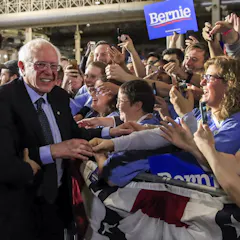
The Democrats have 24 potential presidential candidates but, like Donald Trump, their two front runners are both men in their seventies: Bernie Sanders and Joe Biden.
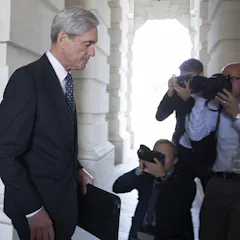
Those awaiting a rollicking read from Robert Mueller may need to manage their expectations.

Will the public ever see a report from Robert Mueller’s investigation of possible collusion between the Trump campaign and Russia? Maybe not. There are big legal hurdles to making it public.
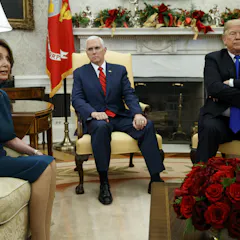
Democrats control the House and could impeach Trump if they wanted. But removing the president from office is in the hands of the Senate – which is still dominated by Republicans.
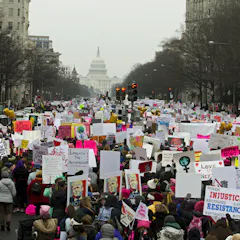
A parody of ‘the Washington Post’ announcing that Donald Trump had resigned was recently handed out in Washington, D.C.
The new Congress is divided into a GOP Senate and Democratic House. History provides a glimpse of what this could mean: Democrats hold the power to investigate, if not to legislate.
American military personnel must pass a fitness for duty exam before they serve. Nuclear weapons handlers undergo a rigorous screening process. Shouldn’t the president also undergo such exams?
Top contributors
-

Professor of Law and Adjunct Professor of Political Science, Wayne State University
-
Professor of law and ethics, Georgia State University
-
Foundation Professor of Law and Political Science, Arizona State University
-
PhD Candidate in the School of Languages, Cultures and Linguistics, SOAS, University of London
-
Professor of Languages and Linguistics and Anthropology, Department of Anthropology, McMaster University
-
Lecturer in American Politics, University College Cork
-
Research Specialist, the Miller Center, University of Virginia
-
Assistant Professor in Political Science, University at Buffalo
-
Professor of Philosophy, Public Policy and Governance, University of Washington
-
Professor in U.S. Politics and U.S. Foreign Relations, United States Studies Centre,, University of Sydney
-
Professeur d'Histoire et civilisation US, Université Paris Cité
-
Election Analyst (Psephologist) at The Conversation; and Honorary Associate, School of Mathematics and Statistics, The University of Melbourne
-
Professor of Communication and Journalism, Texas A&M University
-
William Nelson Cromwell Professor of Jurisprudence and Political Science, Amherst College
-
Associate Professor of Political Science, The Ohio State University