
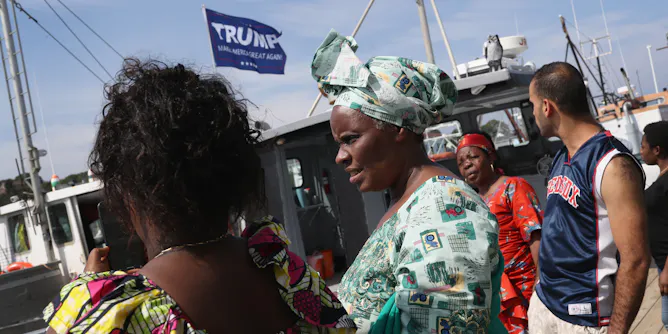
A new DHS policy could result in the detention of thousands of people who have lawful immigration status.
Articles on Immigration
Displaying 101 - 120 of 1522 articles
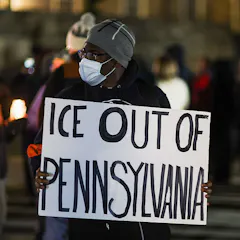
After the government acquired a warehouse in PA to expand ICE operations, questions are mounting about transparency, cost and government real estate transactions.

Bad Bunny’s naming of ‘Canadá’ at the Super Bowl exposed Canada’s tendency to imagine itself as peripheral to Latin America, when its people and culture are central to its reality.

Emerging from a swirl of sonic influences, reggaeton began as Panamanian protest music long before Puerto Rican artists turned the genre into a global phenomenon.

The assumption that Australian values are coherent is flawed, and the same flawed assumption is often projected onto other countries.

For body cameras to function as transparency tools, wrongdoing would have to be consistently penalized, highlighting the consequences of noncompliance.

Both Prohibition and current mass deportation efforts were hastily built, staffed by people permitted to use force, and had difficult objectives to achieve.

Stories of Florida’s immigrant entrepreneurs show how immigrants find opportunities and fill economic gaps.
The growth of today’s aggressive immigration tactics traces back 25 years, when enforcement took on the dimension of counterterrorism.

Clergy sometimes place themselves in harm’s way for moral and religious reasons. A scholar of religious ethics explains when – and why.

A ‘domestic terrorism’ label that comes before the facts teaches the public to treat the term as propaganda rather than factual diagnosis.

Federal immigration raids in Minnesota prompted a social backlash. But the business community is largely hedging its bets due to a changed political calculus.

Spain’s mass amnesty increases its economic reliance on immigration.

Congress has handed ICE a blank check, dramatically increasing its funding without exercising oversight.

Clergy demonstrating against ICE in Minneapolis have turned to classic ‘freedom songs’ – the music associated with protests ever since the Civil Rights Movement.
Pedro Sánchez’ government is opening legal channels for residency.
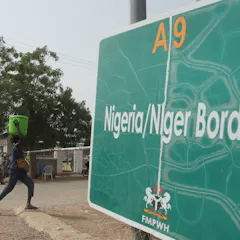
Nigeria’s open borders promise trade but deliver exploitation.
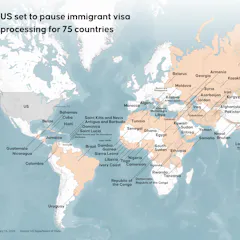
Family reunification is often framed as a cost, but evidence shows it functions as social infrastructure that supports work, well-being and economic stability.

When protesters experience repression and violence, whether or not they have legal education can help determine continued involvement in a protest movement.
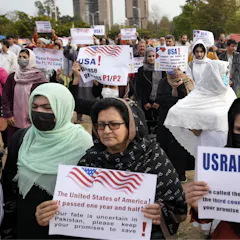
After a failed US intervention exposed Afghan civilians to Taliban threats, Washington is retreating from its humanitarian obligations.
Top contributors
-

Professorial Fellow, University of Canberra
-
Senior Lecturer in Public Policy, Lancaster University
-
Professor of Social Economics, UTS Business School, University of Technology Sydney
-
Professor of International Migration and Forced Displacement and Director of the Institute for Research into International Migration and Superdiversity, University of Birmingham
-
Visiting professor, Harvard University
-
Professor of Law and Government, Durham University, Durham University
-
Associate Professor, School of Law, Murdoch University
-
Professor of Public Interest Law and Chicana/o Studies, University of California, Davis
-
Clinical Associate Professor of Law, Co-Director, USC Immigration Clinic, University of Southern California
-
Emeritus professor, Monash University
-
Program Director, Housing and Economic Security, Grattan Institute
-
Professor, Department of Politics, University of Liverpool
-
Professor in the Department of Economics, UCL
-
Senior Lecturer in Human Rights, Constitutional Law and Legal Theory, University of Wollongong
-
Adjunct professor, Adelaide University