

With Australian and New Zealand demand for cocaine as strong as it is, it’s hard to know how much $600 million will do to stop the flow of drugs.
Articles on Illegal drugs
Displaying 1 - 20 of 39 articles

On its own, the Drug Overdose (Assistance Protection) Legislation Bill is no magic bullet. But it would add to an existing range of effective harm-reduction tools.

Legal drugs mimic popular substances. But when one is banned, another quickly takes its place.

Two airstrikes in recent weeks have been aimed at ‘narcoterrorists’, according to the White House. They’ve been deadly, dangerous and likely ineffective.

Not even during the darkest days of Pablo Escobar’s infamous empire did Colombia produce as much cocaine as it does today.

The benefits of providing safe smoking kits include fewer people injecting and stronger connections with harm-reduction services and community groups.

Increasingly, these types of tranquilizers are turning up in fentanyl, oxycodone and other illegal opioids.

To curb the illicit drugs trade, law enforcement should look beyond individual drug busts and focus on capturing the illegal money that reaches so many parts of the global economy.
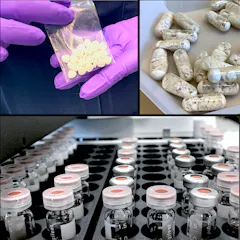
Unlike opium, nitazenes and other synthetic opioids can be produced anywhere in the world using precursor chemicals that are often uncontrolled.
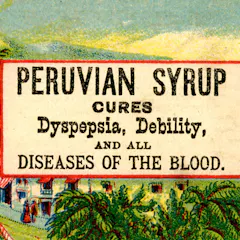
Cannabis for religious purposes, cocaine in wine and heroin for coughs. These are just some of the ways illicit drugs have been used throughout history.
The attributes that make many athletes great, like risk-taking and aggression, are a reason why some turn to illegal drugs.

Taking MDMA can raise our body temperature higher than it should be. Extreme heat may compound this effect.

New research shows that not only is the use of drug detection dogs ineffective, it may in fact increase the risk of drug-related harm.

Buyers and sellers alike use this system to not get caught.

Tor Market is now the longest-running English-language market for illegal drugs on the dark web. But its success and profile may contain the seeds of its own downfall.

Some people seek out the herbal drug Kamini to stay awake – but it contains up to 21% morphine so doesn’t have that effect. And dependency can escalate quickly.

History shows there is no magic bullet for solving gang crime. Only an evidence-based approach, coupled with mutually agreed targets and indicators, will start to achieve real change.
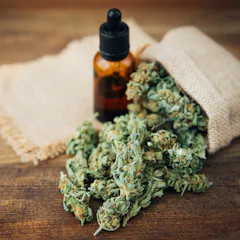
Non-intoxicating cannabis products are safe and well tolerated by those who use them, so why not lower the clinical threshold for their manufacture and sale?
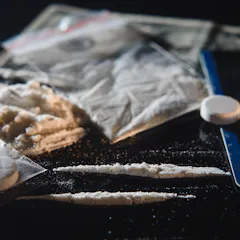
The Drug and Substance Checking Bill currently moving through parliament marks another milestone in New Zealand’s shift away from criminalisation and towards harm reduction.

Decriminalization is an important step in addressing the overdose crisis, but it is crucial that other approaches — like regulation — are also in place.
Top contributors
-

Professor of Law, University of Waikato
-
Associate Professor, National Drug Research Institute / enAble Institute, Curtin University
-
Honorary Fellow, Department of Health Sciences, University of York
-
Professor in Criminal Justice and Faculty Director of Public Engagement, University of Kent
-
Associate Professor in Drug Policy and Health Law, Te Kunenga ki Pūrehuroa – Massey University
-
Professor of Policy and Health, Te Kunenga ki Pūrehuroa – Massey University
-
Professor of Law, University of Waikato
-
Lecturer, Edith Cowan University
-
Senior Lecturer, University of Stirling
-
Associate Professor in Criminology and Drug Policy, Centre for Crime Policy and Research, Flinders University
-
PhD candidate, College of Health, Te Kunenga ki Pūrehuroa – Massey University
-
Senior Lecturer in Pharmacy and Pharmacology, Head of Breast Cancer Targeting and Drug Delivery Laboratory, University of Sydney
-
Director, International Centre on Human Rights and Drug Policy, University of Essex
-
Professor, Sociology Department, Oregon State University
-
Lecturer in Criminology, University of Leicester