

For many in former Soviet Bloc countries the desire to forget the communist past conflicts with the need to make money from dark tourism sites.
Articles on Hungary
Displaying 61 - 80 of 115 articles

On Holocaust Remembrance Day, or ‘Yom HaShoah,’ a music scholar recollects how composer Istvan Anhalt’s experiences in Nazi-occupied Hungary informed his later life and music in Canada.
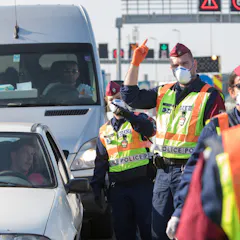
National emergencies allow for the purest expressions of sovereign power, testing the government’s commitment to human rights. Some leaders are failing the coronavirus test, experts say.
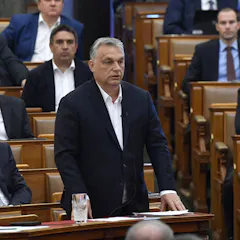
The government now has the power to do whatever it deems necessary to manage the crisis, effectively for an unlimited period of time.
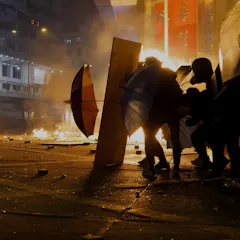
Revolutions are built not on deep misery but on rising expectations. History may not provide much hope of immediate change in Hong Kong – but protesters may have a longer view.
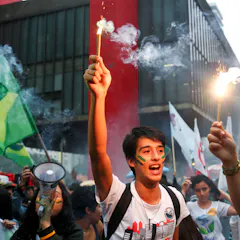
Universities are increasingly under threat everywhere.
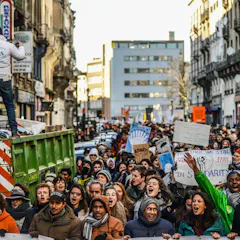
The 2015 reception crisis had a profound impact on civil society in Europe. A significant set of attitudes and practices emerged that give a sense of what political participation means today.
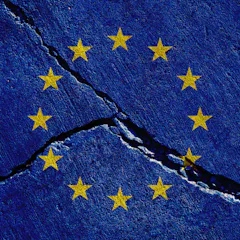
Populists didn’t do well enough in the EU’s recent elections to destroy Europe from within. But with far-right and far-left parties winning new seats, consensus on key issues looks ever less likely.
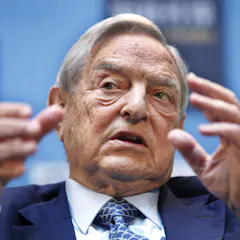
Media-savvy, far right-wing activists in the U.S., Hungary and Poland spread white nationalist politics using paranoid Soros conspiracy theories. This new global extremism is coming to Canada.
Populism and nationalism are two concepts that go together today. Isolationist proposals, Euroscepticism and a definition of nation against the “enemy” are three of its main ingredients.
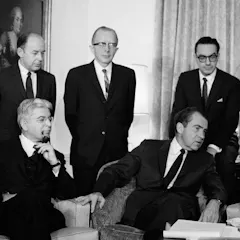
President Trump has been attacking the Federal Reserve for months and appears intent on nominating political allies to its board. An economist explain what typically happens next.
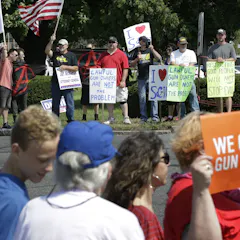
Legislators in a growing number of democracies are clamping down on civil society. In the United States, it’s happening at the state level.
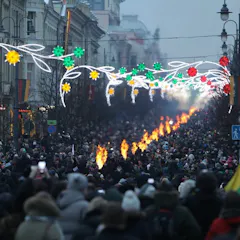
While many countries across Eastern Europe celebrate 100 years since they were born or restored as nation-states after the First World War, not everyone in these states are celebrating.

When an elected leader turns autocratic, the economy tends to suffer. That’s because, in a functioning democracy, economic policy is made jointly, with lawmakers playing a key role.
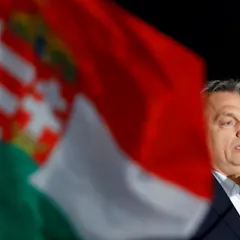
Hungarian Prime Minister Viktor Orban has transformed from a liberal into an authoritarian leader who uses the tools of democracy to attack civil society. Hungarians are protesting in the streets.
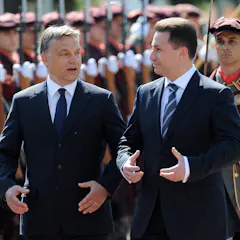
Viktor Orban is extremely opposed to taking asylum applications, unless they come from his friends.
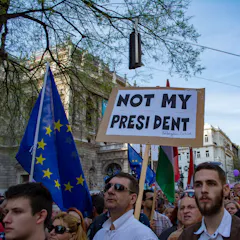
Gender studies degrees in Hungary will no longer receive funding at state universities.
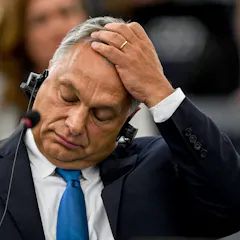
The proudly illiberal leader is forging new alliances ahead of European elections next year.
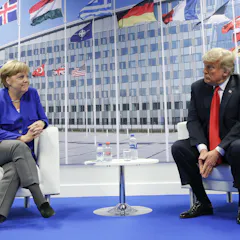
The president, who called the European Union a ‘foe’ following a series of meetings in Europe, may not realize just how much Americans have gained from their relationship with Europe.
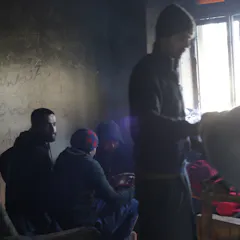
Men living in transit camps on the EU’s borders are at risk of exploitation and violence.
Top contributors
-

Professor in International Politics, Glasgow Caledonian University
-
Senior Lecturer in Czech Studies, University of Glasgow
-
Professor of Practice in Diplomacy, Fletcher School of Law & Diplomacy, Tufts University
-
Professor of International Management & Political Economy, Loughborough University
-
Affiliated Fellow at the Institute for Advanced Study, Central European University
-
Chair, Human Rights Program, Associate Professor, Central European University
-
Professor of International Security, University of Birmingham
-
Lecturer in Politics and International Relations, University of Glasgow
-
Assistant researcher, University of Sydney
-
Professor of comparitive politics, Georgetown University; Independent Social Research Foundation
-
Assistant Professor, Institute of Political Studies, Polish Academy of Sciences, Polish Academy of Sciences
-
Hurst Senior Professorial Lecturer, Co-Director Transatlantic Policy Center, American University School of International Service
-
Associate Professor of Political Science and Global Studies, Boise State University
-
Director of Migration Studies Programme, Te Herenga Waka — Victoria University of Wellington
-
Cultural and Political Sociologist, Université de Liège