
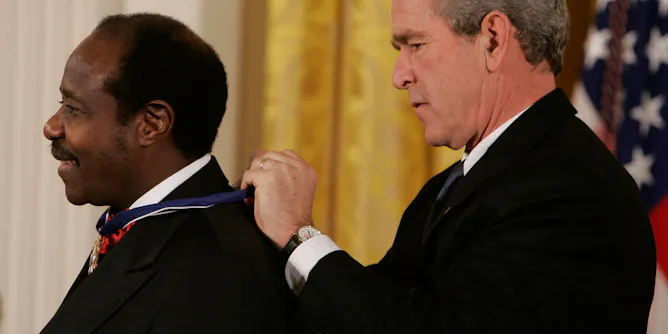
Rusesabagina’s release portrays Rwanda’s president as a pragmatist – one willing to negotiate once a security threat is neutralised.
Articles on Human rights
Displaying 241 - 260 of 1125 articles

Three scholars examine the implications of the crisis roiling Israel as hundreds of thousands of people protest across country.
Thirty years ago the World Bank recognised that its position was untenable. It put in place mechanisms to make the bank more accountable to ordinary people.

Discrimination against anyone based on their sexual orientation or gender identity is not an African value.
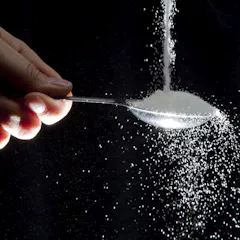
By reflecting on the violent origins of the Canadian sugar industry, we can bring wider attention to the exploitation underpinning the history of Canadian cuisine.

In Tunisia, scapegoating migrants diverts from the continuous failure of government to solve deep economic and social crisis.
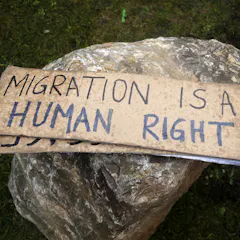
Recognizing the challenges posed by climate-induced displacement is important. But officials must avoid rhetoric about displaced people that can fuel xenophobia.

Neil Agget’s passionate trade unionism proved fateful. It made him a target of a brutally repressive apartheid police state.
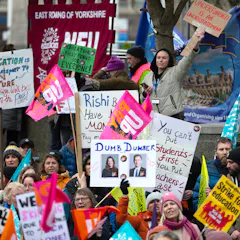
The UK parliament’s Joint Committee on Human Rights has suggested changes to the strikes bill but even those may not go far enough.

The earthquake that struck Turkey and neighboring Syria on Feb. 6, 2023, was a natural disaster, but its consequences have been shaped by the human tragedy of the Syrian civil war.
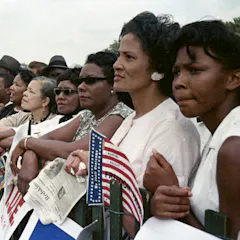
From family to grassroots activists, these are some of the women who shaped MLK’s vision and campaigns.
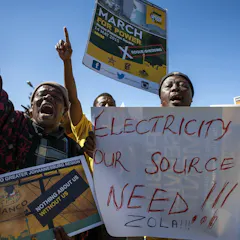
South Africa’s courts are likely to set a high bar in cases brought against the government’s most recent state of disaster declaration.
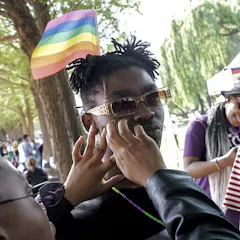
The absence of reliable quantitative data makes it difficult – if not impossible – to hold Home Affairs, the police and other state entities to account.

The explosive viral spread of the grainy but dramatic footage shows the limits of mainstream media ethics.
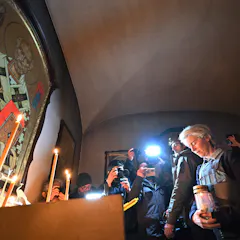
The war’s one-year anniversary is eerily close to that of an EU report on the prevention of mass atrocities. Ten years later, its authors reflect on what the bloc could have done differently.
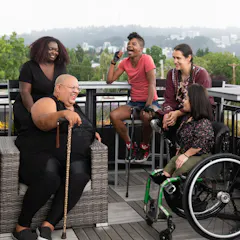
There could be lots of reasons why people with disability decline or don’t want offers of help. Research at the Dignity Project at Griffith University shows there is no ‘one-size fits all’ approach.

A scholar who has studied imprisonment explains why the promise of sentence reductions in return for organ donation raises ethical issues about whether inmates can ever consent freely.
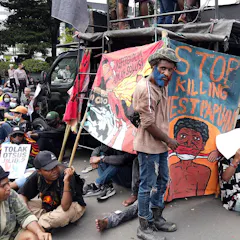
The kidnapping of Phil Mehrtens is a sign the West Papuan independence movement is again becoming desperate to attract international attention, following decades of violent human rights abuses.

Mexico’s crime epidemic continues to worsen, as poverty and inequality also grow in the country.
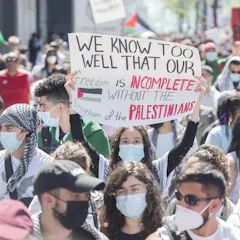
When universities are seen as favouring one position on the Palestine/Israel issue, their ability to uphold academic freedom as a fundamental tenet of democracy is jeopardized.
Top contributors
-

Professor of Law, Conflict and Global Development, University of Reading
-
Professor in Human Rights and International Law, University of Newcastle
-
Sarah Joseph is a Friend of The Conversation.
Professor of Human Rights Law, Griffith University
-
Professor of Human Rights Law, Monash University
-
Professor of Law, University of Waikato
-
Professor of International Human Rights Law, Centre for Human Rights, and acting SARChI Chair in International Constitutional Law, University of Pretoria
-
Professor/Senior Research Fellow, Centre for Advancement of Scholarship, University of Pretoria
-
Professorial Fellow, University of Canberra
-
Pro Vice-Chancellor Academic Advancement & Diversity, The University of Western Australia
-
Fellow, Saint Mary’s University
-
Associate Professor of Law, Member of Deakin Cyber and the Centre for Law as Protection, Deakin University, Deakin University
-
Professor of Law, University of Waikato
-
Professor of Law; Kim Santow Chair of Law and Social Justice, University of Sydney
-
Assistant researcher, University of Sydney
-
PhD Candidate, University of Technology Sydney