

Building infrastructure takes time. To develop sustainable transportation, Canada needs to invest in high-quality infrastructure that will enable us to make environmentally friendly travel choices.
Articles on High-speed rail
Displaying 21 - 40 of 50 articles

HS2 will provide an economic boost to cities in the north and midlands of England.
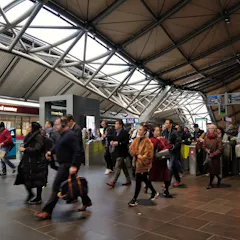
While governments focus on how to ease congestion and make affordable housing more accessible for workers in our biggest cities, fast rail could be a mixed blessing for regional cities.

More than half a century after the first high-speed trains began running overseas, Australia is still waiting for the long-promised service. Right now, faster rail is a better short-term prospect.

Planners have long tried to determine the ideal city size, and ideas have evolved with changing circumstances. But a good city depends more on the way it’s managed than on how many people it holds.
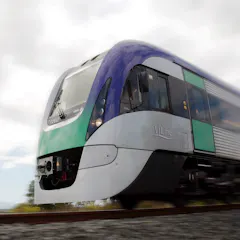
High-speed rail for Australia has been on the drawing boards since the mid-1980s but has come to nothing. Three states are developing medium-speed rail with federal funding, but NSW is missing out.

With 35 new inter-city routes shortlisted for testing, it’s time to start taking hyperloop seriously.
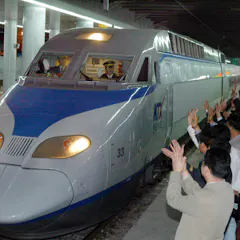
The private consortium CLARA is proposing a high speed rail network between Sydney and Melbourne paid for by value capture but it still relies on the benefits outweighing the costs.
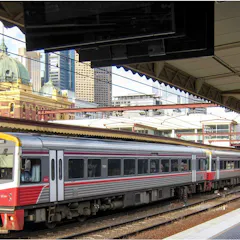
Long-distance commuting may help promote the development of regional cities by boosting local populations, skills and incomes.
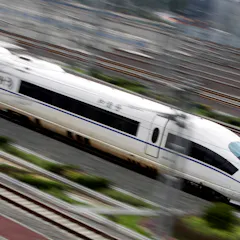
High-speed rail is now a well-established technology and Australia needs it, as long as the project ticks all the boxes needed to deliver both private and public benefits.
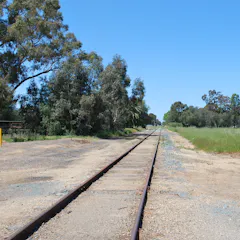
A fast rail link between Sydney and Melbourne was first proposed in 1984. So why haven’t we done it yet?
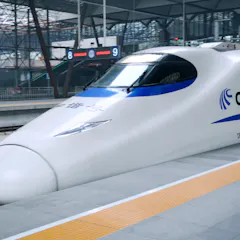
Is the UK chancellor’s new commitment to infrastructure undermined by a reliance on China?
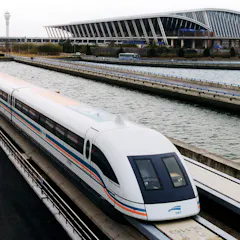
Trains that use magnets to levitate above the tracks might sound like something from Back to the Future, but the concept of magnetic levitation has been around for many years. Maglev trains, which use…
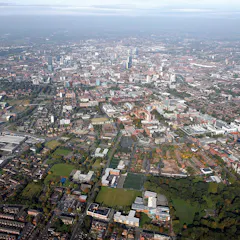
The UK’s economy is highly unbalanced; we have the worst regional disparities in the developed world and London’s property prices are also the world’s most expensive – second only to Monaco. Rebalancing…

George Osborne’s proposal for a high speed rail line across the north of England makes a lot of sense. It will come far too late to resolve our present economic worries, but better train links are crucial…
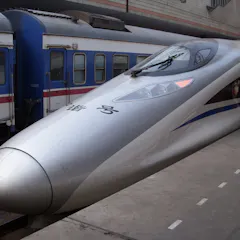
As a young university student, I first visited Guangzhou during the mid-1990s and found it a gloomy and unsettling place. The third world, undoubtedly. When I went back again in 2010, it was transformed…

Despite impressive economic growth rates over the last decade, a third of Laos’s population still lives below the extreme poverty line of US$1.25 per day. Most of the extreme poor Laos are ethnic minorities…
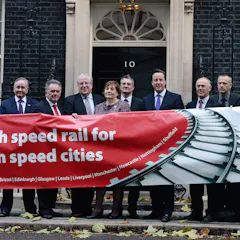
The HS2 project survives. Despite ferocious attacks, the initial High Speed Rail (Preparation) Act 2013 was passed in November and the Hybrid Bill – where the real arguments are debated – is now going…

The expansion of UK airports could mean breaching climate targets, Climate Change Committee head David Kennedy has said. Ahead of a full report next summer that would examine the airport expansion plans…
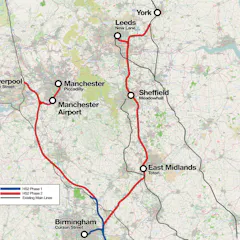
Professor Peter Mackie Institute for Transport Studies, University of Leeds Leeds and its metropolitan region should be one of the big winners from HS2. Financial and legal services, engineering consultancy…
Top contributors
-

Honorary Principal Fellow, University of Wollongong
-
Professor in Transport and Supply Chain Management and Interim Head of School of International Business, Logistics and Supply Chains, University of Sydney
-
Professor of Sustainability, Curtin University
-
Senior Research Fellow, La Trobe University
-
Emeritus Professor in Sustainable Urbanism, Swinburne University of Technology
-
Adjunct Professor, School of Engineering and Built Environment, Griffith University
-
Associate Professor, School of Political Studies, with Cross-Appointment to Geography, Environment and Geomatics, L’Université d’Ottawa/University of Ottawa
-
Professor of Global Studies and Geography, Hofstra University
-
Professor of Construction Project Management, University of Manchester
-
PhD Candidate, Urban Geography, UCL
-
Scientia Professor of Economics, UNSW
-
Senior Teaching Fellow in Strategy and International Business, University of Warwick
-
Professor of Business Economics, University of Birmingham
-
Professor of Control Systems Engineering, Loughborough University
-
Lecturer in Infrastructure Planning, Bartlett School of Planning, UCL