

The move is part of a longer history of obscuring and demonizing the Haitian Revolution and its leader, Jean-Jacques Dessalines.
Articles on Haitian Revolution
Displaying all articles

Historian Julia Gaffield discusses her recent biography on Haiti’s first leader, whose life she argues was unfairly tarnished by biased verdicts of history.
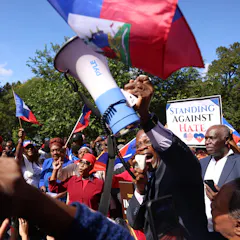
As Black immigrants, Haitians are doubly marginalized by structural racism embedded in US immigration policies and the broader societal racism experienced by Black Americans.

There is a long, and often ugly, history of foreign intervention in Haiti.
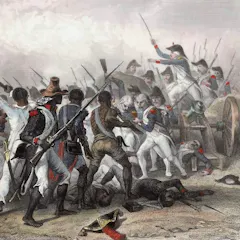
Leaving out the history of Napoléon’s brutal subjugation of Haiti is akin to making a movie about Hitler without mentioning the Holocaust.
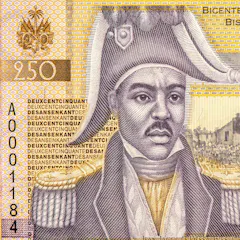
The Haitian revolution was the first by a former slave colony and was to inspire other emancipation movements across the New World.
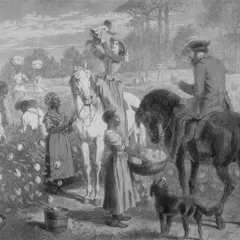
History is full of examples of nations paying out to compensate for slavery. But the money never went to those who suffered under the system, only those who profited.

The economy of the Bahamas depends on Haitian labor. But some Bahamians see no place for migrant workers in their country’s long, slow recovery from Hurricane Dorian.
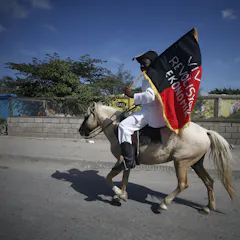
Jean-Jacques Dessalines, who freed Haiti from French colonial rule in 1804, is revered as a spirit in the Haitian religion. Now he’s become an icon of the uprising against President Jovanel Moïse.
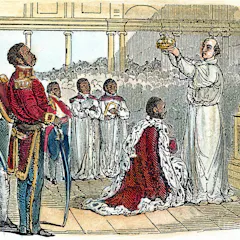
In 1811 a former slave named Henry Christophe anointed himself ‘First Monarch’ of the ‘New World.’ For 10 years, he ruled over a part of modern-day Haiti, becoming a global media sensation.
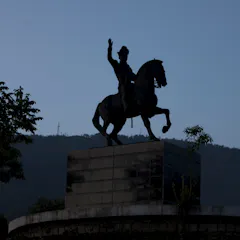
A renamed Brooklyn street celebrates Jean-Jacques Dessalines, a Haitian slave turned president. For centuries his legacy was tarnished by allegations that Haiti’s revolution led to ‘white genocide.’
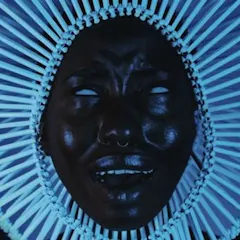
In a gloomy year filled, a number of artists with an Afrofuturist perspective gave hope with inspired works of art.
Top contributors
-

Professor of History, William & Mary
-
Professor of French and African American Studies, Yale University
-
Senior Lecturer in History, The Open University
-
Lecturer of English. PhD Candidate in Afrofuturism and African Studies, University of the Western Cape
-
Associate Professor of Public Policy, University of Connecticut
-
Professor of Anthropology, American University
-
Associate Professor of Anthropology and African American & Africana Studies, University of Kentucky
-
Professor of International Politics, Lancaster University