

Beijing’s cyber operations are largely conducted in the shadows. But a recent leak has shed light on how the state is working with private companies to target online activism.
Articles on Hacking
Displaying 21 - 40 of 284 articles

We don’t know much about the nature of this large-scale ransomware attack. But it’s not entirely surprising – health data is a prime target for cybercrime.
In what is colourfully termed a ‘brute force’ attack, hackers use bots to test millions of username and password combinations on different websites – until they find a match.

Prolific and highly profitable, LockBit provides ransomware as a service. Aspiring cybercriminals sign up to the scheme, and the group takes a cut. Here’s how it works.

Securing our voting systems to defend against hacks is vital but challenging.
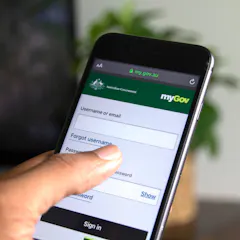
Scammers have exploited a simple weakness in the myGov online portal to redirect hundreds of millions of dollars in tax refunds.

AI could allow cybercriminals to operate with greater efficiency, targeting more people at once.
Cybercriminals are attempting to monetise the hacking techniques used by state actors.

What data privacy risk does TikTok pose, and what could the Chinese government do with data it collects? And is it even possible to ban an app?

School officials are becoming increasingly wary of TikTok amid concerns that the app poses a risk to student safety and privacy and makes the nation vulnerable to spies.

Optus used press releases, and Twitter when it could have contacted its customers by text.

From tractors to smartphones, consumers may own their devices but the manufacturers still often hold the keys.

Cyberattacks demanding ransoms for the release of information are on the rise. To determine if they should pay, businesses need to think about how they would react in such a scenario.

“Hackathons” can imply breaching security and privacy. To more accurately reflect their creative and constructive intent, they can be referred to instead as “datathons” or “code fests.”

Many organisations abide by a “zero trust” rule wherein absolute trust is placed in nothing, apart from a central identity and access management system. But what happens when this system is breached?

The social media strategies of many parties and candidates aim to bypass mainstream media to speak directly to voters, but they are often not as sophisticated as is assumed.

Cryptocurrency allows Ukraine to get quick financial support, and Russia, to bypass international sanctions and protect some of its economic interests.

There’s an alleged global network of cyber activists operating under the Anonymous name. Knowing who is responsible for what will become increasingly difficult as more cyber attacks happen.

This deceptively simple online word guessing game has captured the English-speaking world.

Weirdness is a clue about fraudulent email messages. But it takes more than a sense that something’s wrong to get people to investigate.
Top contributors
-

Director of UWA Centre for Software Practice, The University of Western Australia
-
Head, The Cyber Academy, Edinburgh Napier University
-
Professor of Cyber Security Practice, Edith Cowan University
-
Lecturer in Software Engineering, Monash University
-
Associate Professor, School of Engineering, RMIT University
-
Senior Lecturer in Networking, The Open University
-
Adjunct Fellow, Computer Science and Software Engineering, Swinburne University of Technology
-
Professor of Management, University of North Carolina – Greensboro
-
Associate Professor in Telecommunications Engineering, Swinburne University of Technology
-
Security Researcher, Associate Professor in Resilient Systems, Edith Cowan University
-
Adjunct Professor, Australia-China Relations Institute, University of Technology Sydney
-
Directeur de la Recherche et des Formations Doctorales, Directeur adjoint, Télécom SudParis – Institut Mines-Télécom
-
Professor of Criminal Justice, Michigan State University
-
Professor, Information Security Group, Royal Holloway, University of London
-
Teaching Professor of Computer Science and Electrical Engineering, and Associate Director, UMBC Cybersecurity Institute, University of Maryland, Baltimore County