

Young people continue to cancel their private health insurance despite discounts to entice them to stay. Instead, we should reduce their premiums based on their likelihood of needing health care.
Articles on Grattan Institute
Displaying 41 - 60 of 68 articles

Health insurance costs are rising and the price of prostheses such as hip replacements are partly to blame. But there is a way to rein in costs – and give patients more choice and better devices.

The next government can make its own luck, but it needs to focus on what matters and ignore the rest.

Whoever the federal education minister after the May 18 election, he or she needs to put school funding, evidence for what works and initial teacher training front and centre.

Before deciding what to study at which university, high school graduates should consider the drop-out rates, early-career employment prospects and lifetime earnings their program is likely to yield.

Compelling Australians to put even more into super runs the risk of giving them a better standard of living in retirement than they had while working.
The Grattan Institute says swapping stamp duty for land tax would make Australians up to $17 billion a year better off.
The federal government is primarily to blame for the mess that is Australia’s energy policy. It’s time for the states to step up, to reduce both prices and emissions.
In the election bidding wars, parties commit billions to transport projects, often before all the work needed to justify these has been done. More cost-effective alternatives hardly get a look-in.

Efforts by governments to redirect population growth to regional Australia have never worked. Even if such policies could be made to work, they probably wouldn’t be worth the costs.

Ahead of two state elections, the Grattan Institute Orange Book examines the state of each state and how each can do things better. The good news is that if each copied the best in each field they would do very well indeed.
A new report from Grattan Institute argues the secrecy and inequality surrounding who has “say” and “sway” in Canberra can be remedied – if politicians can just find the will to do it.

A new report has found that Tasmanians, Queenslanders and New South Welshmen are paying $100-$400 a year for unnecessary infrastructure.
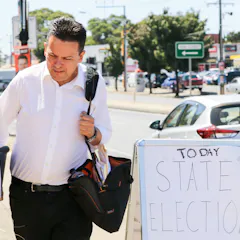
The minor party vote in Australia is historically high and growing, as trust in the bigger parties slides away.

Universities now have the incentive and flexibility to respond to student interests, and we shouldn’t distract them with policy changes that could make things worse.

Extra funding to GPs from lifting the Medicare Rebate freeze should be used to buy better data, so that future reform can be based on sound evidence.
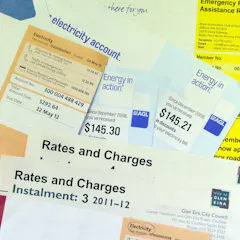
Electricity retailers need to make their prices and offers more transparent and easier for customers to understand, or risk having to submit to price regulation to drive down bills.

A flat-rate fee on all student loans is a fairer economic proposal.

Obesity imposes enormous costs on the community, through higher taxes to fund extra government spending on health and from foregone tax revenue because obese people are more likely to be unemployed.

Confusing short-term jobs with long-term career outcomes is a distraction from the real issues in science higher education.
Top contributors
-

Honorary Enterprise Professor, School of Population and Global Health, and Department of General Practice and Primary Care, The University of Melbourne
-
Professiorial Fellow, The University of Melbourne
-
Program Director, Housing and Economic Security, Grattan Institute
-
Professorial Fellow, University of Canberra
-
Program Director, Health and Aged Care, Grattan Institute
-
Chief executive officer, Grattan Institute
-
Disability Program Director, Grattan Institute
-
Senior Associate, Grattan Institute
-
Democracy Deputy Program Director, Grattan Institute
-
Professor of Higher Education Policy, Monash University
-
Associate, Grattan Institute
-
Researcher, Grattan Institute
-
Deputy Program Director, Migration and Labour Markets, Grattan Institute
-
Transport and Cities Program Director, Grattan Institute
-
Associate, Disability Program, Grattan Institute