

In Mozambique growth and employment are becoming disconnected, and so are skills and opportunity.
Articles on Graduate employment
Displaying 1 - 20 of 29 articles

Higher education is about more than just income.
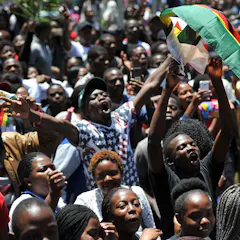
Zimbabwe’s graduates feel let down because the modernist promises of education have failed them.

Care leavers aren’t able to return to a family home to consider their options after graduating.
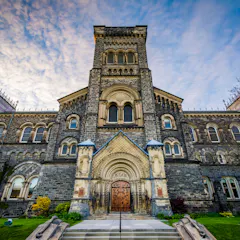
Forcing universities to only serve the needs of the labour market undermines their abilities to educate students and conduct research.

Rates of full-time employment and pay relative to other workers have fallen for the latest generation of new workers. Yet the HILDA Survey shows their reported job satisfaction has risen.

Most of the universities whose graduates earn more after nine years in the workforce are in NSW and ACT. That suggests it’s more about where the best-paid jobs are than the universities themselves.

Completing two degrees at the same time can increase graduates’ rate of success in finding full-time work by up to 40%.

More and more Australians are gaining university degrees. And increasingly that means a degree does not guarantee a job, although it did appear to offer some protection against COVID job losses.

The experience of upward social mobility through education can have unexpected emotional costs – particularly for graduates from the working class.

Doubling the cost of degrees in the humanities and social sciences has a disproportionate impact on women because they account for two-thirds of the students.

Graduate employment outcomes will determine 40% of the $80 million extra government funding for universities. This is a problem for three reasons.

Having a good degree is not always enough to succeed.

An administrative link between a graduate’s education and taxation records already exists, and it could be used to give us more accurate and detailed longitudinal analyses of graduate outcomes.
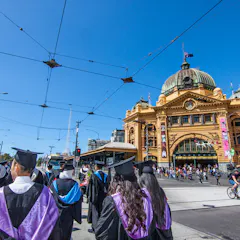
While more people than ever are graduating from universities, some companies are abandoning degree requirements altogether.

There are already signs of this happening in Australia, but research from overseas reveals few benefits.

Vocational Education and Training helps low school achievers up skill and avoid disadvantage in the workplace.

Economic models suggest that South Africa’s GDP would fall, inequality would deepen and unemployment would rise if university graduates don’t enter the labour market in 2017.
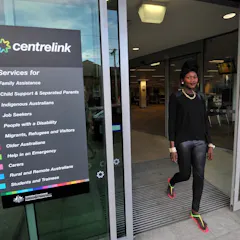
Working life is becoming more fluid, if not precarious. We need to look at how our education systems are preparing young people for a changing workplace.

Young people today will need to be more flexible and more entrepreneurial than in the past. Universities can help by designing courses that will have value in a rapidly changing economy.
Top contributors
-

Associate Professor in Managing People and Organisations, University of Sydney
-
Professor of Economics, University of Canberra
-
Scientia Professor of Economics, UNSW
-
Associate Professor, University of Pretoria
-
Director, Science Policy and Projects, Australian Academy of Science
-
Director, LH Martin Institute, The University of Melbourne
-
Director, Gilbert + Tobin Centre of Public Law, UNSW
-
Senior Research Fellow, specialising in big data, The University of Melbourne
-
Professor of Education Policy and Practice, Youth Studies, Monash University
-
Professor of Economics, University of Pretoria
-
Research Fellow in Responsible Artificial Intelligence, University of Southampton
-
Senior Research Fellow, Curtin University
-
Professor and Coordinator of Literacy Programs, St. John's University
-
Director, Economics of Education and Child Development, The University of Melbourne
-
Education Director, Monash University