
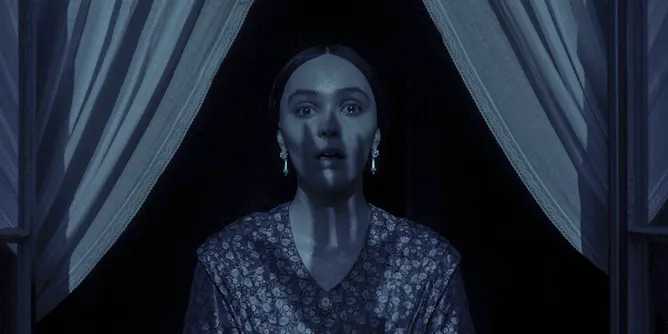
Why do we see German and Roman characters speaking like they’re from London? The blame lies partly with film directors – and more broadly with British imperialism.
Articles on Gladiator II
Displaying all articles
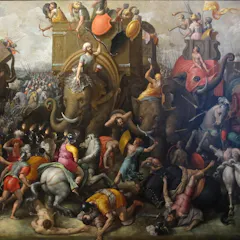
Numidia was once a vast kingdom, stretching from the east of modern-day Morocco into Algeria, Tunisia and the west of Libya.
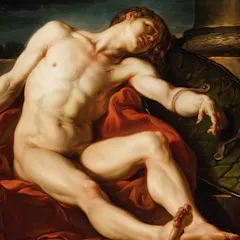
To early Christians, ancient gladiators were potent symbols of martyrdom, embodying virtue and bravery despite being enslaved.

Perhaps unsurprisingly, the walls of Pompeii’s brothel were a particular hot-spot for sexual graffiti.
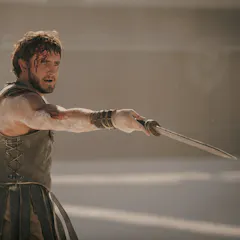
Politicians like Cicero saw gladiators as vain and self-indulgent, while the true warriors engaged in wars of words.
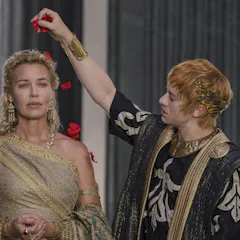
It’s clear Caracalla and Geta had an intense rivalry. This was kept in check while their father Septimius Severus was emperor. But once he died, their relationship devolved into outright hostility.
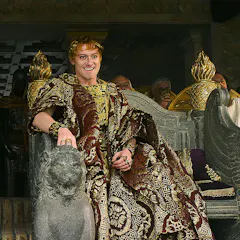
Much like modern-day football hooliganism, gladiator fandom could be weaponised in inter-communal violence.
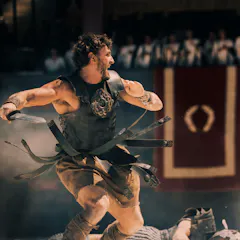
While undoubtedly entertaining, the sequel feels like a duplicate of the original which sacrifices characterisation for ambitious set pieces.
Top contributors
-

Lecturer, Department of Literature Film and Theatre Studies, University of Essex
-
Reader in Archaeology, King's College London
-
Associate Professor in Latin Christianity in Late Antiquity, Australian Catholic University
-
Associate Professor of Classics, Wake Forest University
-
Associate Professor Classics and Ancient History, University of Exeter
-
Professor of Religion and Classics, USC Dornsife College of Letters, Arts and Sciences
-
Visiting Research Fellow, School of Literature, Drama and Creative Writing, University of East Anglia
-
ARC DECRA Fellow in Screen Studies, Senior Lecturer in French Studies, Australian National University