
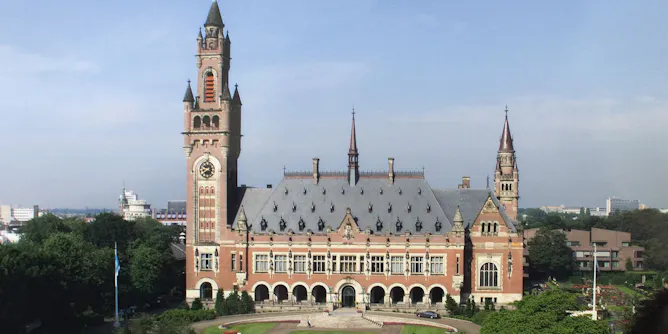
The DRC is making a third attempt to bring Rwanda before the world’s highest court in relation to the violence in its eastern region.
Articles on Genocide Convention
Displaying all articles
If New Zealand expressly recognises Palestine at the UN next week, it will be a significant – but justified – departure from long-standing foreign policy.
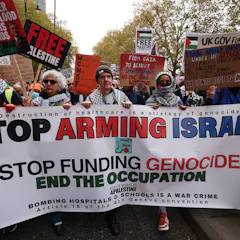
An expert in international law explains what constitutes genocide.

The recent ruling by the International Court of Justice means Canada could be guilty of supporting genocide in Gaza by cutting aid funding and continuing military exports to Israel.
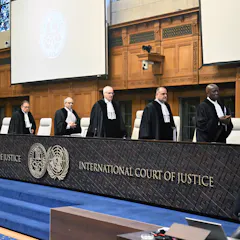
While the International Court of Justice lacks enforcement powers, it can issue orders that could heighten international pressure on Israel to curtail some of its offensive in Gaza.
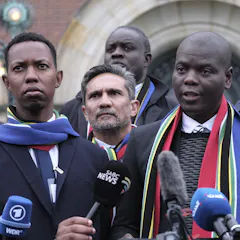
Canada doesn’t support the case before the International Court of Justice that Israel is guilty of genocide in its war against Gaza. That’s contrary to its stance on other cases of genocide.
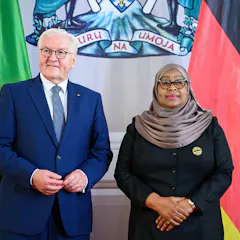
The evidence suggests that atrocities committed against civilians and communities were indeed intended to destroy an identifiable group.
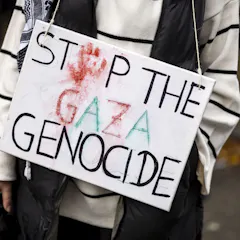
People talk about genocide in a few different ways, ranging from technical to colloquial – but a war of words does not replace a path to peace, a genocide scholar writes.
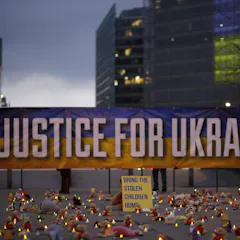
The Genocide Convention says the forced transfer of children could constitute genocide if the intent was to destroy a national, ethnic, racial or religious group.
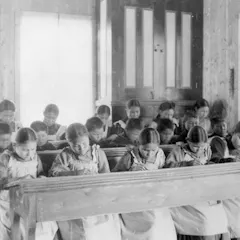
Canada’s recent resolution to label the Indian Residential School system as genocide (and not cultural genocide) is not a mere alteration of words, it is a significant and consequential change.
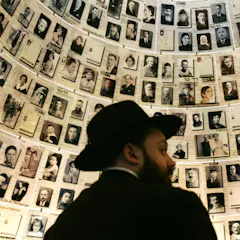
There isn’t one, clear-cut way to prevent genocide. But there are effective methods of prevention that governments can take.
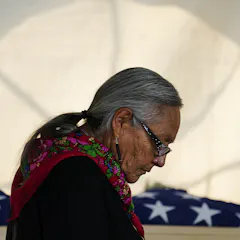
Ukraine says thousands of Ukrainian children have been kidnapped by Russian soldiers, which is a war crime. The US government kidnapped and forced the assimilation of Indigenous children for decades.
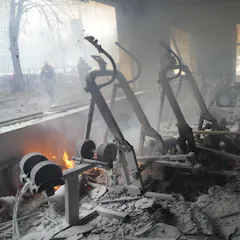
Putin never formally declared war on Ukraine, calling the invasion a “special military operation.” Official declarations of war are increasingly a thing of the past. Here’s why that’s detrimental.

Vladimir Putin has justified his invasion of Ukraine with baseless claims that Ukraine is committing genocide. It isn’t the first time a political leader has cried genocide for political means.
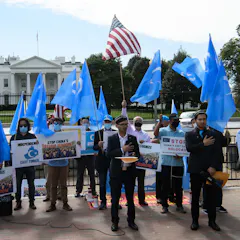
When your ‘friend’ and biggest trading partner is accused of genocide you can’t ignore it. But meaningful change will take more than words.
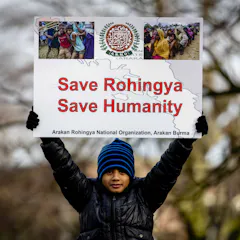
The Rohingya case before the International Court of Justice is politically and legally significant.
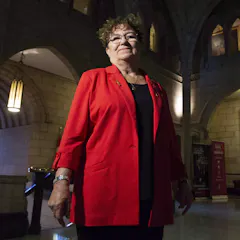
It may not be legally called genocide, but the impact of the Canadian government’s actions, including the sterilization of Indigenous women, still add up to genocidal practices.
Top contributors
-

Assistant Professor of Law, Osgoode Hall Law School, York University, Canada
-
Associate Professor International Law, Roskilde University
-
Distinguished Professor of Anthropology; Director, Center for the Study of Genocide and Human Rights, Rutgers University - Newark
-
Professor Emeritus, Department of Political Science, Wilfrid Laurier University
-
Professor, Faculty of Law, University of Toronto
-
Professor of Criminal Law, University of the West of England
-
Professor of Family Law, University of South Carolina
-
PhD Candidate, Peter A. Allard School of Law, University of British Columbia
-
Associate Professor of Law, York University, Canada
-
Professor of Political Science, McMaster University
-
Phd Candidate, International Relations, McMaster University
-
Professor of Law, University of Waikato
-
Associate Professor of Politics and Global Studies, Arizona State University
-
Lecturer in Criminal Law and International Law, Curtin University
-
Professor, Lancaster Law School, Lancaster University