

Holding war crimes trials during active hostilities is rare. Proceedings in Ukraine also open the risk of Russian show trials, argues a law of war expert.
Articles on Geneva Conventions
Displaying 41 - 60 of 70 articles
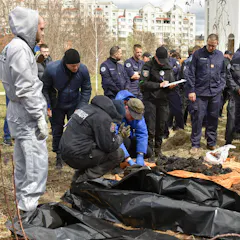
The first war crimes charges are being laid against Russian soldiers in Ukraine, but will the architects of the war face justice?
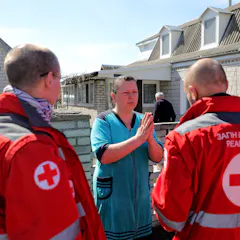
Aid workers are supposed to be protected by international humanitarian law. But increasingly they are being targeted by warring parties.
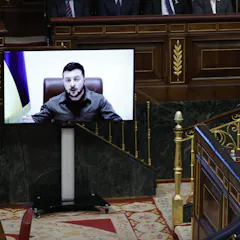
The Ukrainian president says the country will set up its own system for prosecuting Russian soldiers for war crimes.

The laws of war and what is considered acceptable and unacceptable weaponry suggest there’s a right and wrong way to kill. It’s unlikely any of the victims of war would appreciate the distinction.
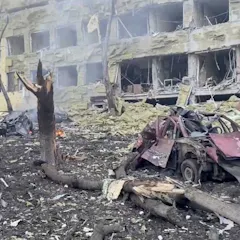
If Russian missiles have an accuracy of one metre, how come they seem to hit civilian targets such as healthcare centres?
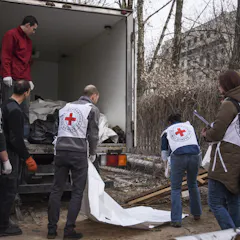
Nearly all of the 129 aid workers killed on the job in 2021 were from the countries where they lost their lives.
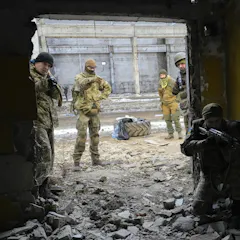
As the number of volunteers for Ukraine’s International Legion rises to a reported 20,000 from over 50 countries, is it lawful for New Zealanders to join the fight?
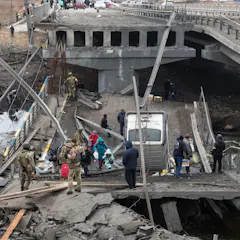
International law says that the Russian invasion is illegal in itself. The Russian military’s alleged conduct also breach various international legal treaties.
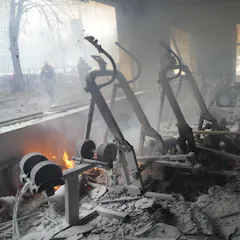
Putin never formally declared war on Ukraine, calling the invasion a “special military operation.” Official declarations of war are increasingly a thing of the past. Here’s why that’s detrimental.
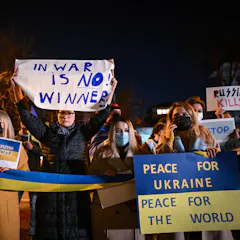
International laws are in place to prevent war and help protect civilians and combatants alike. But these laws are challenging to enforce and are unlikely to stop the unfolding Russia-Ukraine war.

A Catholic historian writes about nuns who protested against nuclear weapons. Even when convicted of sabotage, they used prison time to serve fellow inmates and push for justice.
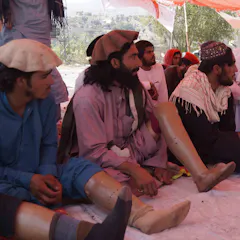
The number of casualties from landmines remains high, with the most people killed and wounded in Syria.
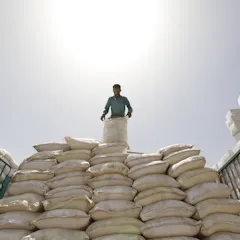
When humanitarian agencies are obliged to stop operations by political decision or because of huge physical insecurity, the poorest and most vulnerable succumb first through starvation and disease.
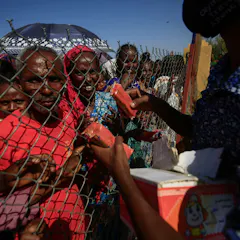
If a country refuses, or blocks, humanitarian aid this act violates international law.
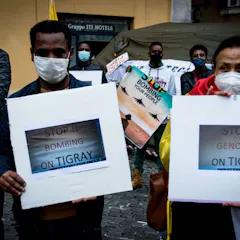
Providers of humanitarian aid haven’t been able to reach civilians in Ethiopia’s Tigray region. There are also reports that hundreds of civilians have been killed.
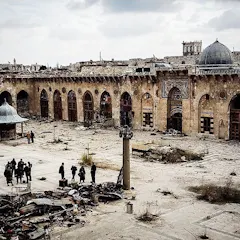
The destruction of a country’s historical and cultural heritage sites is a distressing byproduct of conflict, but there are now strategies in place to prevent it happening.
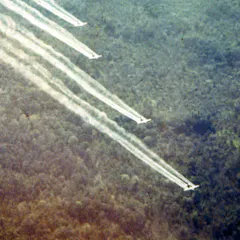
A group of scientists want a new Geneva Convention to safeguard the environment during wars and conflicts. We already have such rules, but they’re inadequate, inconsistent and unclear.
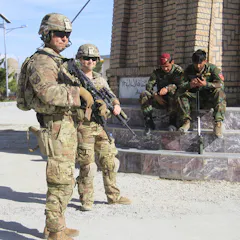
A ceasefire and peace agreement in Afghanistan may mean that the Taliban would have to lose their “terrorist” classification and turn from despised outlaws to legitimate powerbrokers.
Because of its geography, the UK must put an end to uncertainty over asylum policy after Brexit.
Top contributors
-

Professor of Law, American University
-
Professor of Public International Law, University of Bristol
-
Professor, Lancaster Law School, Lancaster University
-
Senior Lecturer in Law and Co-Director New Zealand Centre for Public Law, Te Herenga Waka — Victoria University of Wellington
-
Professor of Law, University of Waikato
-
Professor of International Law, Fletcher School of Law & Diplomacy, Tufts University
-
Professor of Applied Ethics and Director, Security and Risk Research, University of Portsmouth
-
Senior Lecturer in International Law, Cranfield University
-
Professor, Université de Lubumbashi
-
Research Professor and Executive Director of the World Peace Foundation at The Fletcher School, Tufts University
-
Associate Professor of Operations Management, Coggin College of Business, University of North Florida
-
Professor Emeritus in Global Health & Humanitarian Affairs, University of Manchester
-
University Lecturer in Contemporary Middle Eastern Politics & Society; Fellow, King's College, University of Cambridge
-
Professor of International Law, UNSW
-
Research Assistant Professor of Nutrition Science and Policy, Tufts University