
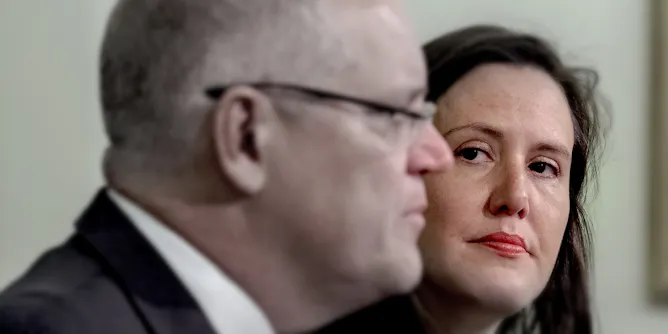
The Prime Minister’s reaction to Kelly O'Dwyer’s decision says much about the Coalition’s attitude to women.
Articles on Gender quotas
Displaying 21 - 40 of 41 articles
The minister for women’s decision to walk away is appalling timing, and the government’s most popular woman might follow suit.
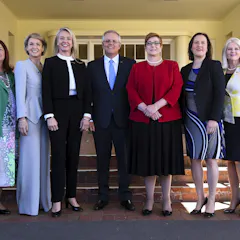
The Liberal Party is at a crossroad in its history. It must take bold steps to ensure better representation in its ranks by introducing gender quotas.
New research shows that conservative voters generally fail to see how being female can impede political success, while left-of-centre voters list gender as the main obstacle to success.

Other conservatives parties in the Western world have done better on female representation than the Liberals - the party needs a gender quota and to rid itself of its right-wing thugs.

Without affirmative action through gender quotas and targets, we will have another 30 years of glacial progress on gender equity in academia.

The vast majority of managers said they wanted “the best person for the job”. They had less idea of just who that might be, or how to ensure appointments on merit and equity targets co-exist.

The only predictor of boards reaching 30% female directors is if it has a director who sits on another board that has already met the target.

Since 2017, only 13% of full-length works by Australia’s major dance companies have been choreographed by women.
Examples from Ireland and New Zealand show that, unless determined measures are taken, masculine political cultures will ensure the gender imbalance remains.
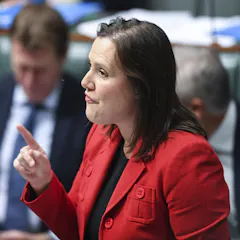
Money no doubt will be useful, but it won’t be enough to significantly boost the number of Liberal women in federal parliament.
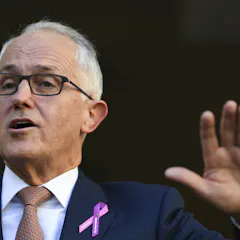
Malcolm Turnbull’s acknowledgement of gendered power imbalances in parliament reveals that the gendered nature of politics is under challenge.
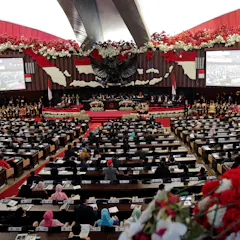
Indonesia obliges political parties to have at least 30% of women candidates in their legislative candidates list. But then why this hasn’t significantly increase women’s electability?
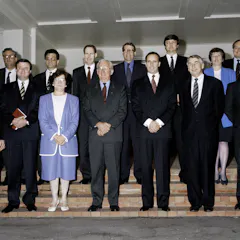
After 1993, Paul Keating became ever-more dominant in cabinet policy discussions to ensure a legacy for the Labor government.
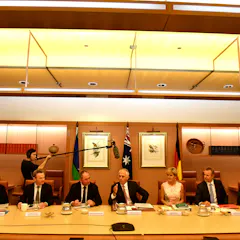
Setting targets is one way to attain more female MPs, but it must be accompanied by cultural change.

The effect of gender quotas on an organisation’s performance depends on employee’s attitude towards quotas, which in turn depends on the labour market environment.

Women remain systemically underrepresented at the top levels of Australia’s most powerful institutions – including the media, universities, government, judiciary and corporate sector.
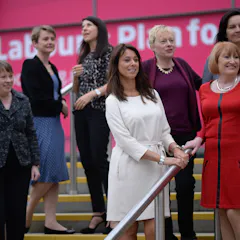
Are quotas the best way to challenge sexism and discrimination in politics and workplaces?
Australia is lagging behind other countries in adopting practical measures to achieve gender balance in public decision-making.
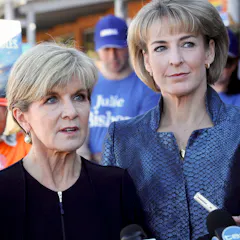
Without quotas to correct the effects of these gender biases, the under-representation of women Coalition MPs is effectively guaranteed.
Top contributors
-

Professorial Fellow, University of Canberra
-
Professor, Canberra School of Government, University of Canberra
-
Professor of Politics, Department of Government and International Relations, University of Sydney
-
Lecturer, Faculty of Law, The Open University of Tanzania
-
Professor of Politics, Griffith University
-
Director of Programs, Human Rights Center; Research Professor of Law, University of Dayton School of Law, University of Dayton
-
Professor of Political Communication; Director CAJII, The University of Melbourne
-
Senior Lecturer in Psychology, Bath Spa University
-
Professor of Leadership and Organisation Studies, University of Birmingham
-
Lecturer, University College Cork
-
Professor of Politics and Policy, University of Auckland, Waipapa Taumata Rau
-
Adjunct Associate Professor, Monash University
-
Emerita Professor of Politics, Adelaide University
-
Professor in Organisation Studies and HRM, and Departmental Research Lead, University of Portsmouth
-
Professor in History, Australian National University